


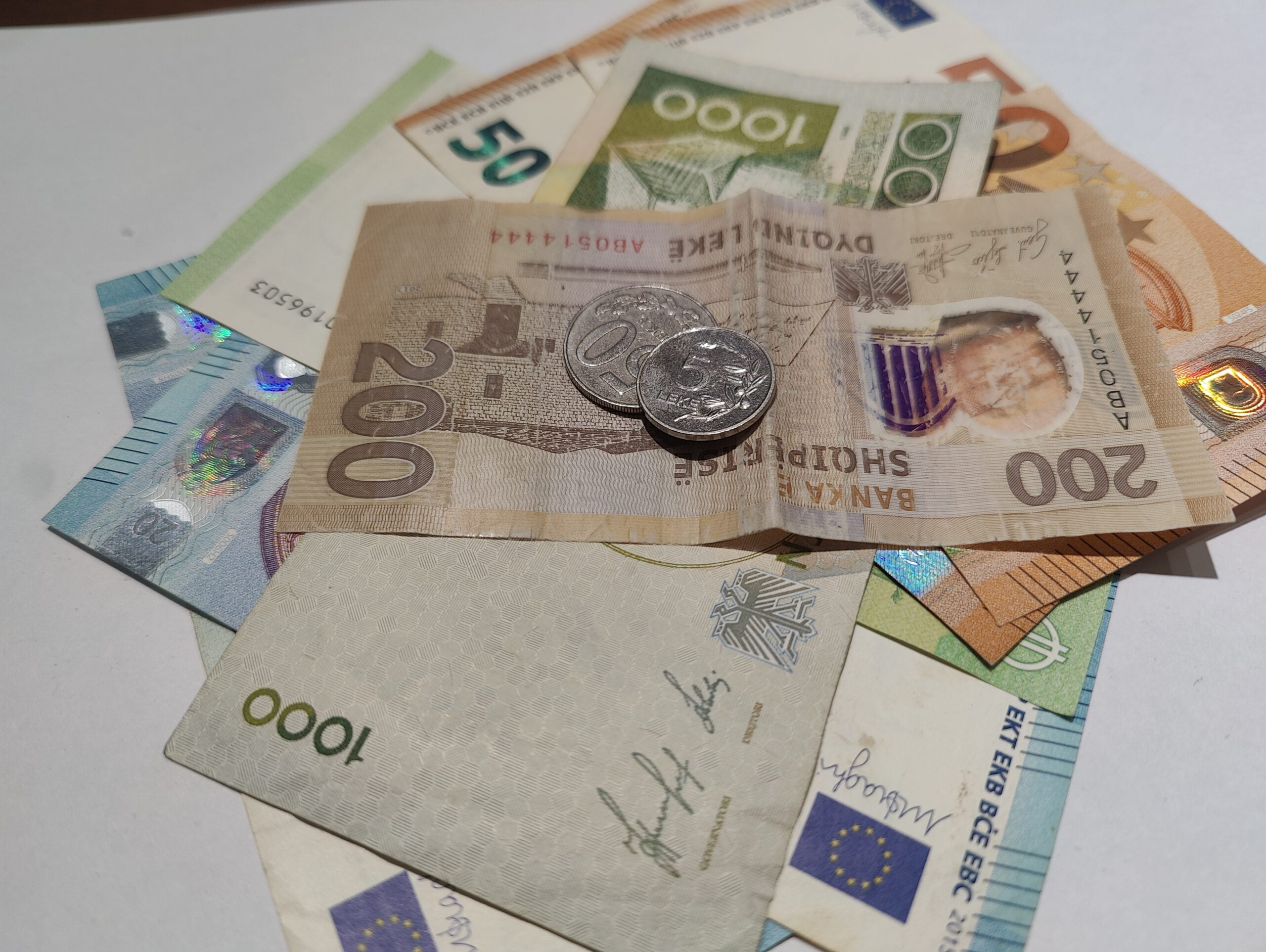
Why did the Euro fall at the end of the 2024 summer season?
The increasing value of the Lek in relation to the Euro, the American Dollar, the British Pound in the currency market should be understood by all consumers and businesses, that the Lek can buy a greater amount of goods and services expressed in the above currencies. .
In fact, the value of imports has increased by 3.1% for the 8th month of 2024 and this is the indication that the strong lek has bought very little in relation to its strengthening of consumer goods, since the purchasing power of the final consumer (individual, business, government ) is low.
The main reason is the based on why and how the value of the Lek increased, where if we start from the factors below, they do not prove that it came precisely from their influence:
First, the impact of the strong Lek should be influenced by the dynamics of supply and demand for the Lek and other currencies. If we had an increasing demand for the Lek compared to its supply, its value would increase. In fact, the demand for Lek in the country has not changed and the offer has not changed on the other hand.
Secondly, the impact from the trade balance and the current account surplus (exports exceed imports) would affect the appreciation of the Lek. According to official statistics for the 8th month of 2024, imports are worth a total of 594.6 billion ALL and exports are worth a total of 255.1 billion ALL, with a deficit of 339.5 billion ALL. In the 8th month of 2023, the import-export deficit was 277.3 billion ALL.
Based on this situation, we are in the opposite direction of the impact of the appreciation of the Lek. The reason is that only the trade surplus would create higher demand for the Lek as foreign entities need to buy it to pay for exported goods or to invest in the country.
Likewise, if from the inflows of Euros and other foreign currencies into the Albanian market, through inflows from remittances and foreign visitors, according to the balance of payments for the first 6 months of 2024, there is a total inflow of 1.95 billion Euros and an outflow from Albanian visitors of 1.2 billion Euros, i.e. a quantity available on the market for consumption in the amount of 740 million Euros.
For the same period of 2023, 1.55 billion Euros have entered the market from external visitors and 977 million Euros have left from internal visitors, with an available amount remaining in the market of 575 million Euros. If we take only this influencing factor in the strengthening of the Lek, then the calculations show that in the 6th month of 2023 the Lek strengthened by 7.3 percent, while in the 6th month of 2024 it strengthened by 3%. It is understood that starting from the comparison and analysis of the indicators, it is not just the income from foreign visitors that affects the strengthening of the lek, through the impact on the economy.
Thirdly, the impact of inflation differences is related to the strengthening of the Lek. In the case where Albania has lower inflation rates compared to its trading partners, the Lek may increase. In fact, according to statistical data, inflation in the Eurozone is on average 2.6% in the months of July – August 2024[1] and it seems that compared to the rate of inflation in the country, which is on average 2.3% in the last months, this does not constitute the necessary difference to influence the strengthening of the lek in these periods. But even in case of a larger difference, the effect comes from the fact that lower inflation maintains the purchasing power of the Lek, making it more attractive to investors. In fact, investments for the first 6 months of 2024 amount to 549 million Euros[2], which has a level of nearly 200 million Euros less investment entry into the country compared to last year.
Fourth, the impact from speculative activities and inflows of dirty/informal money create a much stronger but not easily measurable environment for the strengthening of the Lek. Currency speculation and investor sentiment/perception seem to be affecting the Lek’s valuation. Individuals and traders are already expecting an increase in the value of the Lek and they may buy it in anticipation of its sale at a higher price, leading to its appreciation. But on the other hand, the government’s auctions for treasury bonds, along with the continuity of new Euro inflows accumulated over the years from informal sources, are still creating an impact on the devaluation of the Euro as well as other currencies.
Likewise, the impact of interest rates seems to have no effect in 6m.I 2024, as they remain at comparable levels as in the same period of 2023.
In summarizing the factors that should influence the fall of the Euro and the strengthening of the Lek, it can be seen that the reasons are not mostly found within the market and the formal economy, but outside it.
[1] https://altax.al/norma-e-inflacionit-ne-korrik-gusht-2024-ne-oecd-dhe-ballkanin-perendimor/
[2] https://www.bankofalbania.org/?crd=0,8,1,1,0,17830&uni=20240919123010162158210210120116&ln=1&mode=alone



Leave a Reply
You must be logged in to post a comment.