


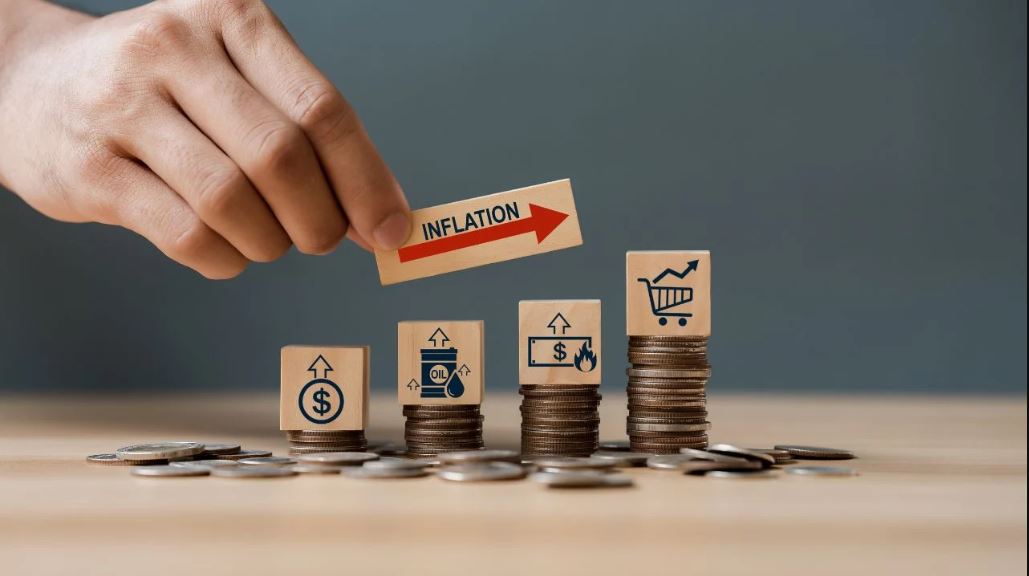
Inflation has gained ground on salaries and pensions in 2022
The post-pandemic situation combined with inflationary effects from the end of 2021, as well as a slowdown in economic growth in 2022 by at least 0.9% according to government forecasts[1] directly affects the labor market with a force not felt for at least 3 decades.
The biggest negative consequence is the erosion of real wages and purchasing power of Albanian families.
By comparing the statistical data of the inflation indicator and the growth of average gross wages according to sectors, a negative difference results for the 11th month of 2022 with 4.5 percent less at the end of the month for each family of individuals living on income from work.
This translates into at least a decrease in average real income up to 2,800 – 3,000 lek per month income from salary less than the average effect of inflation.
In a more detailed look at the inflation indicator, according to the latest INSTAT data, it can be seen that the Consumer Price Index in November 2022 reached 110.9 compared to December 2020. The annual change in the consumer price index in the month November 2022 is 7.9%, while a year ago this change was 3.1%[2].
Food, beverages, transport, transportation, water have the greatest impact, with 58% of the entire inflation rate.
In a look at the increase in average salaries by quarter, it can be seen that the average salary for an employee at the end of September 2022 was ALL 61,613, or 3.4% higher than at the end of December 2021.
Meanwhile, the average salary for an employee in the state sector at the end of September 2022 was ALL 70,593, or 0.1% higher than at the end of December 2021.
While the average salary for an employee in the private sector at the end of September 2022 was ALL 57,613, or 5.7% higher than at the end of December 2021.
Based on the whole panorama with the rate of inflation and the increase in wages, it seems that the wages that are at the low and average levels are at a loss in relation to the increase in prices.
In a verification of the increase in average wages according to the sectors of the economy and activities, (for the same comparative periods as above), it can be seen that the biggest increase is found in the average wages of the Agriculture sector with 14.8%. The increase of other salaries according to sectors is as follows:
Construction with 9.1% salary increase
Trade and services with a salary increase of 7.5%
Industry with 4.7% salary increase
Real estate with a salary increase of 4.1%
Entertainment with a 2.6% salary increase.
An effective decision of the government is to increase the minimum wages (it was 30 thousand ALL per month increased to 34 thousand ALL per month) twice in a row within the year 2022 registering a total increase of 13.3%. This decision has directly affected the protection of the largest part of workers and their families from falling into poverty.
This loss of income from the effect of price increases is at least up to 2,800 ALL per month.
The calculation is already done for the level of the average pension (in 2021 it is ALL 13,891/month), if the indexation for the period October – November 2022 is included, at the level of 6%[3] together with the indexation of pensions from April 2022 at the rate of 3.3%[4]as well as the end-of-year bonus of ALL 5,000 and other compensations, it turns out that the effect of inflation has not managed to fully cover the groups of pensioners (the average increasing effect is up to 8.7%).
The biggest problem remains the category of pensioners with a low level of pensions.
But, beyond the calculations and findings in a different policy approach for pensions, a new approach and with strong support of government policies towards the private market of pension funds remains decisive, which will solve in a long-term model the decline of the nominal value of pensions in their exposure to crisis shocks and their aftereffects.
Persistent high inflation and the rise in interest rates aimed at combating it continue to challenge the economy, the budget and the financial market. This environment is leading to greater interest in alternative investment strategies that can help.
By designing and planning ahead schemes such as private pension funds, which naturally expand the financial market, schemes are able to weather budget storms and overcome any short-term risks while still achieving their long-term objectives.
This positive perspective of pension funds is seen from many European countries, but also in neighboring countries where pension fund managers are sure that they will be slightly affected by inflation in pension schemes during the next year as well as in 2022. especially since many predict that inflation will continue its dramatic rise.
[1] https://financa.gov.al/wp-content/uploads/2022/08/Pjesa-1_Faza-I-2023-2025-1.docx
[2] http://www.instat.gov.al/media/11048/ick_nëntor_2022.pdf
[3] https://qbz.gov.al/eli/vendim/2022/09/14/605/6e8e2c95-33d4-44fa-896c-09e5c6289c06
[4] https://qbz.gov.al/eli/vendim/2022/03/30/188/988e88d0-e189-4f51-b735-beebd0e4b721


Leave a Reply
You must be logged in to post a comment.