


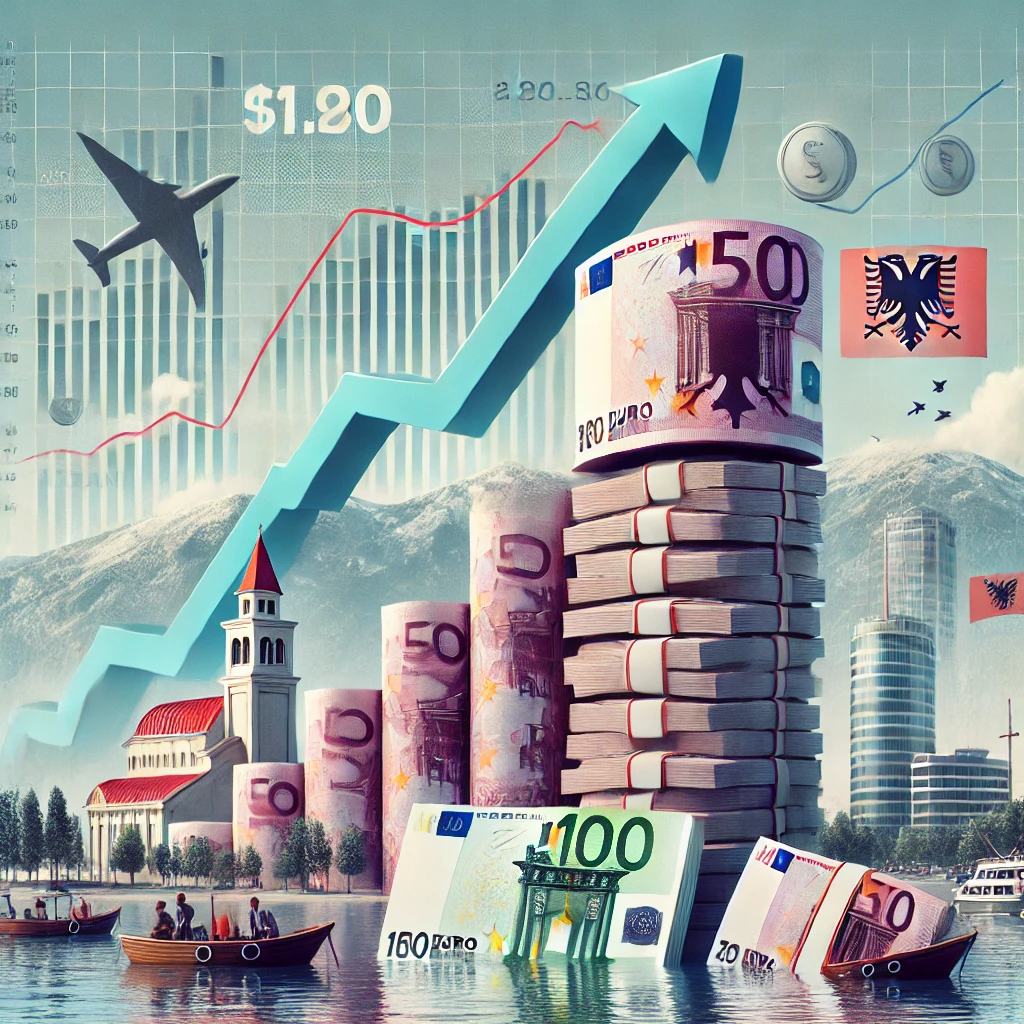
Analysis of the Euro Exchange Rate in Albania (2023–2025) and Influencing Factors
Analysis of the Euro Exchange Rate in Albania (2023–2025) and Influencing Factors
Euro Exchange Rate Movement: A Continuous Depreciation
Over the past three years, the euro has experienced a steady depreciation in the Albanian currency market:
- Start of 2023 → €1 = 116.09 ALL
- Start of 2024 → €1 = 103.24 ALL (-12.85 ALL, -11.1%)
- Start of 2025 → €1 = 97.40 ALL (-5.84 ALL, -5.7%)
➡ Total depreciation over two years: -18.69 ALL (-16.1%)
What Does This Trend Indicate?
- An increased supply of euros in the domestic market has contributed to its depreciation.
- Growth in foreign currency inflows from tourism, remittances, foreign investments, and informal sources has offset demand from imports, weakening the euro.
- Additional pressures come from money laundering and informal sector investments, which flood the market with foreign currency.
Trade Deficit: Why Is It Not Strengthening the Euro?
Albania continues to run a large trade deficit, which would typically increase demand for euros. However, this effect is overridden by strong currency inflows from other channels.
| Year | Exports | Imports | Trade Deficit |
|---|---|---|---|
| 2023 | €4.4 billion | €8.7 billion | -€4.3 billion |
| 2024 | €3.4 billion | €8.9 billion | -€5.5 billion |
➡ Although the trade deficit widened by €1.2 billion, the euro continued to depreciate due to oversupply in the currency market.
Exports and Imports by Sector
| Sector | Exports 2023 | Exports 2024 | Change | Imports 2023 | Imports 2024 | Change |
|---|---|---|---|---|---|---|
| Agricultural & Food Products | €557M | €533M | -4.3% | €1.46B | €1.56B | +6.8% |
| Minerals & Fuels | €940M | €710M | -24.5% | €1B | €930M | -7% |
| Machinery & Equipment | €390M | €375M | -3.8% | €2.1B | €2.4B | +14.3% |
➡ Although imports have risen and exports have declined, other currency inflows have offset pressure on the euro.
Foreign Direct Investment: Is It Increasing Euro Supply?
In 2024, Albania recorded €1.4 billion in foreign direct investment (FDI), distributed as follows:
- 26% in real estate → Foreign investors brought in euros to purchase property, increasing euro supply.
- 17% in the financial sector → Investment in banking and finance boosted monetary stability and the lek.
- 16% in extractive industries → Impact was limited due to declining mineral exports.
- 10% in energy → Helped reduce reliance on energy imports.
- 4% in transportation → May reduce trade costs in the future.
- 27% in other sectors → Including metallurgy, construction, tech, trade, and services.
➡ FDI is a major contributor to the rising euro supply and thus its depreciation.
Remittances, Tourism, and Public Spending: Impact on the Euro
- €900 million in remittances → Sustains a high level of euro availability in the market.
- €4.6 billion in tourism revenues from foreign visitors.
- €3.4 billion spent abroad by Albanian tourists.
➡ Net tourism balance: +€1.2 billion, contributing to a stronger lek. - Government budget spending:
- 2023: €6.2 billion
- 2024: €7.2 billion (+16.1%)
These fiscal injections boost money circulation and increase domestic demand for lek, further weakening the euro.
➡ Remittances, tourism, and fiscal expansion have collectively strengthened the lek and reduced the need for euros.
The Role of Informal Money and Money Laundering
A major factor behind the high euro supply is the presence of informal capital and money laundering.
- Real estate is a key sector for laundering money, generating large foreign currency inflows from questionable sources.
- Trade and construction sectors are also implicated in laundering schemes, further saturating the market with euros.
- Informal investments and undeclared capital create artificial increases in euro supply, pushing its value down.
➡ Stronger government oversight of informal capital flows could reduce euro supply and strengthen the currency.
Monetary and Fiscal Policies: A Reinforcing Factor
- The Bank of Albania has maintained a stable monetary policy, controlling inflation and keeping interest rates supportive of growth.
- Public trust in the lek has increased, reducing reliance on the euro for savings.
Why Is the Euro Depreciating in Albania?
| Key Factor | Effect on Euro |
|---|---|
| Trade deficit (-€5.5B) | Should increase demand for euro, but offset by other inflows. |
| FDI (€1.4B) | Increased euro supply, contributing to depreciation. |
| Remittances (€900M) | Sustained euro supply, strengthens lek. |
| Tourism (+€1.2B net) | Major euro inflow, puts downward pressure on euro. |
| Public spending (+€1B net) | Increases money circulation, favors lek. |
| Monetary policy | Strengthened confidence in lek, reduces euro demand. |
| Money laundering | Informal euro inflows flood market, lower euro value. |
What Lies Ahead?
If recent trends persist, the euro may continue to weaken in the Albanian market.
However, should exports increase or demand for euros in trade and investment rise, stabilization or appreciation could occur.
➡ Future depreciation is likely if current drivers remain, but targeted reforms could reverse the trend.

Leave a Reply
You must be logged in to post a comment.