


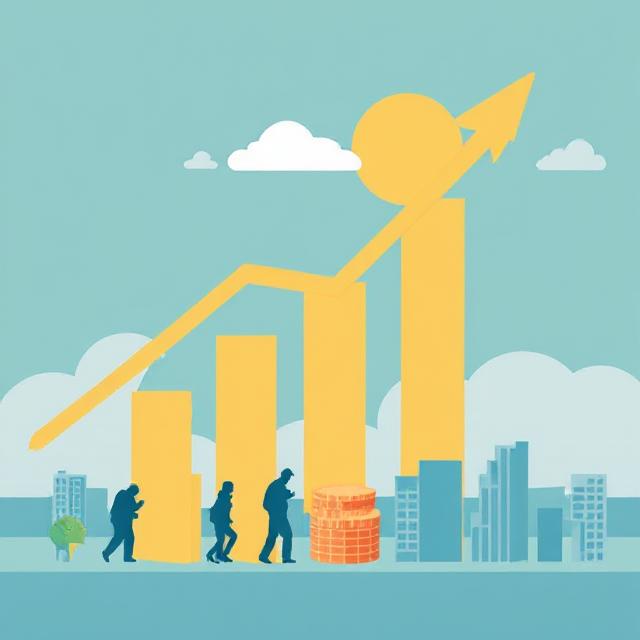
Economic growth in the first quarter of 2025, a continuation of the challenges of a one-sided model
According to data from INSTAT, Gross Domestic Product (GDP) in the first quarter of 2025 recorded a real growth of 3.39%, continuing the positive trend of 4.05% in 2024, but with a noticeable slowdown.
This indicates that the economy still has the momentum to move forward, but the slowdown is a warning signal that the structural and model-related challenges of the Albanian economy remain unresolved and require immediate attention.
The economic model remains dominated by public services and consumption
One key point highlighted by the sectoral contribution analysis is the dominance of the public sector and social services.
“Public Administration, Education, and Healthcare” act as growth engines, contributing an extraordinary +2.24 percentage points with an annual increase of 18.92%. This reflects the importance and impact of wage increases and public expenditure on the Albanian economy.
Similarly, the real estate and construction sectors show positive activity, although construction is growing more slowly (+0.16 points, 1.78% growth), indicating a deceleration in capital developments.
Meanwhile, productive sectors continue to show significant weaknesses
Industry, energy, and water record a decline of -0.66 percentage points and -5.66% in real terms; agriculture and rural sectors continue their downward trend (-0.46 points and -2.76%), while information and communication suffer a modest decline (-0.07 points, -2.93%). This clearly indicates that the productive base is failing to contribute sustainably to economic growth.
Consumption and Exports: A Two-sided story with tourism playing the leading role
On the expenditure side, final consumption remains the main pillar of the Albanian economy:
- Household consumption grew by 2.47%, slightly slower than in 2024, but still at levels keeping the economy moving.
- Public consumption grew faster at 7.34%, showing strong support from the public sector.
Regarding exports, a notable 9.51% increase in goods and services exports is primarily supported by the tourism sector, dominated by visitor- and tourist-related services. This factor indicates that tourism development remains a key element for improving the competitiveness of the Albanian economy in international markets and ensuring more sustainable and diversified growth.
On the other hand, imports grew more slowly (+1.69%), signaling a slight improvement in the trade balance; however, high dependency on imports remains a significant challenge for the economy.
Is there a chance for changes in the structural reality of the Albanian economy?
Essentially, the Albanian economic model remains one-sided and fragile. Domestic consumption and public sector expenditures dominate growth, while sectors with high added value—such as manufacturing, modern agriculture, and technology—have failed to recover from the long-standing decline or stagnation. This situation reflects a deep dependency on factors that are unsustainable in the long term and exposes the economy to risks from both external and internal changes.
Nevertheless, the significant growth in exports in the first quarter of 2025 is a positive signal that should not be ignored, although it must be interpreted cautiously. This 9.51% export growth, largely driven by the tourism and related services sector, shows potential for improvement in the economy’s ability to earn from external markets. At its core, this is a sign that the productive and export sectors may have started a positive movement, but it is too early to draw long-term conclusions based on just one quarter.
However, this potential remains insufficiently exploited, especially given the lack of strong investments in fixed capital— a key element for building productive and technological capacities. Investment growth remains slow and inadequate to address the structural challenges that have blocked the economy for years.
This means that without sustained and significant growth in investments in technology, infrastructure, and innovation, as well as deep reforms in productive sectors, the Albanian economy is very likely to remain dependent on domestic consumption and public expenditures. The latter, while important for short-term social and economic stability, cannot serve as the foundation for sustainable and comprehensive long-term growth.
What should businesses, investors, and citizens know?
Businesses in production face a clear challenge: relying on consumption and services may provide a temporary domestic market, but this is not enough to create sustainable value or compete globally. For long-term success, businesses must strongly focus on innovation, operational efficiency, and export expansion. Without this focus, growth will remain fragile and dependent on external factors.
Investors should be cautious and vigilant about the one-sided nature of the economy. Although there is growth potential, structural risks and unsustainable policies could hinder sustainable investment returns. They must look for clear signals from the government and private sectors about deep reforms and targeted support for productive and innovative sectors, ensuring that investments do not merely serve consumption but support sustainable and diversified development.
Citizens need to understand that rising wages and public consumption are important short-term gains but do not guarantee a secure future. Without productivity growth and development in high value-added sectors, prospects for sustainable employment and social welfare remain uncertain. Proper education and professional training are essential to prepare for active participation in an economy aiming for diversification and technological advancement.
Only through a joint commitment of businesses, investors, and citizens to structural transformation and sustainable development can a resilient and sustainable economy be built—one that offers prosperity for all.
Current trends and immediate priorities
Trends from the first quarter of 2025 clearly show that economic development faces significant challenges that cannot be ignored. The second quarter, closing soon, may bring a different outlook.
But the times ahead demand immediate attention.
In this context, the government must take the organizing role to coordinate and enable effective cooperation among different economic sectors and other actors.
Sustainable interventions and targeted investments in key sectors are needed; otherwise, the current growth rates will fail to create a strong foundation for long-term progress. To ensure that the economy fully benefits from its potential, a collective commitment and concrete actions from all economic actors are essential to guarantee stability and continuous improvement for everyone.


Leave a Reply
You must be logged in to post a comment.