


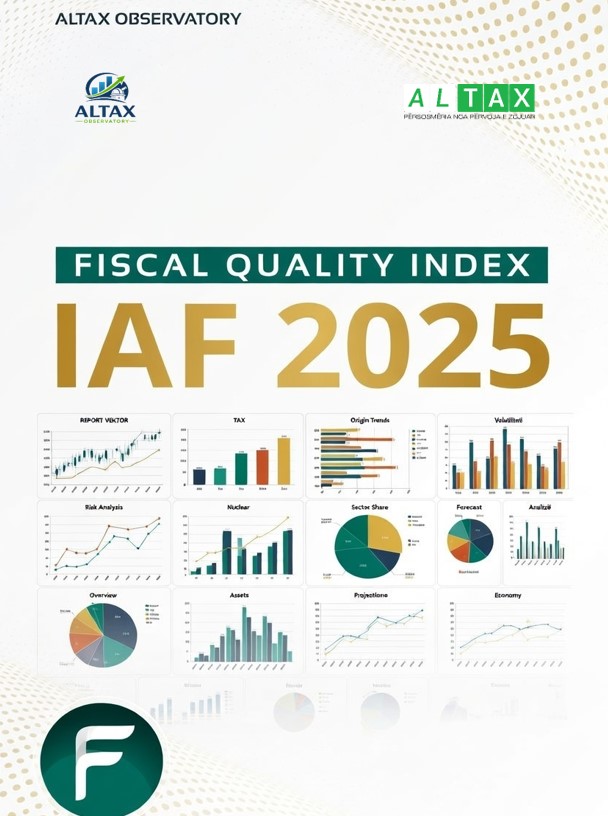
ALTAX Observatory releases the ALTAX Fiscal Index (IAF) 2025 Annual Report
Today, ALTAX Observatory published the first full annual report for the ALTAX Fiscal Index (IAF) 2025, an independent analytical tool that measures the real state of the Albanian fiscal system through three main dimensions: pressure on taxpayers, long-term sustainability of public finances, and fairness in the distribution of the tax burden.
The total index value for 2025 is 64.3 / 100, classifying as average fiscality and marking a moderate improvement of +2.3 points compared to 2024. This increase reflects a year where budget collections reached 754.6 billion lek (+6.2% from the previous year), with 98% of the annual plan being realized, while public debt fell to 53.04% of GDP, a level that places Albania in a more favorable position than most of its neighbors in the region.
However, behind the figures lies a more complex narrative. The largest increase came from personal income tax (+24.8%, or +16.4 billion lek), a figure that shows the success of digitalization (DIVA 2025) and the strengthening of administrative control over wages and formal employment. At the same time, corporate income tax increased by only +2.7%, a clear signal that the fiscal burden continues to be distributed unevenly between individuals and large businesses.
The report highlights that the fiscal system has entered a new phase, from a model that is measured solely by how much it collects, to one that should also be assessed by how fairly it distributes costs and how much trust it builds among taxpayers. Macro-fiscal sustainability (72/100) is the strongest point of the year, thanks to debt reduction and revenue diversification. But fairness and efficiency (58/100) remain open challenges, with compliance costs still weighing heavily on small businesses, perceptions of sectoral inequality are high, and the upcoming “Fiscal Peace” amnesty risks undermining trust if not accompanied by strong anti-evasion and transparency measures.
“2025 showed us that we can collect more without raising taxes, but this is not enough,” says ALTAX Observatory. “Now we must move from administrative efficiency to sustainable fairness. If we do not address the disparity between personal and corporate taxes, if we do not reduce the real costs for small businesses, and if we do not make transparency a daily norm, we risk losing what we have gained in sustainability.”
The report presents a concrete package of measures for 2026, with deadlines and measurable impacts: full digitalization of declarations by June, conditional and time-limited amnesty, property revaluation and property tax reform, as well as the monthly publication of the Fiscal Pressure Index (IPFI) to warn businesses and citizens.
The full report, accompanied by interactive graphics, sectoral analysis and regional comparisons, is available for free.
ALTAX Observatory remains committed to being the independent voice that challenges official narratives with open data and in-depth analysis, because a strong economy is built on transparency, fairness and trust.
Fiscal system in transition presenting increasing sustainability, but fiscal fairness remains a challenge.


Leave a Reply
You must be logged in to post a comment.