


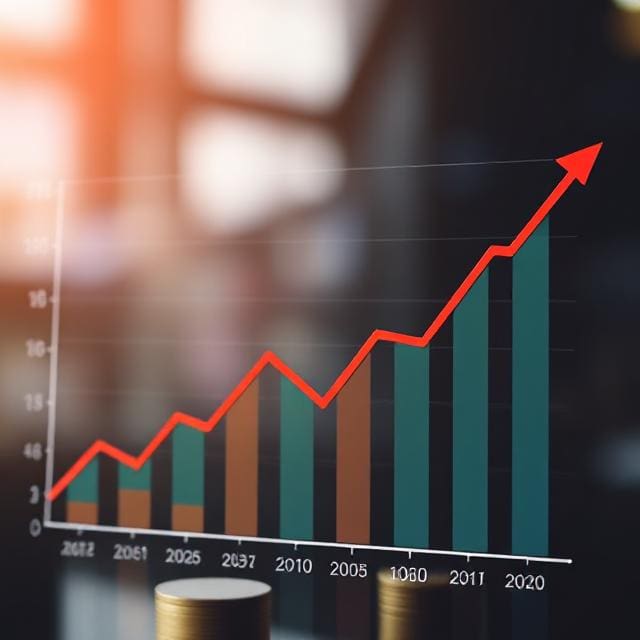
Economic confidence trend 2025: Shifting stability, but no substantial progress
During the first 9 months of 2025, the Economic Sentiment Indicator (ESI) displayed a volatile dynamic while maintaining a level above the historical average, a clear sign of relative stability. The early months of the year recorded slight declines in confidence, especially in January and April, driven mainly by the weakening of the industrial sector and the limited impact of construction and consumption. Although the indicator remained 6–8 points above the historical average, the changes were not sufficient to show a sustainable shift compared to 2024.
The monthly dynamic shows a clear divide between sectors: services and trade contributed positively to consumer confidence, while industry and construction remained sources of weakness and uncertainty.
This reflects a structural problem in the Albanian economy: growth is not based on productive and innovative sectors but relies mainly on services and trade, limiting the real impact of economic expansion.
When comparing these fluctuations with INSTAT indicators for the second quarter of 2025, it is observed that GDP growth of 3.5% is approximately the same as last year, supported by the same main sectors: services, trade, and construction. Industry and agriculture, which have the potential to provide a more sustainable contribution, remain disengaged.
Likewise, indicators for production, trade, retail sales, and services show minimal movement compared to 2024, confirming the absence of any significant change in the economic structure.
From a critical perspective, this shows that the Albanian economy has limited stability but has yet to produce a noticeable breakthrough that would genuinely impact citizens’ well-being. Growth remains dependent on the services sector and private consumption, while structural investments in industry and technology are insufficient to alter the long-term trajectory of the economy.
The forecast for the coming quarters suggests that without a strong focus on modernizing industry, promoting innovation and technology, and improving the labor market for youth and women, consumer confidence may continue to fluctuate, but essential changes in economic growth and its structure will remain scarce.
In essence, 2025 coincides with 2024: stability is evident, but transforming the economic reality into a more productive economy remains an unresolved challenge.

Leave a Reply
You must be logged in to post a comment.