


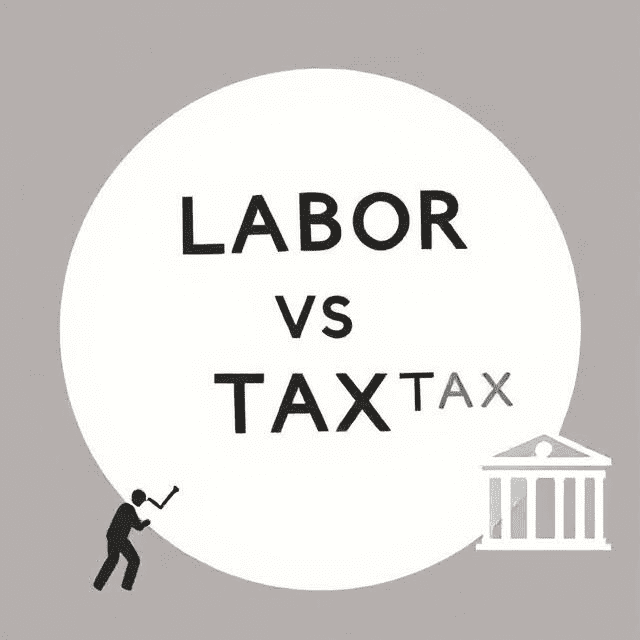
How do labor and capital taxation change in 2023–2024?
🔹 Labor Taxation
Labor taxation is one of the most significant sources of revenue for the state budget and has a direct impact on individuals contributing through their work. In 2023 and 2024, this type of taxation experienced a notable increase, meaning that working individuals are burdened with higher taxes—reflecting both rising income levels and a growing economy.
For example:
- Personal income tax increased by 15.1%, from 57.99 billion ALL in 2023 to 66.75 billion ALL in 2024. This rise reflects both higher individual incomes and broader tax coverage across diverse employment sectors.
- Wage taxation also rose significantly:
- Public sector wage tax revenues increased by 24.0%,
- Private sector wage tax revenues increased by 15.8%.
These figures indicate employment growth and rising wage levels but also a heavier burden on individuals who now pay more in taxes.
In perspective, labor taxes are particularly impactful for working individuals, as a large share of their income goes toward taxes. This directly affects their well-being by reducing disposable income and potentially increasing dependence on government services, while limiting consumption and savings.
🔹 Capital Taxation
Capital taxation is another important revenue stream, but it mainly affects those who possess wealth, investments, and income from capital sources—such as profits, dividends, rents, and interest.
For example:
- Corporate profit tax rose by 8.5%, from 54.98 billion ALL in 2023 to 59.71 billion ALL in 2024. This reflects higher business profits, but the increase may also be influenced by companies employing tax planning or avoidance strategies using various fiscal structures.
- Rental income tax grew by 10.3%, signaling an increase in real estate value and investment interest—particularly in major urban and coastal cities like Tirana and Durrës.
- Dividend and share tax declined slightly by 1.7%, possibly suggesting that investors are using legal structures or strategies to reduce or avoid dividend taxation.
Analyzing this, capital taxes tend to have a lighter impact on wealthy individuals who are better positioned to manage or optimize their tax obligations. Despite the profit tax increase, individuals with capital can still reduce their tax exposure through investments abroad or fiscal structuring. This creates inequities, as wealthier groups are more able to avoid taxes.
🔹 Labor vs. Capital Taxation: Key differences
One of the most critical differences between labor and capital taxation is equity and burden:
- Labor taxation is more transparent and directly impacts ordinary workers, often at a higher percentage rate, and is essential for funding public services like education, healthcare, and infrastructure. However, increased labor taxes can reduce individuals’ living standards, consumption, and saving capacity, especially for those facing debt or other financial pressures.
- Capital taxation, in contrast, is often more flexible and easier to optimize for those with wealth. This means that wealthy individuals and companies may pay less tax proportionally, despite higher capacities to contribute. This flexibility allows them to invest more freely, both domestically and internationally, further widening the wealth gap.
🔹 The distinction between labor and capital taxation is crucial for understanding Albania’s economic and fiscal dynamics. In 2023–2024, labor taxation increased significantly, placing a heavier burden on working individuals and reflecting higher employment income. This affects consumption and savings, creating economic pressure for many citizens.
On the other hand, capital taxation—while also increasing in profit and rental income—remains more flexible and avoidable for wealthier groups and businesses. This asymmetry can exacerbate inequality, as the affluent have more opportunities to minimize their tax burdens. A fairer and more balanced tax system should emphasize greater capital taxation, ensuring that all individuals and businesses contribute equitably to public services and national development

Leave a Reply
You must be logged in to post a comment.