


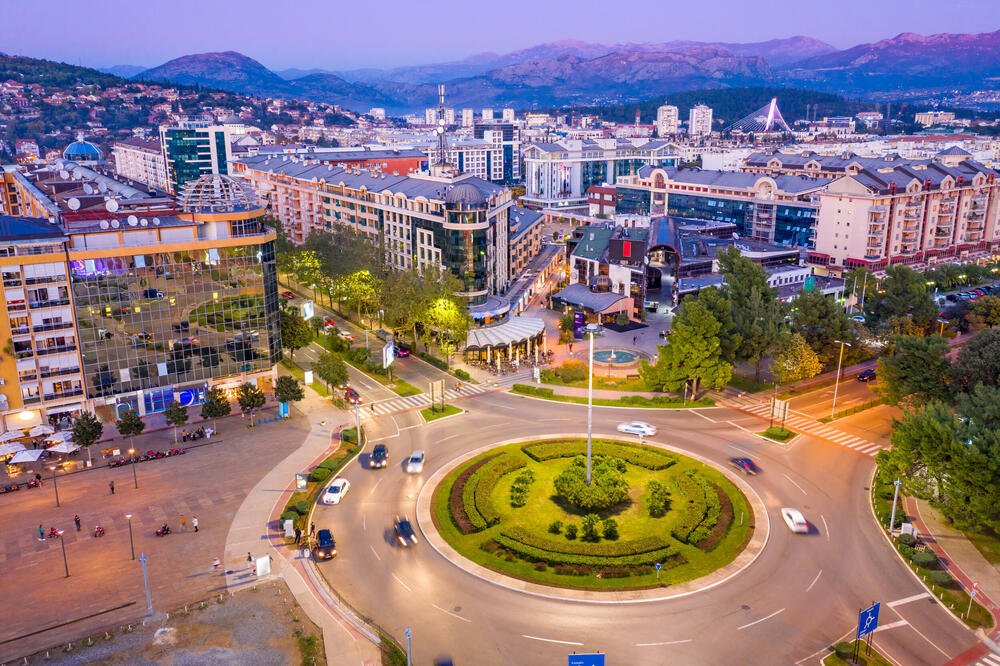
Macroeconomic and fiscal indicators of Montenegro in 2023
The economy grew strongly in 2023, by around 6 percent, the highest in BP6, driven mostly by tourism, which exceeded 2019 levels, and the inflow of immigrants continued to support private consumption[1]. In 2024, tourism growth is expected to moderate. The large influx in Montenegro of refugees from Ukraine and other foreigners has boosted private consumption, tourism, the real estate sector, the banking sector and employment.
If there is no further net inflow of immigrants and foreigners, consumption growth is also likely to slow.
Inflation has fallen from 13 percent in 2022 to 8.6 percent in 2023, narrowing the gap with Eurozone inflation significantly. Whether this trend will continue depends on the international commodity price environment and domestic wage pressures.
| Montenegro | |||
| 2021 | 2022 | 2023 | |
| Population, 1000 people | 6193 | 617 | 615 |
| GDP, real change in % | 13 | 6.4 | 6 |
| GDP per capita (EUR in PPP) | 15.460 | 17.580 | 18.980 |
| Average unemployment rate (in %) | 16.6 | 14.7 | 13.1 |
| Average monthly gross salary, EUR | 793 | 883 | 987 |
| Average annual inflation (in %) | 2.4 | 13 | 8.6 |
| Budget deficit (% of GDP) | -1.9 | -5.1 | -5 |
| Public debt (% of GDP) | 84 | 69.2 | 70.5 |
| FDI inflow, EUR mln. | 591 | 833 | 487 |
The external current account deficit has narrowed significantly to around 11 percent of GDP in 2023. FDI inflows to the real estate sector remain the dominant identifiable source of financing the current account deficit.
Positive developments in the labor market continued, with increased employment and labor force participation. These favorable trends in the labor market, where unemployment has fallen to the lowest historical level below 12% is a significant part of the new recruitment in the public administration, which is already overloaded.
The continued strong performance of tax revenues, temporary increases in non-tax revenues, and lower-than-budgeted spending helped bring public finances into surplus in 2023.
After a period of political instability, in October 2023 the country received its third government in three years. The new government, led by Europe Now!, the movement responsible for the 2022 tax reforms, has promised to implement an ambitious agenda in 2024. This will include increasing pensions, the minimum wage and average wages, and the employment drive complete – and all while reducing working hours. In addition, a number of structural reforms have been announced, ranging from policy reform for state-owned enterprises to a review of public infrastructure investment.
The implementation of all these measures will have an impact on both the fiscal balance and the broader economic outlook. The EU integration agenda has been billed as the new government’s top priority and it remains to be seen whether this momentum will be used to break the long deadlock in the membership process
[1] https://www.imf.org/en/News/Articles/2024/02/11/cs02122024-Montenegro-Staff-Concluding-Statement-of-the-2024-Article-IV-Mission


Leave a Reply
You must be logged in to post a comment.