


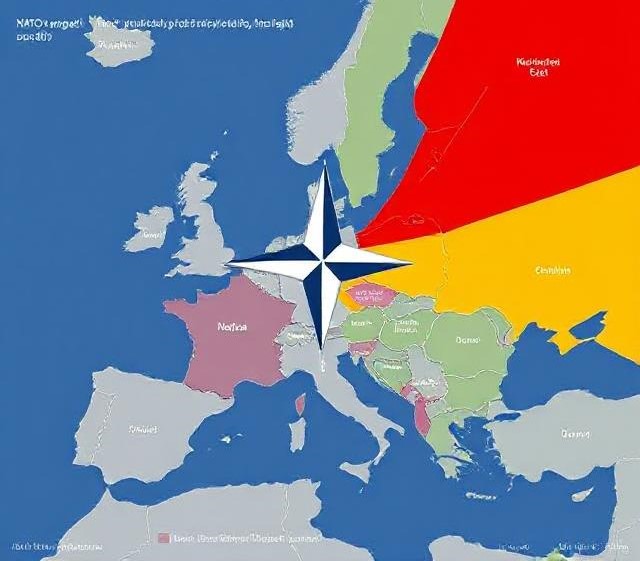
The impact of NATO’s new target on Albania’s medium-term budget and relations with the EU
The historic decision of the Hague summit and its strategic implications for Albania
The historic decision of the Hague Summit on June 25, 2025, which requires NATO member states to increase defense spending to 5% of Gross Domestic Product (GDP) by 2035, marks a fundamental shift in transatlantic security paradigms.
In this context, Albania, which has so far approached the previous 2% target, faces a significant budgetary, political, and strategic challenge. This new objective will require substantial changes, potentially creating tensions between the new NATO obligations and the expectations from the European Union.
Budgetary burden analysis
Based on the projected economic growth scenario from the Medium-Term Budget Strategy and calculations made by ALTAX, this increase translates into a considerable financial burden:
| Year | GDP (€ billion)* | Defense spending at 5% of GDP (€ billion) | Annual increase in defense spending (€ million) |
| 2025 | ~26 | 1.3 | Currently ~0.52 (2% of GDP) |
| 2027 | ~28.5 | 1.42 | +200 million additional per year |
| 2030 | ~31.5 | 1.57 | More than triple compared to 2024 |
* Calculations by ALTAX
To meet this objective, the defense budget must increase by an average of €150–180 million per year, putting significant pressure on public finances and requiring cuts or postponements in social, educational, and non-military infrastructure investments.
In the absence of increased public revenues through formalization of the economy and improved fiscal efficiency, this budgetary burden could result in delays or redirection of priority expenditures for social development.
Fiscal risks and financing Alternatives
Albania faces two main financing paths for this increase:
- Public debt risk: If the increase is financed primarily through borrowing, public debt could rise above 70% of GDP, jeopardizing fiscal sustainability and the government’s ability to fund other essential services.
- More sustainable alternatives: Cooperation through public-private partnerships, as well as aid, donations, and co-financing from the US and NATO, especially for infrastructure projects with dual civil-military use (e.g., military bases, strategic roads).
However, these funds will not be sufficient to fully meet the financial need, making a well-structured and closely monitored plan essential.
Implications for the EU accession process and a complex dynamic
While NATO has set the ambitious target of increasing defense spending to 5% of GDP, the European Union follows a more balanced approach focused on efficiency, coordination, and collective defense capability integration.
The EU strategy aims to avoid unnecessary competition among member states in high expenditures, promoting cooperation instruments such as the European Defence Fund (EDF), Permanent Structured Cooperation (PESCO), and initiatives for military technology and cyber defense innovation.
For candidate countries like Albania, the integration process requires not only increased spending but also alignment with EU standards on budgeting and transparency, demanding careful balancing between defense spending and social priorities.
In this framework, Albania should pursue a sustainable and well-managed modernization of its defense capacities, in line with EU requirements for effectiveness and fiscal control.
Potential concerns from the European Union
The considerable increase in defense spending in a developing economy may raise concerns in Brussels and EU institutions on two key fronts:
- Deviation from core integration priorities: The EU places clear focus on sectors such as education, healthcare, judicial reform, social protection, and sustainable economic development. A substantial allocation of resources toward defense might be perceived as weakening commitment to these areas, negatively impacting negotiations and progress assessments.
- Dominance of the military dimension in national policy: If military security priorities appear excessive relative to institutional and legal development, there’s a risk Albania will be seen as prioritizing NATO’s geopolitical dimension over the institutional and legal integration with the EU. This could cause diplomatic tensions and complicate relations with European partners.
This inevitable perception will require Albania to pursue transparent communication strategies and concrete actions that demonstrate balanced commitment to all dimensions of integration.
Strategic opportunity, a dual-purpose investment model
One of the most important opportunities for Albania in this dual challenge—rising military spending and EU integration—is aligning defense policies with European development and efficiency requirements. A smart and strategic approach would be to position defense spending as a direct contribution to European and regional security, viewing it not only as a military obligation but also as an opportunity for economic and social development.
In this context, Albania should seek support for investments with dual-purpose use. For example, roads and infrastructure built for military needs should also be used for rural development and improving access to isolated areas, creating dual impacts for national security and local economic development. This model, already supported internationally, can reduce budgetary pressure by making investment more efficient and sustainable.
Another strategic opportunity is active participation in European defense programs such as the EDF (European Defence Fund) and EDIDP (European Defence Industrial Development Programme). These instruments not only finance advanced technologies and industrial cooperation but also offer countries like Albania a pathway to modernize their capacities without excessive budgetary pressure. Participation would strengthen ties with European partners and increase Albania’s credibility as a serious contributor to collective security.
The need for fiscal flexibility and integrated strategy
Another key element is advocating for fiscal flexibility within the EU framework for countries contributing to regional security. By arguing that increased defense spending is a strategic contribution to Southeast European stability, Albania could seek special fiscal treatment from EU institutions, allowing for increased military expenditures without jeopardizing progress in critical social and economic reforms.
On the budgetary side, the pressure to raise military spending by an average of €150–180 million per year until 2030 will create strain on social and infrastructure investments, requiring careful management of priorities.
If this increase is financed mainly through borrowing, the risk to fiscal sustainability is high, requiring governments to find alternative co-financing mechanisms and international support.
Navigating between NATO and EU Commitments
From the EU integration perspective, the main challenge is maintaining a delicate balance between NATO obligations and EU expectations. Albania must position itself as a credible contributor to regional security without losing focus on the social, legal, and economic reforms essential for EU membership.
Therefore, it is recommended that the government redesign a National Defense Strategy 2025–2035, integrating military needs with social and economic development aspects.
A dual budgeting model, where investments are clearly separated between military capacities and dual-use civil-military infrastructure, would help manage transparency and efficiency. Additionally, close coordination with the European Union will ensure that increased military expenditures do not undermine fiscal reforms and social priorities. At its core, Albania’s main challenge is how to balance the financial pressure from strategic military needs with EU integration requirements for development and social stability. This calls for a prudent approach, long-term planning, and maximum use of international support mechanisms, ensuring the country does not stall between the two priorities but benefits from both in a sustainable and forward-looking way.


Leave a Reply
You must be logged in to post a comment.