


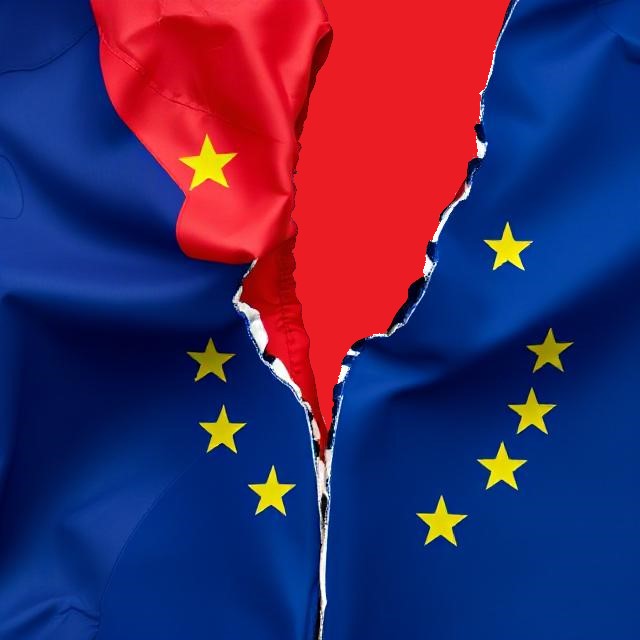
Structural gaps on the path to the EU
A critical analysis based on the IMF Framework on Regional Economic Development and Convergence with the EU
In 2024, Albania remains significantly behind the European average in terms of income per capita, particularly when measured by purchasing power parity (PPP).
According to the latest estimates, Albania’s income per capita accounts for only 30–35% of the EU average and is more than 60% lower than that of the United States.
This structural disparity is not merely a matter of lacking nominal economic growth, but stems from a profound lack of structural competitiveness, composed of three key productivity pillars: (1) total factor productivity (TFP), (2) capital intensity per worker, and (3) utilization of the labor force potential.
Structural Pillars driving the gap – Albania and the EU “Frontier”
1. Labor Market and Human Capital – An underdeveloped potential
The labor market structure in Albania continues to be fragile and with low participation. Women, youth, and the elderly face major barriers to employment integration due to the absence of active policies and social infrastructure (such as childcare and vocational training).
Meanwhile, the education system—especially vocational and technological education—is deeply misaligned with market needs.
This contrasts with EU countries such as Germany, the Netherlands, and Denmark, where dual education-employment systems are institutionalized and significantly enhance the match between supply and demand for skills.
For Albania, it is vital to focus on comprehensive labor market reforms, actively supporting professional retraining, increasing scholarships and programs in technology, and creating a social infrastructure that enables broader population participation.
2. Market Regulation and Business Climate – An environment that hinders competition
Albania faces a business environment burdened by bureaucracy, informality, and weak law enforcement. Permits, licenses, and delays in the judicial system deter serious investors and hinder the organic growth of domestic enterprises.
In contrast, EU countries have undertaken deep reforms to simplify procedures and ensure legal security for investors, such as the cases of Estonia or Poland after EU accession.
Reforming Albania’s business climate must go beyond rhetoric and focus on transparency, digitalization, reducing administrative discretion, and reforming economic justice, particularly in resolving commercial disputes.
3. Innovation and Digitalization – The technology gap
With less than 0.3% of GDP dedicated to research and development (R&D), Albania lags far behind European standards, where the average is around 2% of GDP, and countries like Finland and Denmark invest even more.
The lack of financial and infrastructural support for innovation has resulted in a private sector with no technological ambition and without the capacity to enter high value-added markets.
The Albanian state must act as a catalyst in creating innovative ecosystems—through national startup funds, public-private partnerships for scientific research, and favorable tax policies for innovative sectors.
4. Financial Markets – Lack of depth and access to Capital
Albania’s financial system is concentrated in commercial banks, with a lack of venture capital and organized markets for financing new enterprises.
This closure to alternative forms of financing makes it very difficult for small businesses to grow and innovate.
The EU, in contrast, is advancing with the Capital Markets Union project, which aims to increase access to financing for businesses across the continent.
Albania must develop new mechanisms such as digital platforms for crowdfunding, venture capital funds, and create a structured capital market for businesses that want to exit informality and grow.
5. Governance and Rule of Law – The missing foundation of development
Governance and rule of law indicators in Albania remain among the weakest in Europe, especially in the enforcement of judicial decisions, the fight against corruption, and the effective functioning of public administration.
These are key elements to ensure business and societal trust.
Nordic countries and the Netherlands offer the model of a consolidated rule-of-law state, where transparency and accountability are natural parts of the system.
Albania must focus on building independent institutions, strengthening oversight mechanisms, and increasing the transparency of decision-making processes, including public procurement and judicial appointments.
Fiscal-Structural gaps – An unfair and inefficient System
Albania’s fiscal system is characterized by a regressive structure, where the greatest tax burden falls on low incomes and basic consumption.
Moreover, tax exemptions and the lack of true progressivity have reduced the system’s effectiveness in redistribution.
In contrast, many EU countries have shifted toward taxing harmful consumption and investing in high-productivity-impact public projects.
Albania must adopt a fairer and more efficient approach to revenue collection and allocate those revenues toward investments in infrastructure, education, and healthcare—areas with the highest impact on equity and economic growth.
According to the IMF, if structural reforms are implemented in a deep and consistent manner, the economies of the Western Balkans could benefit from an additional growth of around 9% of GDP in the medium term.
For Albania, this would translate into a cumulative increase of €1.5–2 billion in real GDP over the next 5–7 years.
However, these benefits are not automatic—they depend on political will, administrative capacities, and the real inclusion of the private sector and civil society in the reform process.
Synergy with the EU – But the Road is not One-Way
The EU integration process should be seen as an opportunity to accelerate reforms, not as a goal in itself.
Domestic structural reforms are complementary to EU integration processes, such as capital market unification and the expansion of the single market.
Albania can benefit more from the EU if it builds an economic structure that is ready to operate at the same pace, under the same rules, and with the same standard of accountability.
Albania stands at a critical crossroads in its economic development.
Bridging the income gap per capita is not impossible, but it requires a profound change in how the country thinks, plans, and implements economic policies.
European integration is a chance, but internal reform is the indispensable condition to move toward the European development “frontier.”


Leave a Reply
You must be logged in to post a comment.