


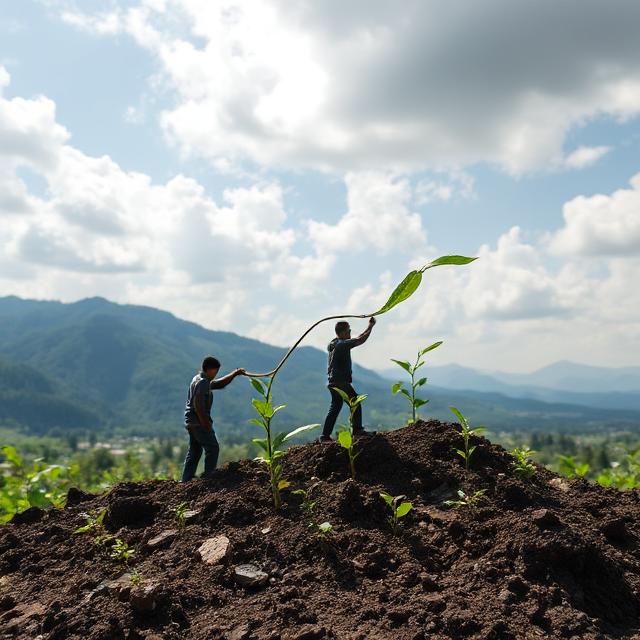
Steady growth, but tomorrow’s challenge requires action
In a typical morning in Tirana, a small shop sees an increase in the number of clients and new buyers. This is one of the real faces of an Albania that, in 2025, is experiencing economic growth of around 3.5%, according to INSTAT data. Although the figures appear promising, the economy has not yet fully leveraged the potential of public investments. Infrastructure projects (roads, schools, hospitals) have begun to have an impact, but their full effect is expected to be felt in the coming years, while many are still in the implementation phase.
The labor market is gradually improving. The unemployment rate has fallen to 8.5%, indicating that more citizens are finding sustainable employment opportunities. However, many young people and women still face challenges entering the labor market with sufficient skills, showing that the workforce’s potential remains underutilized in terms of real economic growth.
Inflation, kept below 3% (2.3% in August 2025), is an indicator of price stability and the credibility of monetary policy, but this does not hide the fact that, to fully exploit investment opportunities and stimulate stronger growth, additional measures are needed to increase productivity and innovation.
In this context, Albania demonstrates that it can move forward even under challenging conditions, but the path to sustainable long-term growth requires that the investment projects reach their full potential and be combined with policies that empower the labor market and promote innovation.
In a small town in Albania, a factory filled with modern machinery is still partially in use. Its owner sees the full potential it could achieve if there were more trained workers and greater support to sell products abroad. This example shows the real face of the Albanian economy in 2025: growth exists, investments are being made, but their full impact has yet to be felt.
Albania remains a country where the economy relies mainly on services and retail trade, especially construction and seasonal tourism. This makes the country sensitive to economic fluctuations and limits opportunities for sustainable development. A portion of the workforce, especially young people and women, is not finding space to reach their full potential, while the lack of qualified professionals prevents firms from innovating and growing.
However, this is not a permanent limitation. Investments being made, whether in infrastructure, technological, or industrial projects, have the potential to transform the economy. But to harness this potential, Albania must change direction: move beyond reliance on services and retail and invest in manufacturing, innovation, and projects that deliver quick and tangible returns for citizens.
If action is taken now, by improving education, vocational training, and creating an environment that encourages entrepreneurs and innovative firms, today’s economic growth can turn into sustainable long-term development. Any delay, however, risks losing opportunities, while other regional countries advance faster toward production- and innovation-based economies. Albania has potential, but it must make the right choices now to avoid falling behind.
The 2025 budget targets a deficit of 2.6% of GDP and a reduction of public debt under 55%, a clear indicator of the government’s effort for careful fiscal management. But the true picture goes beyond numbers: to ensure long-term stability, keeping debt under control is not enough. The government must create policies that increase productivity and promote sustainable economic development.
In 2026, expectations are that the deficit will approach a lower level, around 2%, while public debt is expected to gradually fall to around 54%. This next step aims to boost investor confidence and create room for new development policies. However, the real impact of these measures will depend on the country’s ability to support new entrepreneurs and expand labor market participation, especially among women and youth.
In this context, fiscal policies should not merely be tools to balance numbers. They must be instruments to promote sustainable growth, innovation, and the development of high-value industries. Only if the government combines fiscal control with concrete support for businesses and the workforce can Albania fully exploit the potential of investments and create a stronger, more sustainable economy for the coming years.
Ultimately, Albania’s growth story cannot be measured solely by quarterly statistics or budget figures. It is measured by the decisions made today to transform the country’s potential into real results for citizens. Every investment in youth education, every incentive for women’s labor market participation, and every support for innovative entrepreneurs are cornerstones for an economy that is not merely based on services and retail, but on production, technology, and innovation.
Economic growth is visible and tangible in more cities and villages across the country, but this should not lead to complacency. Tomorrow’s challenges, better redistribution of economic growth, an aging population, lack of qualified professionals, and the untapped potential of investments require immediate action. Only through sustainable reforms, smart investments, and policies that support citizen creativity and initiative can a prosperous and sustainable future for Albania be ensured. Any delay in action is a missed opportunity.


Leave a Reply
You must be logged in to post a comment.