


Public Debt Dynamics in Albania (2015–2025)
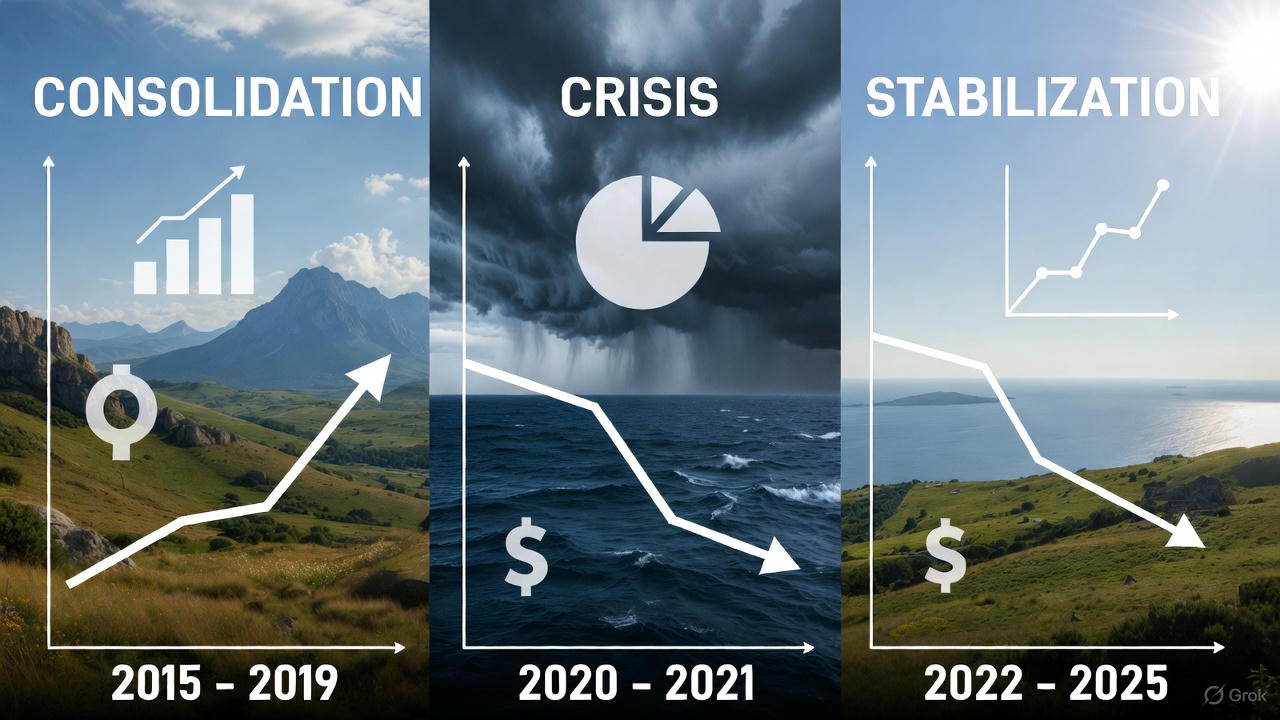
Over a tense decade, Albania’s public debt experienced a cycle marked by growth, crisis, and stabilization, reflecting the challenges faced by developing countries with limited fiscal capacity. From 72.1% of GDP in 2015, the debt-to-GDP ratio peaked at 74.1% in 2021, before gradually declining in subsequent years, with projections indicating 53.5% in 2025. This process can be divided into three main phases: consolidation (2015–2019), crisis (2020–2021), and stabilization (2022–2025).
Consolidation Phase (2015–2019)
During this period, the economy recorded steady growth in nominal GDP, from 1.44 trillion lek to 1.71 trillion lek, while the public debt stock remained almost constant, rising slightly from 1.04 trillion to 1.11 trillion lek. As a result, the debt-to-GDP ratio gradually declined from 72.1% to 64.9%. This trend was supported by an average real GDP growth of 3.7% per year, controlled new borrowing following financial management reforms, and moderate depreciation of external debt due to the strengthening of the lek. The debt structure remained balanced: domestic debt accounted for 35–38% of GDP, while external debt was around 30%, reducing currency risk and ensuring financial stability.
Crisis Phase (2020–2021)
The COVID-19 pandemic and the 2019 earthquake caused a sudden surge in public debt, from 65% to 74% of GDP, with the stock rising from 1.11 trillion to 1.38 trillion lek. This was the largest nominal increase in debt in the decade and represented a structural shift in the country’s fiscal profile. Key factors included emergency expenditures for reconstruction and economic support, pushing the budget deficit above 6% of GDP, alongside a nominal GDP decline in 2020. External debt increased sharply to 36.5% of GDP, reflecting access to international financing sources, while domestic debt stabilized at 37–38%.
Stabilization Phase (2022–2025)
After 2021, public debt entered a steady downward trajectory, supported by strong nominal GDP growth (from 1.87 trillion to 2.62 trillion lek by 2025), keeping the deficit below 2% of GDP, and fiscal consolidation policies. The debt-to-GDP ratio fell to 57.6% in 2023, 54.2% in 2024, and is projected at 53.5% in 2025, representing a decline of over 20 percentage points from the pandemic peak. The composition remains stable: domestic debt around 31% and external debt 22–23%, reflecting portfolio diversification and reduced currency risk.
Assessment of Sustainability and Policy Implications
The decline in the debt-to-GDP ratio is positive, but long-term stability depends on three factors: real GDP growth above 3.5%, borrowing costs, and maintaining a modest primary surplus. If these conditions hold, public debt could stabilize at 50–52% of GDP by 2027. However, economic slowdown or new fiscal pressures could push the ratio above 60%.
From Nominal Stability to Real Sustainability
Although the debt-to-GDP ratio has fallen, this is primarily due to nominal GDP growth rather than an actual reduction in the debt stock, which increased by 35% while GDP grew by 81% from 2015 to 2025. Achieving real sustainability requires policies focused on gradual reduction of external debt, lengthening the maturity of domestic debt, and restructuring capital expenditures to generate tangible economic growth. Only through these measures can Albania move from nominal stability toward genuine public debt sustainability


Leave a Reply
You must be logged in to post a comment.