


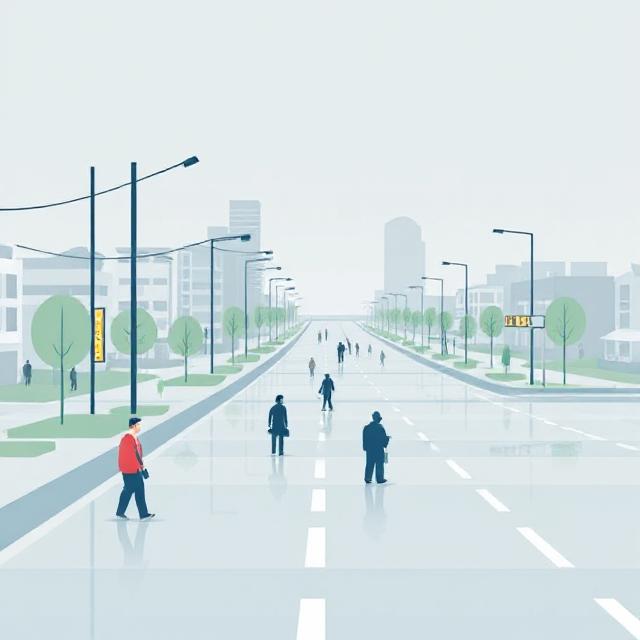
Population decline as an invisible obstacle to “Albania 2030”
If we were to look for a single indicator that accurately reveals the entire structural fragility of Albania on the brink of its European transformation, it would be the continuous and systematic decline of the population.
What initially might have been interpreted as a transitional demographic cycle has now turned into a multidimensional crisis that strikes at the roots of national development and prospects.
At the center of this crisis lies the fact that the country is losing not only numbers but, above all, the people who could be the bearers of reform, supporters of the state, and creators of the future.
Data published by INSTAT on January 1, 2025, ring a long-lasting alarm bell.
The resident population of Albania has decreased to 2,363,314 inhabitants, with an annual contraction of 1.2 percent. This decline does not occur due to a single reason but consists of a combination of two parallel developments: a positive but minimal natural increase (+1,208 more births than deaths in 2024) and a still deeply negative net migration (-28,836 people).
These two factors, interconnected with each other, are shifting Albania toward a demographic profile increasingly incompatible with the strategic objectives of development and integration.
Structural aging and burdens on the active population
One of the most visible dimensions of the crisis is the rapid aging of the population. The median age has risen from 43.5 to 44.3 years, confirming that Albania is not only a shrinking society but also an aging one. This process is accompanied by a significant increase in the old-age dependency ratio (from 31.1% to 33.3%), which translates into greater burdens on the pension system, social insurance, and public expenditures.
The overall dependency ratio has already reached 57.1%, meaning that for every 100 people of working age, there are nearly 60 who are economically dependent. This is an unprecedented situation for a country aiming to accelerate integration into the European Union and benefit from the Western Balkans Growth Plan.
Even more concerning is the deviation in the gender ratio at birth, which has reached 107.8 males per 100 females, suggesting a possible impact of gender preferences at birth and long-term consequences for social balance.
Urban concentration and territorial abandonment
Only the Tirana district recorded a slight population increase of 0.2%. All other districts registered declines, with the largest in Shkodër (-2.5%) and Kukës (-2.3%). This division deepens another aspect of the crisis: the extreme concentration of population and development in a limited territory, while the rest of the country moves toward depopulation.
Tirana today accounts for 32.2% of the country’s total population, a disproportionate concentration that creates significant stress on urban infrastructure, public services, and social cohesion.
Districts such as Fier (9.9%) and Elbasan (9.6%) still retain considerable weight but are also exposed to internal migration dynamics and aging.
This reality, divided between overcrowded centers and abandoned peripheries, produces an asymmetric development model that contradicts the sustainable development principles promoted by the EU through the Green Agenda and the Territorial Cohesion Strategy.
Economic impacts, a self-reinforcing cycle
Inevitably, this depletion of human capital creates a self-destructive cycle in the economy. The lack of labor force directly affects productivity and growth capacity. Sectors such as agriculture, construction, and services increasingly face shortages of qualified workers. Both domestic and foreign investors face an unclear and often uncertain horizon for the long-term realization of their projects.
The pension system is under pressure and will become increasingly dependent on public financing. This means more taxes on a shrinking number of contributors and fewer benefits for an increasingly aging population. Without structural interventions, the Albanian economy risks stagnating in a concentrated model dependent on remittances, lacking internal development potential.
A challenge for the state and the European project itself
Institutionally and socially, this reality limits the state’s capacity to provide public services equally. In remote areas, the lack of population leads to school and hospital closures, while in urban centers, population growth exceeds existing infrastructure capacities. In both cases, the losers are the citizens.
This situation calls into question the sustainability of the “Albania 2030” project and the practical meaning of European integration.
The Growth Plan proposed by the EU foresees significant financial support, but this can only be absorbed if Albania has the administrative and human capacities to implement it. Here lies the greatest risk: the lack of people able to implement these reforms, maintain public services, and design and carry out investments in strategic sectors.
Albania faces a historic test
Albania no longer has time to proceed with reactive strategies. This is a time for a national strategy on population and human capital, which must include:
- Bold policies for the return and integration of the diaspora;
- Initiatives to stop youth migration and create conditions for them to stay;
- Reform of the economic model to balance territorial development;
- Sustainable investments in education and youth employment;
- Functional and budgetary decentralization to revitalize areas outside Tirana.
If urgent and comprehensive concrete measures are not taken, Albania will remain only a note on paper, where any progress in European integration will be an illusion without substance.
A country without a sustainable population and active youth is doomed to lose its sovereignty, development, and place in the Europe of the future. Demographic depletion is not just a statistical problem but the greatest threat to national existence and sovereignty.


Leave a Reply
You must be logged in to post a comment.