


Performance indicators for public administration, political patronage and action plan adopted to fight corruption
In the implementation of the reform, the government in these 10 years[1] has aimed, according to
the strategy for the administration[2], to strengthen performance indicators in addition to technology. In its history, the DPA (alb. DAP) under the governing program for over the last two terms has tried to (1) reduce the civil service to make it more affordable and to bring it into line with a new, reduced role of government in the activities economic; (2) provide civil servants with appropriate incentives, skills, and motivation; and (3) improve management and accountability based on transparency.
According to the public administration reform strategy for the period 2015 – 2020, it is intended to “serve as a planning and monitoring instrument with the aim of creating an administration:
– stable and able to face the country’s development challenges and EU membership priorities.
– to offer an innovative governance as in the professionalism of its employees, in the improvement of the policy-making process and the drafting of legislation, in the efficient organization of structures, increasing the responsibility of employees, transparency in activity and improvement of services to the public.
In a long-term perspective, it is aimed to:
– increasing the sustainability of public administration employees, through the rigorous
implementation of the procedures defined in the legal framework in force, strengthening capacities through in-depth and continuous training of central and local public administration employees, especially in the field of improving skills leader.”
If we look at the number of employees in budget institutions in 2013 it is 87,710 employees, while in 2023 the number of employees in budget institutions is 84,762 employees, with a decrease of 2,948 employees[3].
Although the number of budgetary employees is in a slight decline, especially for the central government as well as for the local government, the long-term planning of the amount and budgetary cost of employees is necessary to come as a concussion based on comprehensive thematic studies, where the numbers of budgets should reflect at least demographic developments, but also other weighty elements that constitute the main indicators of a decent labor market.
In the monitoring of public administration reform by civil society organizations[4], it is reported that it is still necessary to achieve high standards of transparency, accountability and inclusiveness in the policy-making process, as well as the technical complexity and inter-institutional coordination necessary to achieve them.
Meanwhile, in the 2022 report of DPA[5], it is found that in the general analysis of the progress of the measures, as well as in the objectives set for 2023, it is found that a good part of the objectives for quality, sustainability, efficient organization of the administration and transparency still have non-compliance, as mentioned in the 2022 performance report of HSA (alb. KLSH)[6].
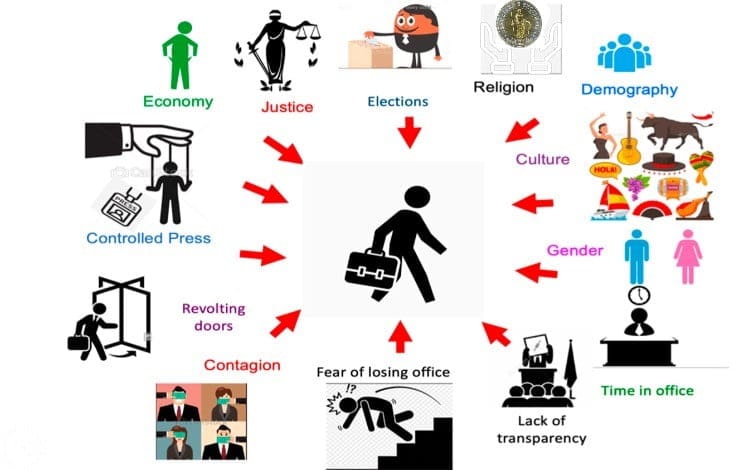
Despite the introduction of consolidated rules for the civil service, in practically all institutions, politicians (mainly part of the current majority) retain some discretion (freedom of action) in this selection process.
This flexibility may allow politicians to select individuals deemed capable and motivated to do the job, even though the law may be susceptible to patronage. But there are enough cases reported by the media and the whistleblowers themselves that positions in the public sector can be used to reward political supporters of the ruling party[7].
Even an innovation in the public administration, the recruitments in leadership positions of institutions are carried out in an incomplete and responsible manner, resulting in many senior managers having a dark ethical and even criminal past.
In these appointments, political support is the main criterion, which replaces quality/meritocracy. After such appointments at the local level there are also denunciations of nepotism, it is certain that political patronage is activated as a potentially key obstacle to efficient recruitment, merit-based motivation and performance of public sector employees. Although accounts of this phenomenon are common, we have little systematic evidence on the role of patronage in public employment selection.
But is patronage affecting the employment of meritocrats and administration?
Is the administration reform progressing in sync with digitalization and the anti-corruption program[8]?
The uniformly harmful effects of corruption in the public sector have made the fight against its a priority for policy makers, as much as an absolute priority of the institutions of the special anti- corruption prosecution with a historical support for Albania in aid of national integrity and security.
In this national priority comes the logic of the activity of a certain part of civil society organizations in the orientation of their efforts based on expertise to ensure that, if all of us are involved in a coordinated manner with the anti-corruption mission to a) report procedures not as prescribed by law, b) expose corrupt activities and risks, which may otherwise remain hidden, c) keep the public sector honest, transparent and accountable, d) the demand for accountability for not keeping political promises, then we have managed to influence the present and the perspective of minimizing political corruption.
The strategy and action plan adopted to fight corruption[9] is seen to be related to the way its underlying causes are conceived. Many anti-corruption initiatives are designed to reverse the trend of corruption. However, the weak coordination and cooperation of the institutions, as well as poorly organized resources have resulted in poor fulfillment, where the perceived level of corruption[10] is still at stubborn levels of resistance to the measures in force.
[1] https://www.dap.gov.al/images/raportetvjetore/DAP_Raporti_Vjetor_2013_.pdf
[2] https://www.dap.gov.al/publikime/dokumenta-strategjik/64-strategjia-ndersektoriale-e-reformes-ne-administraten-publike- 2015-2020/
[3] https://financa.gov.al/buxheti-ne-vite/
[4] https://idmalbania.org/wp-content/uploads/2021/11/WeBER2.0_Monitorimi-RAP-Shqiperi_2019-2020_ed.pdf
[5] https://www.dap.gov.al/images/raportetvjetore/2023-03-27_DAP_Raporti_Vjetor_2022.pdf
[6] https://drive.google.com/file/d/1XZ-FR__lyBJ5dbFUzELEychi6OX8FpZX/view?usp=drive_link
[7] https://www.reporter.al/2021/04/19/nepunes-police-dhe-ushtarake-ne-listen-me-mbi-9000-patronazhiste-socialiste/
[8] https://www.drejtesia.gov.al/wp-content/uploads/2021/04/1.-PLANI-I-VEPRIMIT-ANTIKORRUPSION-2020-2023_AL.pdf
[9] https://www.drejtesia.gov.al/strategjia-ndersektoriale-kunder-korrupsionit/
[10] https://altax.al/renditja-e-shqiperise-sipas-indeksit-te-korrupsionit-1999-2021/

Leave a Reply
You must be logged in to post a comment.