


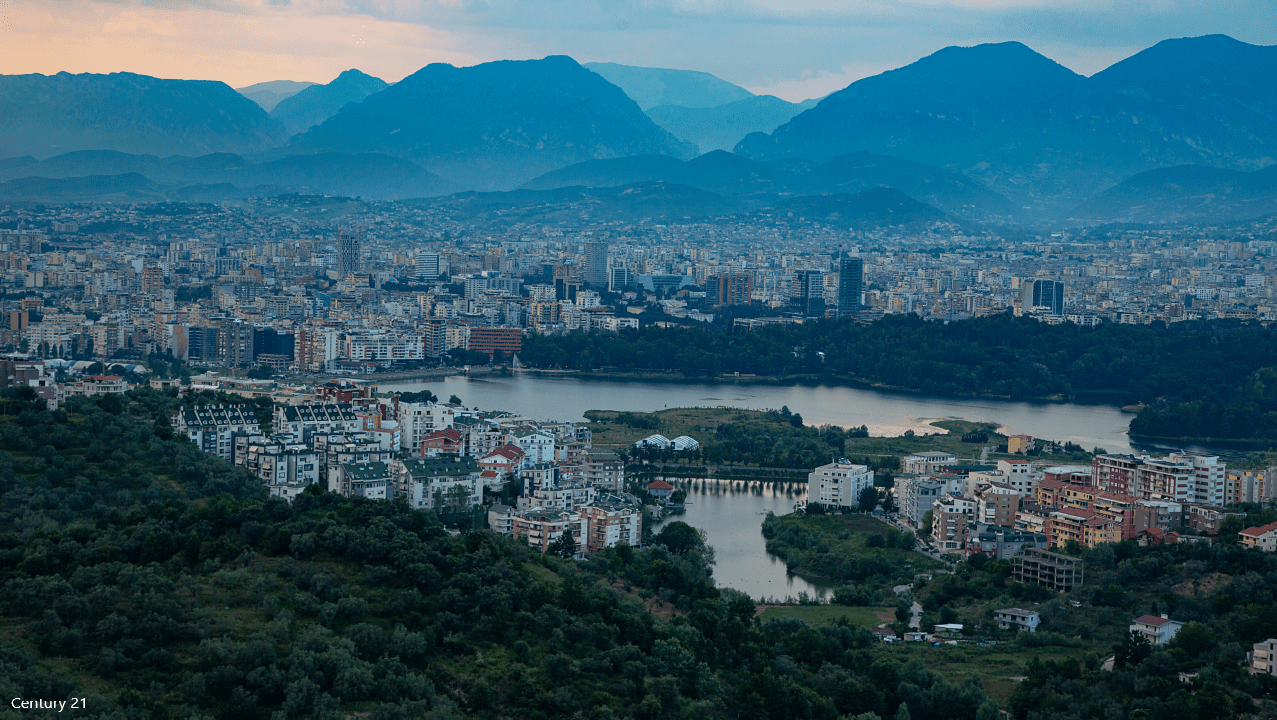
Housing prices and their affordability by Albanian families
The housing construction sector has an important role for family stability and income growth. Based on this role, increased attention is needed for developments in the sector not only from entrepreneurs/developers, but also from the public sector as a whole for economic and regulatory policies, including flexible tax policy. Housing wealth is seen to have greater effects than other wealth and is closely related to consumer spending, for the security it provides at the family or personal level.
Due to real estate’s enduring impact on living standards, development, housing and land use policies and housing developments should require broad cross-party consensus and a deeper transparency of the sector’s funding sources.
In order to avoid the harmful effects of the general balance and due to the limited public resources, the regulatory policies on the land and the construction process with all its constituent elements should be targeted with the care that this well-developed market deserves to have in the years The last.
It is a fact that housing prices[1] are growing faster than incomes in the country, reducing the level of savings of middle-income families, but also causing social dissatisfaction in the category of low-income families, which should benefit from local social housing policies.
In the initial analysis of construction cost elements, let’s first look at the performance of the Residential Construction Cost Index[2].
For the period Trem.4 2020 to Trem.4 2023 it can be seen that the increase is 14.8%[3].
Secondly, when we look at the performance of the part of the built-up area, which is paid as a cost by the construction developer to the owner of the building plot for the same period as above, it turns out that there is a slight annual increase, on average 2% to 4% , starting from the reference of land and plot prices in 2016[4].
In the first 6 months of 2024 there is an expectation of an increase in the reference value of the land by at least up to 5% more than the current market.
At the same time, let’s also look at the development of housing sales prices.
Based on these main elements that make up the main parts for the sale price of housing, according to a previous analysis by ALTAX, they have shown an average reference increase in sale prices in Tirana up to 23.8% for the period 2018-2023.
But, in the reality of the Albanian market, where the real house sales prices are used, the increase in prices mainly for Tirana and the suburbs for the year 2023 ranges from 11% to 31%[5]. The smallest increase is in the central areas where prices have increased year after year by an annual average of 9% for the last decade[6].
From the comparison between the total cost for the construction of the apartment and the real sales price, a positive average difference of 13% can be seen, which can be considered as the part of the profit that should be taxed.
Although the balance sheet of a construction company summarizes many other elements that are included in the fixed cost, the difference above is only indicative of a market reality, based on the indicators presented above.
What can be the government’s policy regarding this market?
Housing prices are determined by a combination of factors, both on the demand side (such as income and wealth, financial conditions and demographic developments), and on the supply side (such as the availability and condition of housing units).
Higher interest rates and greater uncertainty have increased the cost of capital and put upward pressure on elevated sales prices, including primarily housing [7].
The real estate market plays an important role in macro-financial developments through
its connections in several directions (the price of housing, the availability of banks for loans, the state of the economy outside of construction, especially with the impact of inflation and the 16% devaluation of the Euro and other foreign currencies by 2023).
Given this large influencing weight of the real estate market we see a need to link together three parts that affect household welfare (real house prices, household disposable income and real private consumption)
Thus, according to data from INSTAT and investigative media, for the average of the last 5 years (2018-2023):
– The increase in housing prices is 28.3%
– The increase in gross disposable income is 28.3%[8]
– The increase in the final consumption of the population is 9.1%[9]
In this connection between the three indicators above, it can be seen that the increase in housing prices and gross disposable income should stimulate consumption by increasing the level of income and wealth of families.
The evaluation results confirm the significant impact of real estate and income growth on consumer spending, but this logic is not functional for Albania as it talks about an increase in disposable income up to 50 Euros in 5 years.
Of course, such an increase in average disposable income indicates the situation for more than 70% of families living on work and remittances. An expectation to enable the purchase of real estate for this part of the population should also be the lending policy accompanied by the easing of borrowing restrictions, especially for short-term loans. In the publication of the Bank of Albania on the lending trend in 2023[10], it is mentioned “…slowing down the growth rates of housing loans and why there is an increase in consumer loans.”
According to Forbes “People usually take out these types of (consumer) loans because they have a hard time paying their bills. They borrow to pay for health care, for a new car they need to get to work, and to cover their expenses as they face family emergencies. People generally do not borrow money for fun, but because they have little savings for emergencies. Rising consumer debt reflects increasing financial strain on many households. Consumer debt is the pressure valve when squeezed by high costs, low incomes, or a combination of high prices and low incomes.” [11]
In fact, our experts confirm this reality after finding that the increase in consumer debt has gone along with the drop in liquid savings after an initial blow related to the internal problems of the Albanian economy, also influenced by external crises[12]].
The state of property markets and consumer spending are closely related to changes in the effects of income on private consumption.
Real estate holdings are today the main determinant of family wealth, just as in Europe.[13]
However, the rapid increase in housing prices in recent years raises concerns about the affordability of housing purchases by families with incomes from middle and low incomes.
The price ratio to the income of a family with two working adults for an average apartment (up to 90m²) [14] is a widely used indicator of affordability for the potential purchase of an apartment.
In 2023, the average selling price for a house for a family in Tirana was 5.6 times higher than the average household income. This indicator for a low-income family was 9 times higher. If we apply the ratio to other cities of the country, this ratio reaches up to 1.8 times higher for families with average income and up to 2.5 times higher for families with low income
This ratio has increased by at least 1 times in the last decade.
From the level of this ratio, we understand that the higher it is, the fewer the chances of getting a low-cost loan, since the lending conditions are based a lot on the family’s income, in addition to the criteria for guaranteeing the loan with collateral [15] from the borrower family.
In a context, that the affordability to buy an apartment from a middle-income family should have the ratio indicator up to 2.6 times. This means the salary level should be double the current level, i.e. over 150,000 ALL/month for a family member or over 3.6 million ALL family income per year.
Meanwhile, for low-income households, the affordability to buy a house of a similar area would need the wage level to increase by 3.8 times the current minimum wage level.
This salary increase in Albania is part of the increase in added value, which is created by the increase in productivity of Albanian businesses, both in tourism, but also in other sectors, as a combination of demand and supply factors of the labor market.
On the demand side, policy support should stimulate sustainable income growth by allowing financing conditions with low interest rates or less than half of the banking market. This new policy of financial support from the public sector should be aimed as soon as possible to subsidize favorable financing sources at a time when many families are looking for more space in the real estate market.
On the supply side, restrictions on new construction in areas where the cost of construction is high should be analyzed to increase the number of properties available on the market at precisely affordable prices for middle- and high-income families. ulta.
Another important indicator to consider is the level of affordability of housing expenses (renting). From a calculation with the same types of families as in the cases above, it results that families with an income from the average wage spend up to 30% of their annual income on housing, including costs such as rent, common services and maintenance.
For low-income families, housing costs reach up to 50% of their annual income.
While this housing cost of families shows the financial burden of housing, for families with lower incomes, dedicated social policy is needed by the municipalities and the central government to analyze the dimensions of the situation and the costs that should be borne at the optimal time from the budget of taxpayers
While financial risks remain present in the market, due to an economy that circulates not only physical money outside of banks, but also has not reduced the level of informal money circulation[16] is a very strong reason for organizing an in-depth and multi-directional study to guide housing policies for all classes and ages.
The affordability of households to buy an apartment should already be a policy concern, as prices have resumed their upward march in 2024 after the brief pause at the end of 2023[17].
Keeping interest rates high and the lack of low-cost financing, including a very limited policy with unfulfillable criteria for the majority, would worsen affordability, further increasing the costs of mostly young families.
Also, an increase in the net income of families, looking at it from the point of view related to the affordability of housing prices, would require a discussion based on real facts and a joint commitment in the form of a new Social Contract between the government and citizens to promote another higher standard of living based on well-being that should come from policy optimization based on reforms and new political will.
In fact, apart from the political will, which should not be discussed, there are several other reasons that affect the possibilities that families have to solve the housing problem. Government policies have the main role in this direction, as it is the duty of the institutions not to allow the growth of income inequality, since it seems that at least in the last three years the growth of low and middle incomes needs high growth and not what it is currently.
But the lack of automation of the economy and insufficient investments from the state budget and businesses related to research and development, in function of increasing the productivity of marketable goods produced and services is another responsibility not addressed as well as it should be.
“Real estate is the ultimate non-tradable good (Bardhan et al., 2004) and in this context, construction is usually dictated by the land and the area where it is built. Therefore, a kind of “cost sickness” (Baumol, 1993) partly lies behind the increase in housing expenditure percentages (Albouy et al., 2016).”
In the case of our country, informality has a sufficient influence together with dirty money to distort the cost / profit ratio. Moreover, the tax base for housing policy is not broad enough due to low incomes and the extent of the informal economy.
Meanwhile, increasingly complex and unenforceable policies and regulations also due to their incompatibility with the real conditions of doing business in Albania, adding to the aggressiveness of local taxes in Tirana and some coastal cities create new housing buildings with a density of high, which adversely affects the quality of the environment and housing. In attractive cities, land values have escalated and low-priced houses are almost impossible to build anymore. Let’s not forget that the level of corruption, on the other hand, goes in the same direction of growth as the non-implementation of construction standards is allowed.
Preliminary analysis suggests that an increase in government spending on social housing benefits should be accompanied by an increase in housing affordability. The effects are significant over a several-year horizon after increased government spending.
Expenditures for the development of social housing have a positive effect, but the size is smaller and the impact is not significant if it is not harmonized with the policy to increase wages based on productivity. These results may reflect the fact that spending on housing benefits may have a more direct effect on improving housing affordability by directly reducing borrowing costs.
Solving housing affordability problems requires a combination of economic growth, local productivity-based entrepreneurship to increase the value of businesses, and assistance to improve household conditions.
Integrated local and national policies are critical to empowering families, communities and real estate developers. The central and local government needs to address through the policies that must be implemented by the institutions under their jurisdiction, a fair redistribution of the resources in the administration to balance the purchasing power.
Incompetence, corruption, clientelism and partocracy must not have the controlling package in these decision-making and policy-making.
[1] During 2023, housing prices across the country increased by 11.6%, while for the capital by 13.3%.
[2] The Construction Expenditure Index (for Dwellings) measures the price performance of construction materials, labor and other capital expenditures used in the construction of a typical dwelling (8-10 floors).
[3] https://www.instat.gov.al/media/13072/indeksi-i-kushtimit-në-ndërtim-për-banesa-tr-4-2023.pdf
[4] https://atp.gov.al/wp-content/uploads/2023/08/vkm-nr.89-date-03.02.2016-per-miratimin-e-hartes-se-vleres-se-tokes_compressed-1-compressed.pdf
[5] https://www.monitor.al/cmimet-e-apartamenteve-ne-kryeqytet-shtrenjtohen-deri-ne-30-brenda-nje-viti-kryeson-periferia/
[6] https://www.monitor.al/cmimet-e-apartamenteve-ne-tirane-jane-rritur-me-66-nga-2005-a-2/
[7] https://www.imf.org/-/media/Files/Publications/WP/2023/English/wpiea2023256-print-pdf.ashx
[8] https://www.instat.gov.al/media/13063/anketa-e-të-ardhurave-dhe-nivelit-të-jetesës-në-shqipëri-silc2022.pdf
[9] https://altax.al/inflacioni-konsumi-rritja-ekonomike-dhe-ndikimet-ne-2024/
[10] https://www.bankofalbania.org/rc/doc/Tendencat_ne_kreditim_tetor_2023_shqip_WEB_25666.pdf
[11] https://www.forbes.com/sites/christianweller/2023/02/24/rising-consumer-credit-could-pose-risks-in-slowing-economy/?sh=38f4df4a5615
[12] https://www.monitor.al/depozitat-me-afat-ne-leke-renia-ngushtohet-ne-nivelin-me-te-ulet-ne-nje-dekade/
[13] https://www.imf.org/-/media/Files/Publications/WP/2023/English/wpiea2023247-print-pdf.ashx
[14] https://www.instat.gov.al/media/12918/vjetari-statistikor-rajonal-2023__.pdf
[15] Property pledged by a borrower to protect the lender’s interests
[16] https://fiu.gov.al/wp-content/uploads/2023/06/RaportVjetorFinal2022.pdf
[17] https://scantv.al/cmimet-e-banesave-ne-rritje-edhe-per-2024-drejtori-i-narea-projeksionet-jane-per-shtrenjtim-5-8-per-qind/



Leave a Reply
You must be logged in to post a comment.