


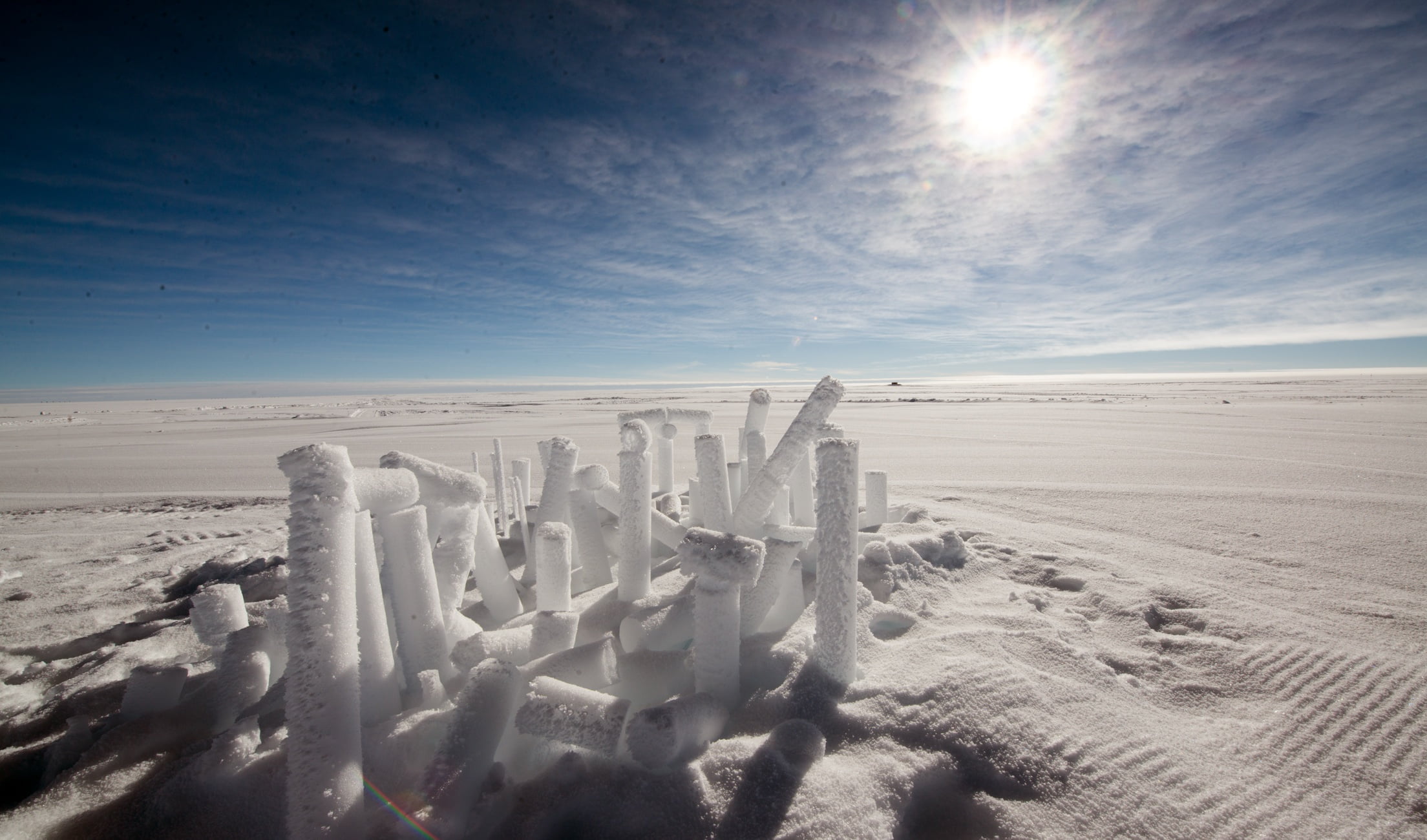
Economy like the sun that shines, but does not warm
In international analyzes related to the current financial situation, it is mentioned that “inflation came from nowhere”, as stated by the president of the ECB, Mrs. Lagarde [1].
Although, inflation in Albania came more as an imposition from outside, in fact it revealed all the problems of the disordered market, without clear rules and with freedom truncated by clientelism and the weak culture of a small market. He quickly found a suitable environment and is now becoming part of the domestic economy.
While recent data on inflation have shown encouraging trends, the elimination of imbalance factors that have increased prices will need to be eliminated/minimized to restore price stability.
But the problem should start to be widely discussed with the banks, and time requires a thoughtful analysis of the vision for the financial market for the future.
So far, rising interest rates have helped slow demand growth, allowing supply to catch up, especially for commodities. The biggest risk is the deviation of credit demand in the informal market, which continues to be active and lends a good part of investments, in the construction and real estate sector, but also in other sectors that need credit rapid investment and spending.
And then, from which sources are the sectors/activities credited (supplied) with liquidity?
Our regional contacts note that high interest rates have not slowed down the housing market as expected, both in terms of sales and new housing construction. Real estate and infrastructure projects (including speculative ones) also continue to develop, where companies have continued with projects related to their expansion or improvement. The lack of raw materials that raised construction prices in 2022 is no longer a concern and their prices have already fallen.
From different analysis, research and investigations, there is a growing concern that the credit restrained by the financial system is already being replaced in many projects by money and the informal credit market.
In these unclear situations, based also on the chaos and uncertainty present in the Albanian domestic market, the main concern for financial institutions, as we have expressed before [2], is the monitoring of shadow risks, which can be hidden without appearing in the monitoring systems in banks and non-bank financial institutions, or in such institutions as AMF, DPT and other monitoring and regulatory institutions.
Vigilance is imperative, as expectation has far-reaching consequences.
Although the financial system continues to be a sector that does not suffer from a lack of confidence and a lack of liquidity, it still remains an unsystematic challenge to rebuild the foundation to support the future development of the market by acting as soon as possible to advance structural transformations and to fight the fragmentation of the economy and the lack of diversity, to move to productivity in relation to regional competitiveness.
The mindset for digitization with a few steps before the public sector to accelerate the digital revolution, in addition to the large damages of public trust and investors in the missing security needs a more visionary policy, which should start precisely from the financial market to improve the digital business environment and to increase human capital and their involvement in the added value of the economy. Current policy is moving slowly on this multi-year approach.
And if the expansion and safe growth of the financial market, (beyond investments in bonds and bonds) does not aim to transform the financial market into a powerful and large portal to cope with the development of tourism, as well as the expansion of private pension funds, investments , as well as the further expansion of energy generation sources and services, then the whole policy will continue to consume a lot to produce a little.
This visionary new policy orientation approach can finance more in terms of growth and jobs but will also affect Albania’s real recovery.
In this context, it is natural to increase regional cooperation and beyond the Balkans, as this has already been understood to have a positive effect on reducing the damage to the economy from fragmentation. But the fragmentation of capital flows, including foreign direct investment, would be another blow to the country’s growth.
The economic information received during the first part of 2023 has shown the elasticity of basic demand in the market of goods and services, as well as in that of work, but also the stability of inflation. Partly in response to higher interest rates, tighter bank lending standards, and tighter overall financial conditions, economic activity had to slow.
In the most recent measurements of the trend of the economy for 2022, but also in the forecasts for 2023, as stated by the Minister of Finance and Economy, the GDP grew at a rate of at least 1.6% more than the expectation for the previous year, but it is expected to grow by at least as much in 2023.
The acceleration of activity is more clearly observed in the construction and housing sectors. Residential investments continue to increase significantly in a reaction outside the logic of BSH policy with higher interest rates.
There is still a long-term structural shortage of available housing, suggesting less pressure on prices than might be expected given rising interest rates. Construction contacts also indicated that they expect public sector spending and future spending by infrastructure companies to support activity, unlike the expected effect in other countries with advanced formal economies and a strong structure of its sectors.
Inflation, although it fell in March 2023[3], remains too high and too stubborn for those goods and products that make up most family budgets and of small and micro businesses. The February data on inflation was still high, but we remember that in January, the data was a little stronger. So, while the inflation level is lower than it was last spring[4], it seems that the inherited problems for the economy, the financial market in particular and the performance of the monetary and fiscal policy do not have the same expectations as neighboring countries, as well as those of the EU market.
Policymakers will undoubtedly face more complicated choices and difficult communications as the trade-offs between inflation and employment become more apparent. Uncertainty about the policy path may increase once the public and markets begin to assess how the Bank of Albania and the Ministry of Finance are weighing inflation and its implications in relation to a softening labor market.
Reflections on the stability of inflation can serve to shift the policy discussion around a more in-depth analysis of the structural factors that influence and hinder growth.
Before the pandemic, considerations of economic growth focused exclusively on weak demand, as supposedly evidenced by low interest rates and low inflation. The 3-year period showed us that if the demand could increase, the supply would be close, and the growth would increase.
However, a more in-depth analysis followed by a more transparent communication remains to be carried out by BSH and the government on the huge amount of liquidity in the financial system and the impossibility of offering it to families and businesses. Individuals and businesses[5] for example are holding €6.4 billion at the end of February 2023. This extra money coincides with a sharp increase in savings since the pandemic, as spending was curbed, and government transfer programs struggled to maintain family income.
If households decide to hold onto higher levels of liquidity, out of a sense of caution given the experience of inflationary shocks, then the effect on the economy, inflation and politics may be minimal. If instead this higher liquidity allows households to increase spending, the result could be continued pressure on imbalances and inflation. Such a scenario may require further increases in interest rates to encourage savings rather than spending.
In fact, both price stability and financial stability are important for a healthy economy although there cannot be a trade-off between the two. Well-formulated and well-communicated monetary policy that achieves the objective of price stability while also positively affecting maximum employment would support financial stability by allowing households, firms, and financial institutions to make better decisions about investment, saving, loans and lending.
The year 2023 is declared to have started with a more positive development than expected, but based on the finances of families and businesses, uncertainty and negative risks do not seem to have diminished.
This makes the entire forecast for the coming months based on uncertainty and the conservative belief that if policies are not harmonized based on inclusiveness, we will continue to have a good year that resembles the expression “like the sun that shines but does not warm”.


Leave a Reply
You must be logged in to post a comment.