


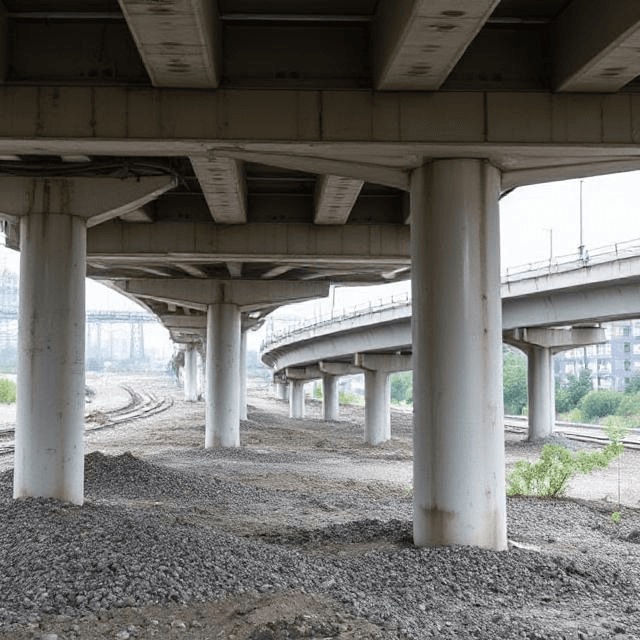
Delays in Infrastructure, hidden costs, and solutions for businesses
The government’s responsibility for delays in roadworks and the resulting losses for businesses is a critical issue that directly affects the economy and the social life of citizens.
Public infrastructure is essential for national development. However, when projects are delayed due to mismanagement, lack of funding, corruption, or bureaucratic procedures, the consequences become significant—especially for businesses.
For economic operators that rely on the free movement of goods and customers, a blocked or unfinished road can lead to serious financial losses, and in some cases, bankruptcy.
In Europe, several countries have established legal mechanisms to protect businesses from the consequences of infrastructure delays.
For example, in Germany, regulations require the government to compensate businesses affected by unjustified delays in road construction.
In France, courts have repeatedly ruled in favor of businesses, recognizing state responsibility for the losses incurred.
In the United Kingdom, the government has a clear policy for compensating businesses affected by infrastructure delays, with dedicated funds used to mitigate the economic impact.
In Albania, although the law theoretically provides businesses with the right to seek compensation, in practice the challenges are numerous.
The judicial system remains influenced by politics and corruption, making it difficult for businesses to assert their rights through legal channels. Additionally, delays in public procurement and a lack of transparency in construction contracts further aggravate the situation.
Another significant issue is the low transparency in public procurement. In many cases, construction tenders are awarded to companies without sufficient experience, which fail to complete the works within the set deadlines.
Moreover, frequent changes in infrastructure projects—driven by political or financial reasons—create uncertainty and unnecessary delays.
A typical example in Albania is the Arbër Road, which has experienced significant delays, harming businesses in the Dibra area that depend on this road for transportation and trade.
Similar delays have been reported in the construction of the Vlora and Elbasan bypasses, directly affecting the circulation of goods and increasing logistical costs for businesses.
A concrete example illustrating the economic losses caused by infrastructure delays is that of a small business, such as a restaurant or shop, located near a main road with a daily flow of around 500 clients. Due to prolonged construction work, the number of customers drops by 30%.
- 500 clients × 30% drop = 150 lost clients
- 150 clients × 1,500 ALL = 225,000 ALL in daily losses
- 225,000 ALL × 180 days (6 months) = 40,500,000 ALL (~€410,000)
This significant loss, combined with operational expenses, may force the business into bankruptcy.
Additionally, transport companies operating in areas with unfinished infrastructure report up to a 30% increase in operating costs due to higher fuel consumption and vehicle damage from poor road conditions.
If compensation mechanisms like those in Germany or France were in place, Albanian businesses could prevent financial deterioration and have a chance to recover from the losses.
In this context, Albanian businesses must adopt new strategies to protect their interests.
Proper documentation of the economic damage caused by infrastructure project delays is essential.
Business organizations and chambers of commerce can play a more active role in pressuring authorities to establish compensation mechanisms. Media coverage and public opinion can also help increase transparency around public infrastructure projects.
The long-term solution lies in strengthening the justice system and increasing institutional accountability. Reforms are needed in public fund management, the enforcement of stricter procurement rules, and the creation of a clear legal framework that guarantees the rights of businesses.
Another important step would be the establishment of an emergency compensation fund for businesses affected by infrastructure delays, based on the principle of state liability for economic damages caused by mismanagement of public projects.
Without these measures, delays in road construction and their consequences will continue to burden the economy and the citizens.
4o



Leave a Reply
You must be logged in to post a comment.