


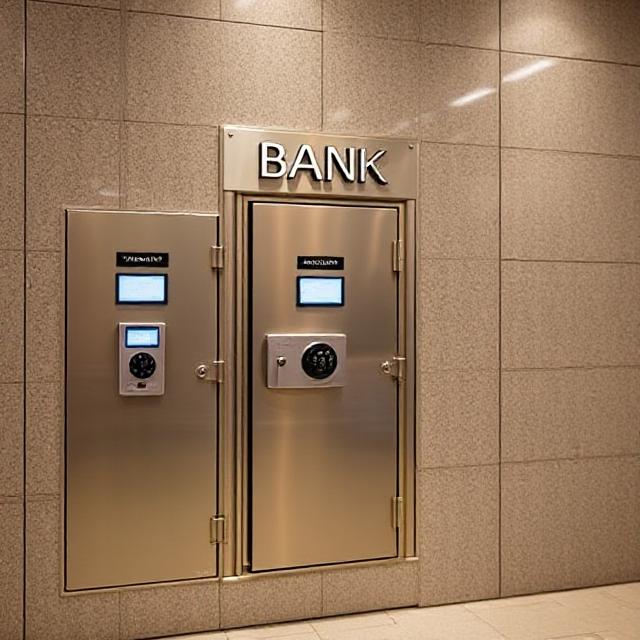
Bank safety deposit Boxes in Albania – Treasures in the dark that challenge financial integrity
In Albania, while official rhetoric centers around combating informality and money laundering, a crucial and rarely mentioned link remains outside institutional control: the safety deposit boxes offered by second-tier banks. Promoted as discreet services for safeguarding personal valuables, these boxes operate in a legally unmonitored space where the lack of transparency and reporting obligations creates fertile ground for informal capital and illicit activity. In an environment where corruption and the grey economy are widespread phenomena, these storage structures within the banking system can easily turn into havens for dirty money.
A grey area within the formal system – legal gaps, costs, and lack of oversight
Currently, over 5,000 safety deposit boxes are in use in Albania, distributed across various bank branches from Tirana to Vlora. The annual rental price ranges from 50 to 300 euros – a relatively modest amount compared to the potential value stored within them. But this seemingly harmless service operates with no obligation for audit, declaration, or centralized registry.
Banks are not required to know the contents of the boxes, and clients have no obligation to report their use. This lack of oversight not only constitutes a legal loophole but also poses a systemic risk to the financial integrity of the country. The situation mirrors the gaps found in other property and finance-related laws, as highlighted in the draft law “On Trademarks,” where Article 4 clearly reflects the absence of a coordinated approach with EU standards in regulating sensitive economic instruments.
Risks arising from the dark – invisible capital and barriers to investigation
In the absence of transparency, safety deposit boxes may be used to conceal illegal capital – whether in the form of informal cash, forged documents, or unregistered real estate contracts. Moreover, without a property registry or control mechanism, investigations into unjustified assets remain incomplete and ineffective.
This situation has broader macroeconomic consequences: hidden capital does not enter formal circulation for consumption, investment, or deposit – distorting fiscal and economic indicators. Furthermore, a parallel financial reality emerges where individuals safeguard wealth outside any legal regime, within structures licensed by the state – a dangerous paradox that undermines every effort to build a formalized and transparent economy.
IV. International practices: a reflection for improvement, not prohibition
In stark contrast to Albania, developed countries like Germany, Switzerland, the USA, and Italy have established clear rules for the use of safety deposit boxes. In Germany, users are required to identify themselves, and the service is subject to periodic audits. In Switzerland, banks must flag clients with suspicious profiles. In the USA, boxes are included in AML (anti-money laundering) legal guidelines, while in Italy, the Guardia di Finanza has the authority to intervene due to the risk of organized crime involvement.
Albania, by comparison, has no structured framework for oversight, declaration, or transparency regarding this service – a void that not only leaves room for abuse but also undermines efforts to meet EU integration criteria in the fields of finance and justice.
The way forward requires illumination, not criminalization
In Albania’s financial landscape, safety deposit boxes offered by second-tier banks represent an underdeveloped institutional link, positioned at the border between a legal service and a latent potential for misuse. Instead of banning or stigmatizing this instrument, a strategic approach is needed to strengthen oversight and enhance public transparency, transforming this mechanism from a grey zone into a structured component of the formalized financial system.
The solution does not lie in banning this service, but in bringing it under legal and institutional scrutiny. The core of the intervention is to build a functional architecture for transparency, oversight, and inter-institutional coordination, based on five key pillars:
1. Building oversight infrastructure – The centralized registry
The first priority is the establishment of a centralized registry, managed by the General Directorate of Taxation, encompassing all users of safety deposit boxes. This tool is essential for increasing institutional transparency and creating a database to support risk analysis by competent authorities.
2. Periodic auditing and risk-based profiling
The service must be included in banks’ internal audit mechanisms, with mandatory regular reporting and special focus on high-risk users: large entrepreneurs, political figures, public officials, and PEPs (politically exposed persons). This will enable the creation of a clearer picture of service usage and help identify deviant cases.
3. Integration into risk analysis and tax databases
The use of safety deposit boxes should become an integral part of the FIA’s (Financial Intelligence Agency) risk assessments and the Tax Administration’s database, to detect tax evasion, capital informality, or suspicious activities. This inter-institutional data integration supports the development of a coordinated financial monitoring system.
4. Banks as the first filter – Flagging suspicious use
Banks should not remain passive reporters but must actively signal suspicious usage, such as large cash payments, inconsistencies with the client’s profile, lack of transparency regarding the purpose of use, or frequent changes in contents. This first-line filter role is vital in preventing boxes from becoming shelters for informal capital.
5. Focused investigations into misuse networks
SPAK (Special Anti-Corruption Structure) and financial investigation units must develop dedicated investigations based on data from the registry, alerts, and risk analyses to identify individuals or networks using this service for illegal purposes. These investigations not only strengthen oversight but also send a clear message to informal actors that the dark zones are shrinking.
Transforming safety deposit boxes from an uncontrolled mechanism into an integrated component of the financial system requires not prohibition, but the illumination of institutional terrain. With a well-coordinated approach and appropriate legal tools, this service can evolve from a latent risk into a reliable element of the national financial architecture.
Transparency as a weapon of public trust
For this reform to have lasting impact, it must be accompanied by a clear and continuous public communication strategy, presenting citizens with the purpose and benefit of monitoring safety deposit boxes – not as an attack on privacy, but as an effort to preserve the integrity of the financial system and build a formalized economy.
Through this transformation, safety deposit boxes will no longer be “treasures in the dark” but reliable, monitored, and integrated instruments within a legal-respecting financial system that serves the country’s sustainable development.
Transparency is a duty, not an option
In a reality where individuals grow wealthy in silence, where assets are hidden and institutions are often limited to formal statements, safety deposit boxes represent a dangerous node in the dirty money chain. They are dark treasures hidden behind the armored walls of the banking system – a symbol of the lack of control and will to truly fight informality.
If Albania aims to build a fair financial system aligned with EU practices, then every segment of the economy must be illuminated – especially those currently existing in the shadows of oversight. Institutional silence in this case is not neutrality – it is complicity.
In conclusion, the path to formalization is not the closure of a financial space, but its intelligent regulation. Only through transparency, institutional cooperation, and advanced oversight mechanisms can this service be transformed into a valuable and safe tool for citizens and the economy.
The question is now present:
Will the treasures remain in the dark, or will the state dare to expose them to the light of law and transparency?



Leave a Reply
You must be logged in to post a comment.