


When dirty money finds its way, a concern for Fiscal Peace and the failure of prevention in Albania
At the end of 2025, the media reported a story that shocked public opinion in Albania.
A Spanish citizen, Álvaro Romillo Castillo, known as “CryptoSpain,” was arrested in Spain for a cryptocurrency pyramid scheme that defrauded thousands of people and caused damages of €250–300 million.
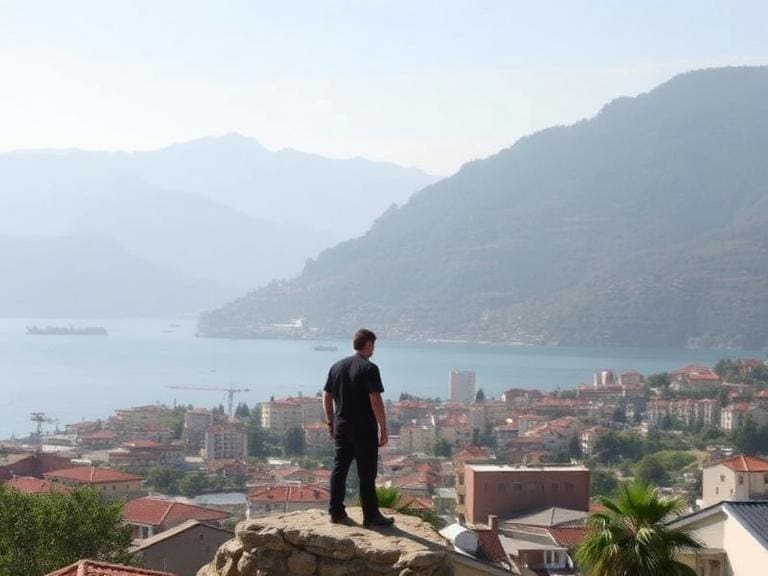
The illegal funds managed to penetrate Albania, where authorities seized assets worth about €30 million (approximately 2.9 billion lek), including land, luxury cars, bank accounts, and three companies in tourism and real estate, mainly in Dhërmi, a village of about 600 houses.
The main concern is not only the scale of the scheme in such a small and highly visible area, monitored by local tax offices, the cadastre, the municipality, police, and local banks, but the fact that none of these institutions detected or reported in time such an extraordinary flow of assets and transactions.
In a small territory like Dhërmi, where land purchases, construction activity, and the emergence of luxury assets are highly visible to the community, this kind of activity should have generated early warning signals from tax inspectors, community policing, property registration offices, and the local branches of central institutions.
The fact that the discovery did not come from Albanian institutions, but from an investigation conducted in Spain under Operation PONEI, with the support of Europol and the Spanish Civil Guard, deepens this institutional gap even further.
Albania became involved only after Spanish authorities traced the money flows, a clear indication that our preventive system, from the field to the center, failed to function in real time and only reacted after evidence arrived from abroad.
On paper, laws and national strategies assign clear roles to institutions.
The Tax Administration must monitor the field and detect real-time financial flows related to tax evasion, which often masks dirty money.
The Financial Intelligence Agency (AIF) (formerly the General Directorate for the Prevention of Money Laundering – DPPPP) must analyze suspicious transaction reports and alert law enforcement.
The Bank of Albania must activate mechanisms to supervise banking flows.
The Police must monitor the territory and report suspicious cases.
SPAK must investigate major cases and act swiftly.
But these mechanisms cannot function if they are not fed by field intelligence, from community policing, local administration, and the signals generated where economic activity actually takes place.
In this case, none of them moved beyond ex-post reaction.
The shell companies “Wortned” and “Wortonova” were created in June 2024, properties were purchased below market value, and significant wealth appeared in a small tourist area, yet no red flags were raised until Spain revealed the photos and the schemes.
This shows that, beyond weaknesses at the central level, even the first line of the state — community policing and local oversight — is not functioning as a preventive filter, allowing money laundering to flourish silently until it erupts as an international scandal.
Proactive inaction becomes even more worrying with the Fiscal Peace, which entered into force in 2026. This mechanism allows the wiping out of old debts and the declaration of assets without deep verification of their origin.
In a country where corruption and money laundering remain major challenges, such a policy can serve as “official laundering” for suspicious funds. Properties in Dhërmi owned by someone like Romillo could end up declared as “undeclared assets” without anyone asking about their true origin.
The construction sector reveals another serious problem: companies with minimal starting capital and loss-making balance sheets receive permits for large projects.
Between 2015 and 2023, the number of construction companies increased by 40%, yet most have only 1–4 employees and no real financial capacity.
More than two-thirds of high-rise buildings in Tirana are built by companies without verified financing, creating opportunities for money laundering and risks for citizens through unfinished projects.
The permit process remains vulnerable to bribery, with over one-third of businesses admitting they pay to speed up approvals.
This creates a dangerous cycle where informal money enters easily, fair competition is distorted, trust in institutions collapses, and citizens pay the highest price—with unfinished apartments or an economy where clean money has less and less space.
What stands out in this case is the total imbalance between institutional potential and actual results.
We are talking about €30 million—a very large amount for Albania’s small market—that was not identified in time by multiple key institutions: the Municipality, Police, AIF, Tax Administration, Bank of Albania, and SPAK.
This failure shows that investments in technology and human capacity, even when significant, do not automatically translate into real effectiveness.
In other words, having software and staff is not enough—if procedures, coordination, and political will are weak, such schemes are allowed to operate until arrests occur abroad.
This shows two things:
First, technology and capacity are only tools, not guarantees. Without functional protocols, direct inter-institutional coordination, and above all political will, prevention remains theory, not practice.
Second, failure to act in time creates a precedent where money laundering, tax evasion, and shell companies become a “tolerated norm.” Albania is not alone in this; other Balkan countries, such as Greece, show the same pattern—institutions react only after international scandal, not proactively.
The problem is not only the money that was seized, but the system that allowed it to happen—an institutional ecosystem that, despite investments, fails to prevent crises before they become international scandals.
The Romillo case clearly shows that Albania is far from having a system that prevents damage before it occurs.
This case increases concern that the Fiscal Peace, by allowing asset declarations without tracing the origin of funds, may further weaken the ability of institutions to follow dirty money, opening the door to many similar cases in the future.
Real change begins when institutions move from “reacting after the fact” to “preventing before the fact”—a demand that the IMF, the European Union, and international reports have been repeating for years.


Leave a Reply
You must be logged in to post a comment.