


Public debt in Albania and public perceptions of fiscal policy
In 2024, Albania’s public debt reached the lowest level of the decade, falling to 54.7% of Gross Domestic Product (GDP), or around 2.8 percentage points less than in December 2023, amounting in nominal value to approximately €13.6 billion.
This downward trend continued in the first half of 2025, when public debt fell further to 54.02% of GDP, reflecting relatively cautious expenditure management and a moderate stability in the budget deficit.
However, while these figures could have provided room for more expansionary fiscal policies, Albania has not taken advantage of this opportunity. This situation highlights the tension between the government’s technical capacities and public perception of the effects of debt reduction.
One of the main reasons for this inaction relates to fiscal transparency, which remains partial and fragmented. Citizens and economic actors often lack clear information about debt maturities, funding sources, and servicing costs, making it difficult to understand the connection between debt reduction, expenditure policy, and expectations for taxation.
This incomplete perception is reinforced by past experiences with fiscal consolidations, which have left a pessimistic imprint and shaped expectations that any fiscal relaxation would directly affect individuals, regardless of the relatively low level of public debt.
In this sense, the absence of a fiscal relaxation policy following debt reduction is not merely a technical issue but reflects a twofold challenge. First, the combination of institutional constraints and weak public perceptions prevents the fiscal space from being translated into stimulative policies. The government has not developed clear mechanisms to revive consumption and investment, while citizens lack the means to monitor the use of fiscal space. Without detailed information on maturities, debt sources, and service costs, any change in expenditure or taxation is perceived as episodic and independent, not as part of a sustainable fiscal policy. The result is a spiral where debt reduction is not accompanied by lower fiscal pressure on individuals, maintaining a pessimistic environment and heightened sensitivity to any future fluctuations in prices or taxes.
Second, citizens’ historical experiences with previous fiscal consolidations reinforce this negative perception. Individuals who have lived through periods of budgetary tightening expect that any fiscal easing would directly impact them, despite the fact that public debt has reached relatively low levels.
This creates psychological pressure that makes the public skeptical about the effectiveness of fiscal policies and prevents them from perceiving the fiscal space created by debt reduction as a real opportunity for relief and economic stimulus.
From a critical perspective, this situation shows that debt reduction, without full transparency and clear communication, remains an unconverted potential for citizens’ benefit. Lacking detailed information on debt and government spending, citizens are unable to understand how debt reduction should translate into lower fiscal pressure and economic stimulus.
In the absence of analysis and clarity, the entire fiscal space created by debt reduction remains dependent solely on government decision-making and often translates into the imposition of non-transparent fiscal instruments. These are approved through laws or normative acts passed without broad public consultation, thereby adding to the fiscal burden on individuals.
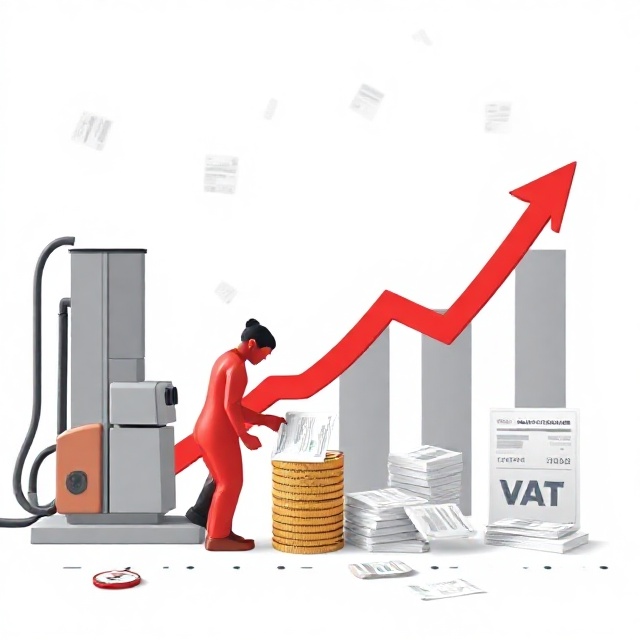
A typical example is the use of hidden taxes embedded in prices, such as increases in fuel excise duties, which are not communicated as part of a long-term fiscal strategy but are applied as immediate measures with direct effects on the cost of living.
Similarly, the introduction of new administrative fees for public services, electricity, or water is often not justified by the real cost of providing the service but by the government’s need to collect additional revenues.
Another instrument used involves changes in corporate profit tax or VAT for specific business categories, which are adopted without public consultation and create a sense of inequity in the distribution of the tax burden.
In all these cases, the lack of transparency deprives citizens of the ability to assess whether these measures are part of a coherent consolidating policy or simply ad hoc tools to fill budget gaps. Consequently, public debt reduction, which theoretically should ease fiscal pressure, is perceived as irrelevant in everyday life, as citizens continue to feel exposed to the tax burden through such hidden mechanisms.
In this context, citizens are unable to assess whether fiscal relief measures are reasonable, while the absence of tools for monitoring and public pressure renders them passive in relation to reforms. This situation indicates that the non-implementation of fiscal relaxation is not only a technical issue but also reflects institutional limitations and entrenched public perceptions. As a result, the fiscal space created by debt reduction remains incapable of delivering tangible benefits to the economy and society.
In conclusion, the Albanian experience shows that debt reduction alone is insufficient to generate trust in fiscal measures or to sustainably stimulate economic activity. As highlighted by international literature, including IMF studies[1], public perceptions of debt and expectations regarding fiscal policy directly influence consumption, savings, and attitudes toward taxation and public spending.
When transparency remains fragmented and information on debt and expenditures is incomplete or controlled exclusively by the government, citizens cannot assess whether fiscal policy is fair or effective, nor do they have the means to exert pressure for sustainable reforms. In this context, the fiscal space created by debt reduction remains an underutilized potential, while citizens remain skeptical and sensitive to any possible increase in the fiscal burden.
Changing this situation would require an integral approach combining full transparency, public monitoring, and active communication on fiscal policy and debt management. This is the path to building citizen trust, stimulating the economy, and turning debt-reduction gains into real benefits by enabling citizens to understand, monitor, and influence fiscal policies moving forward.
[1] https://www.imf.org/-/media/Files/Publications/WP/2025/English/wpiea2025197-print-pdf.ashx


Leave a Reply
You must be logged in to post a comment.