


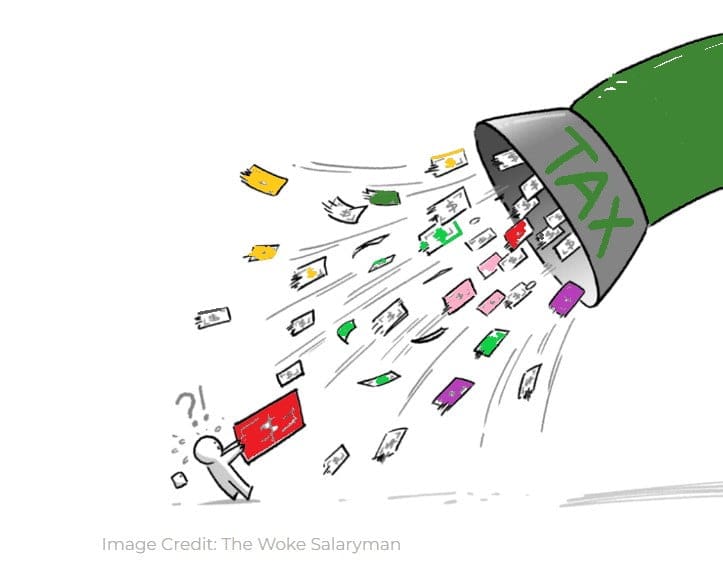
The economy we have today is affected by unproductive investments and harmful politics
An investment in which no profit is generated, or less profit is realized than programmed is considered a bad investment. But an investment that also produces negative effects on taxes and fees, as well as budget costs from waste and corruption is much more than bad. This is the red line to evaluate the effectiveness of a decision, whether it was good or harmful.
But what happens to the decisions that are made to make investments, especially when the money for investment does not belong to private shareholders, but is the money of taxpayers?
Governments in Albania, with the traditional logic of evaluating projects and investment proposals, base it on the idea of returning the former success to the sector where it will be invested, or if the investment will be a case of success that can be marketed politically.
We have experienced for many years now that there are countless examples showing that this is not the case.
In fact, we should be in another stage of free movement of capital and economic freedom, which governments have negatively influenced.
The only duty of governments should be to create the environment to do business with the same conditions as the countries that are ranked in the first countries for economic freedom.
If the investments are compared only with the profitability of investments in strengthening the production and processing capacities of oil and gas, chrome, and copper, as well as the processing industry for those raw materials that today serve for export, the funds generated would serve the strengthening and growth of the budget. On the other hand, they could produce more added value, if a part of the investments had gone to education and technology, for the effectiveness and training of human capacities, as well as for increasing the productivity of sectors such as: agro-industry, technological services, etc.
But how much were the decisions for private investments/privatizations worth in Albania?
Foreign and domestic investments in Albania have been made by individuals, but most often they have represented companies that in most cases are mergers with Albanian companies or individuals. These investments are concentrated in extractive and processing industries, real estate, the energy sector, banking and insurance, and information and communication technology.
If we were to refer to a list of investments with foreign capital or even with mixed capital (foreign and Albanian), it can be observed that the map of the countries of origin of foreign investors, according to the sectors of the economy where they have invested and operate is[1]:
– Electric Energy Sector (Netherlands, Norway, China, Austria, Italy, Germany, France, Turkey)
– Extractive industries sector (Netherlands, Turkey, China, Greece, Italy, etc.)
– Financial services sector (Austria, Turkey, USA, Germany, Italy, Hungary, Bulgaria, etc.)
– Telecommunications and transport sector (Switzerland, Great Britain, Hungary, France, China, etc.)
– Information technology sector (Germany, Italy, USA, Kosovo, Germany, etc.)
– Manufacturing sector (Italy, Germany, Greece, Austria, Greece, Turkey, South Korea, China, etc.)
– Real estate sector (Russia, Turkey, China, Italy, etc.)
How are foreign investment portfolios distributed by the end of the first 6 months of 2023?
If we look at the distribution by sectors, summarizing a total stock of 12.4 billion Euros[2], we notice that the most important sectors are according to the table below:
| No. | Economic Sector | Stock value (bln. Euro) | Share at total investment stock (%) |
| 1 | Electro Energy | 3.15 | 25% |
| 2 | Extractive Industry | 2 | 16% |
| 3 | Financial and insurance services | 1.5 | 12% |
| 4 | Real Estate | 1.33 | 11% |
| 5 | Telecommunications and ICT | 1.3 | 10% |
| 6 | Manufacturing industry | 1.1 | 9% |
| TOTAL Foreign Investment Stock | 10.38 | 83% | |
The rest, which constitutes 17% of the total stock of foreign investments, is oriented towards technical and scientific activities, wholesale trade, construction, transport, and other related services.
If we analyze the weight of each country according to the fiscal residence of the main investors, according to data from the Bank of Albania until the first 6 months of 2023[3], the investors with the largest weight are according to the table below:
| No. | Country | Sector | Stock value (mln. Euro) | Share at total investment stock (%) |
| 1 | Switzerland [4] | Transport | 2.021 | 16% |
| 2 | Netherlands [5] | Extractive Industry | 2.014 | 16% |
| 3 | Canada [6] | Extractive Industry | 1.594 | 13% |
| 4 | Italy [7] | Several sectors | 1.353 | 11% |
| 5 | Türkiye [8] | Extractive Industry
Metal production |
905 | 7% |
| 6 | Bulgaria [9] | Financial services | 785 | 6% |
| 7 | Austria [10] | Electro Energy | 772 | 6% |
| 8 | France [11] | Electro Energy
Telecommunications |
440 | 4% |
| 9 | USA, GER, HUNG, XK, CYPR, UK, GR [12] | All sectors | 238 – 353 | 16% |
| TOTAL Foreign Investment Stock | 11.750 | 95% | ||
From the map of the countries that have made investments in Albania and hold the main stock of the country’s capital, some countries such as Italy and Türkiye have a more distributed weight in several sectors.
Other countries are less distributed in sectors, keeping as an investment portfolio only one main sector, considered with a satisfactory rate of return on invested money.
Meanwhile, in the last decade there is another expansion of the share of investments from the countries of the Middle East, where after the experience of investments in tourism and real estate from Kuwait in the 90s, now investors from the United Arab Emirates are increasing.
Investments by the end of the 6th month of 2023 from the United Arab Emirates have reached 40 million euros, in the real estate sector. Expectations in the next three years from mixed investments with local capital and other investors are expected to reach beyond 2 billion Euros for the revitalization of the port of Durrës into a tourist and residential center. However, this has been met with skepticism by a part of the Albanian media.
On the other hand, the Abu-Dhabi Fund has simultaneously promised to finance the New Boulevard and the Tirana River projects, which have long since started work (Gazeta Si, 2022). In general, there is little transparency about investments from Arab countries in Albania, which increases skepticism and criticism of these funds and financing.
At first glance, it seems that foreigners control significant parts of strategic sectors (energy market, electricity, oil, and gas production). But if it is seen from the contribution to the budget and the economy, it does not seem that the main weight is carried by foreign investors. Meanwhile, the labor market and the economy have another impact from these investments, even though the main capitals are not in sectors with high employment.
An analytical look inside the main investment sectors
The extractive industry sector (mining sector, oil, and gas sector) seems that, apart from the still modest investments in the production and processing of chrome and copper by Turkish and Albanian investors, it is seen that it has not yet positively changed the well-being of the inhabitants and the regional economy in the areas where operated [13].
Investments in the exploitation of mineral resources are a decision based on the economic objectives of the moment. If it were, otherwise, development and welfare funds would have been created in time to serve to cover the costs of the miners’ status. For years now, the mining industry has been targeting the Chinese market, and many businesses, mainly from India, have invested in the mining sector to export to China. But beyond the exploitation of the resources, they are not engaged in the processing industry, which is currently owned by Albanian resident investors.
Meanwhile, political support seems to have influenced investments and the mining sector itself not to implement standards and laws related to labor standards and salary increases based on decent work and gender equality. However, the other disadvantage that these investment models have carried is that they return to costs for future periods to compensate for low pensions, but also the depopulation of areas due to lack of education, few offers from the labor market and missing public services.
The effect of the mining industry on the Albanian economy is with an impact that does not exceed 2% of GDP [14],
while the contribution to the budget income is up to 4.5 billion ALL in the best year. This effect is the same as the metal production industry, which, although located mainly in the Elbasan area where the Turkish company KURUM operates, seems to have a similar weight to the entire economic effect of the mining industry.
The same analogous situation is with investments in the oil production sector, which are not serving to mitigate costs in times of crises like the one that started strong from 2022 and is still felt with expensive fuel prices, but also with investments in the state oil production company (including oil refining) [15].
The average annual production in the last decade is up to 900 thousand tons per year, exceeding this amount in the best years up to 1.2 million tons. But if oil has a quantity of production that is worth the Albanian economy with at least 2.2% of it and with a fiscal contribution to the state budget of at least 20 billion ALL per year[16].
Although for many years the dominant investors in the exploitation of oil and gas production sites were Canadian residents, now after the change of ownership in the possession of resident Chinese companies, the situation of benefiting from the budget has not changed, although the continued production should result in a more positive situation in favor of the state budget.
Another well-known company like SHELL, which constitutes added value for the culture of the Albanian market of oil and gas production, expands the map of investors to more than two continents. But it will still take time for corporate management by such powerful companies to become an added value for the entire hydrocarbon market.
Meanwhile, such investments related to Albanian politics, such as the various investors of the hydrocarbon processing market, where the last were the owners of the company ARMO sh.a. from Azerbaijan, it was observed that not only was little benefited in terms of added value to the economy and market competitiveness, but the opposite of economic benefit occurred. The financial hole in the non-payment of fiscal obligations reached over half a billion euros (until the moment when the assets really went for scrap). An investor with these economic damages has not only directly affected the unpaid obligations and social problems created by the non-payment of employees’ salaries, but exposed the budget, which has paid employees’ salaries until the moment of closure. Such toxic investments turned in the middle of the last decade into drains of funds, hotbeds of state corruption and bearers of a business model toxic to the health of the economy, which contributed to keeping oil and gasoline prices high during the energy crisis of 2022.
In the electricity sector, starting with the investment in the Vlora Thermal Power Plant[17] and political decisions in the last decade to invest in solar and biomass electricity and urban waste (incinerators) are a major failure with significant effects[18],
as they are considered the most corrupt models in the history of investments in the country.
Their weight in the state budget is at least 250 million euros, without including in this list the ongoing payments for the burners and the two floating TECs that are considered as wrong investment decisions and with budget costs at a cost of at least 3 times more expensive than TEC Vlora.
Meanwhile, the public electricity sector with a history of mismanagement and corruption[19] from the 90’s onwards, beyond large investments and with a great burden for the cost of the citizens, it is one of the tangible failures of the Albanian governments in these three decades.
Thus, the privatization of energy distribution and supply by Czech resident investors (CEZ s.a.) resulted in another model of failure, since the biggest problem is the mindset of governments, which have used the privatization of strategic assets as a platform to realize personal goals or group and not as an added value for the economy and the well-being of citizens.
The budget cost for this privatization was a negative balance, where the realized sale was 120 million Euros was fully recovered from the repossession by force by the Albanian government plus the costs of corruption still under investigation, as well as other costs paid by citizens are estimated to have created a damage of 479 million Euros, according to the HLSH. However, even after this exposure of the damage, no responsibility or recoverable cost has been undertaken by the Albanian government.
Meanwhile, after the start of administration of the distribution operator in 2013 by the Albanian government, in the last decade alone, the public energy distribution company has spent more than 300 million euros in investments and still the level of network losses is at least 6 % less than the program drawn up in cooperation with the World Bank [20]. If we look only at 2022, at the time of the energy price crisis, funds were transferred from budget taxes to the account of OSHEE sh.a. in the value of over 250 million Euros, at a time when the objectives according to the Business Plan [21] of this public company had to be a success story.
In a balance of cost and benefits from public enterprises of the energy sector, it is understood that if they were listed on the stock exchange, the advice we would give would be that investing in these companies is substantial risk. The effect that can be calculated together in non-payment of taxes or financial damages from poor management, as well as poorly drafted contracts and with a negative budgetary impact on the budget from the decisions of court proceedings reaches the cumulative amount of 850 million Euros for their entire history (calculations from ALTAX).
The changes in development policies according to the preferences of the ruling parties, the economic management crisis and the impacts on the Albanian market have influenced the attraction of non-powerful investors, except for some companies (no more than 5) in the electricity sector and the extractive industry.
Beyond the fact that Albania is found to have a great economic potential, a good legal framework and has made progress in limiting corruption, as well as recently digitized public services for both citizens and businesses…” [22], systematically the perception of Albania remains as a difficult place to do business.
In order to attract investors who do not return at an increased cost to us taxpayers, as in the case of Bechetti and other contracts [23], the voice of the business community and all local experts needs to be heard and appreciated much more, so as not to waste even further the public’s trust with wrong decisions for investments which we pay with taxes and debts instead of being part of the welfare fund for Albanians. But, to change the ratio of wrong investments to the right investments, those tasks that have remained stock and are inherited as a “bad debt” from one government to another must be fulfilled.
In this great loss of the economy, where the waste of national assets has influenced anemic development, where the result is the economy we have today with a weak dynamism and fragile structure, vulnerable to unproductive, even harmful investments. It is necessary for the current governors and those who claim to come to government to base their decisions on cost-benefit analyzes and the inclusion of technical expertise in the design and monitoring of public investments/businesses with a high weight in the budget, of PPP contracts and addressing and the punishment of political corruption.
[1] https://fiaalbania.al/members-list/
[2] https://www.bankofalbania.org/?crd=0,8,1,8,0,18666&uni=20231109110117162158210156463446&ln=1&mode=alone
[3] https://www.bankofalbania.org/?crd=0,8,1,8,0,18666&uni=20231109110145162158210154700539&ln=1&mode=alone
[4] in industrial gas transportation, TAP project
[5] in Shell oil and gas production
[6] in the oil and gas sector
[7] in all major sectors
[8] in the extractive industry sectors, banking, and construction materials production
[9] in banks and other services
[10] in investments in electricity
[11] in electricity and telecommunications
[12] portfolio of investments in all the main sectors, which together reach 1.7 billion Euros
[13] https://altax.al/product/ekonomia-e-rajoneve-shqiptare-larg-perspektives-se-zhvillimit-te-qendrueshem/
[14] https://www.instat.gov.al/media/12614/prodcom_2022.pdf
[15] https://altax.al/?s=rafineri
[16] https://altax.al/nafta-me-buxhetin-nje-maredhenie-qe-koha-po-e-ndryshon/
[17] https://www.reporter.al/2016/06/20/deshtimi-i-kushtueshem-i-termocentralit-te-financuar-nga-banka-boterore-ne-vlore/
https://faktoje.al/tec-i-i-vlores-jo-funksional-por-shpenzon-miliona-euro-per-mirembajtjen/
[18] https://www.monitor.al/deshtimi-me-diversifikimin-2/
[19] https://www.zeriamerikes.com/a/klsh-cez-gjiknuri/3006232.html
[20] https://www.reporter.al/2019/01/08/projekti-i-rimekembjes-energjetike-me-pulle-te-kuqe/
[21] https://www.publeaks.al/wp-content/uploads/2017/04/781.pdf
[22] https://www.zeriamerikes.com/a/7200302.html
[23] https://euronews.al/klsh-5-humbje-4-fitore-388-5-mln-euro-dem/
Leave a Reply
You must be logged in to post a comment.