


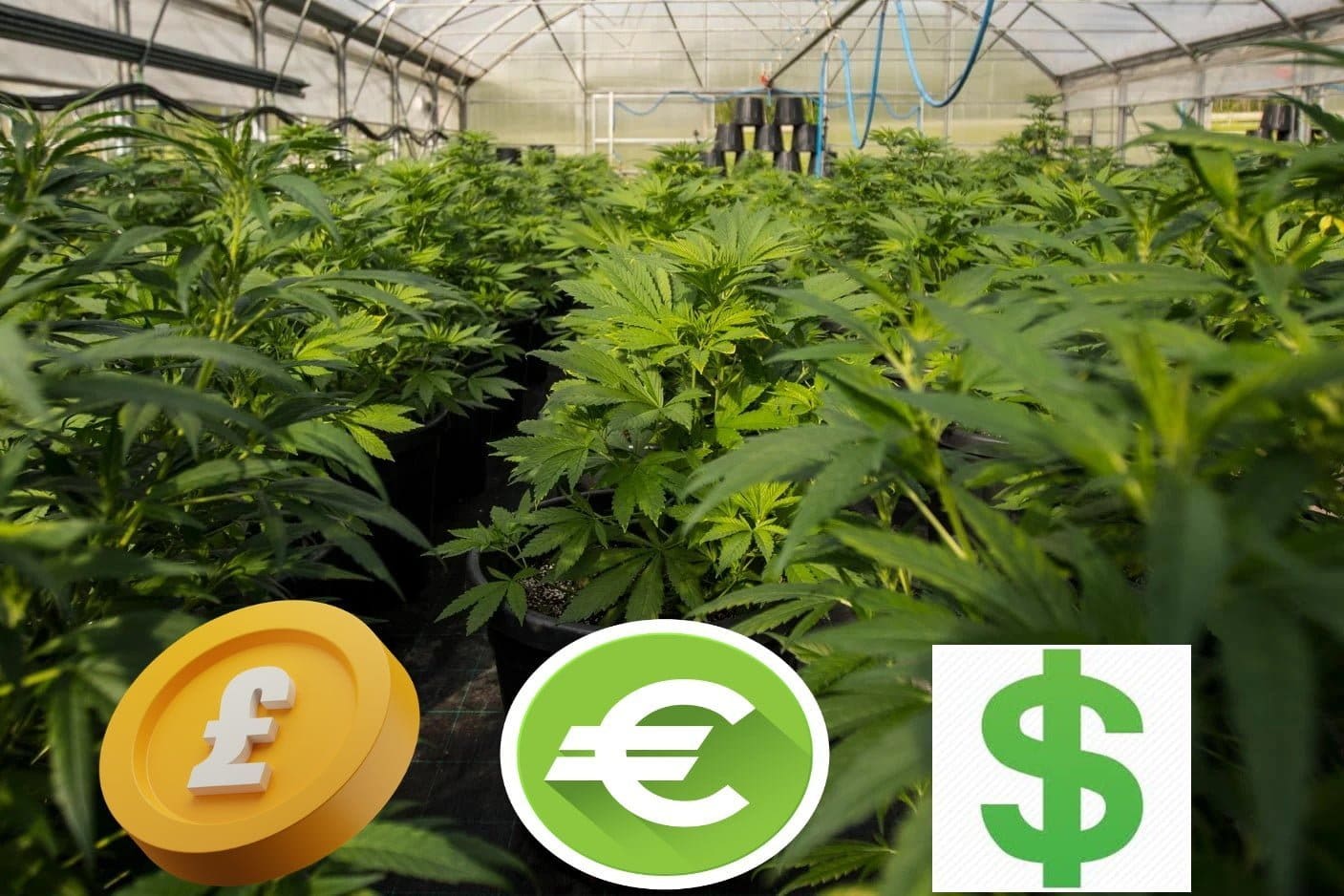
Medical and industrial cannabis: Comments regarding the government’s proposal from country experience
In the draft law approved by the Albanian government on June 16, 2023, there is already a concrete proposal[1] for the Assembly of Albania to approve the discourse on the cultivation, production and controlled circulation of the cannabis plant, its by-products and final products for use (a) medical[2] and (b) industrial[3].
In an examination of the content of the draft law, which is not accompanied by any clarification and even more with a study to exhaust all the questions, concerns and dilemmas on this topic, which breaks very big taboos, we are faced with the fact that it was carried out as a public unconsulted and unheard. The popular perception of this issue is related to criminal activity and this complex is unintentionally reflected in the title of the law, which seems contradictory to the object of the law.
If we look at the content and spirit of the draft law, we find that:
First, from the content of the entire draft law, it does not appear that it is addressed to any special interest for the citizens, as related to their well-being, but also to meet their nutritional and health needs.
Secondly, as long as there are still consultations, people should be informed whether employment will be of interest to the impact that this government project has on the labor market, where skepticism remains as with the strategic investment projects of companies that benefit from the status of businesses of privileged in tourism, but who, apart from the benefits, have not been warned by the government to remove the status when they have not met the criteria. On the contrary, if we assume that the businesses that already own the funds and meet the criteria of the law are ready (offshore or not, although from OECD member countries) and are only waiting for the approval of the law, they are expected to steal even the few forces from the rural labor market work, based on the assumption that they will pay them better than they are paid to date.
Thirdly, in this time of market crise for Albanian consumption, which still does not have an agriculture that meets the consumption needs of the population, these offers are not considered to be required by any urgency of the economy and basic consumption of people. Cannabis (hereinafter marijuana) is not for meeting food needs, but which is assumed not to compete with agriculture, since it will be for export, or at most it will serve as a raw material for the Albanian industry, although it is not known if it will cost effective life for this industry.
Fourth, starting from the precedent where no law has been implemented and monitored as it was approved for implementation, this creates reasonable doubts that the businesses of this very delicate activity will deviate from the purpose for which they were approved and can produce more costs than benefits.
For example, a very problematic topic in the government proposal is point 5. of Article 13, where the space for the subcontracting of some processes of this activity, create the climate of the fashion industry policy, where the economy, in addition to a rather problematic labor market, has lost the qualification of the workforce and in this case also the competitiveness in relation to the surrounding economies.
Given that there is no limit on the number of licensees in the draft law, it seems that this new sub-sector of agriculture has little to do with the calculation of the absorptive and processing capacities for medicine and industry, which of the many reasons listed below may cause towards the activity that is done until today, production as raw material and processed for medical purposes for export and very vulnerable also for domestic consumption.
In other words, in an environment with high informality, with structured corruption, with a trend of illegal cultivation and export among the first 7 countries in Europe[4] and with a law enforcement culture among the lowest in the region, it can be compromised a part of the inventory of marijuana stock towards the domestic market, which according to article 5 is prohibited and punishable the same as until today. This happened in North Macedonia, which has been implementing the same scheme for over 5 years[5].
This violation of the rules established in the law is foreseen as a case, where the values of the penalty are also determined, that in the case of light offenses the maximum fine is 1 million lek, in the case of offenses that coincide up to the level punishable by the Criminal Code until today the maximum fine is 3 million ALL and in the case of a criminal offense the fine is up to 5 million ALL and cancellation of the temporary permit. In these cases, the monitoring agency may ask the prosecutor’s office for the implementation of the Criminal Code, just like for other categories. But, here the jurists can express themselves more clearly how such sanctions of the law will be applied that can favor exactly what the individuals to this day suffer unequivocally directly by deprivation of liberty.
Fifth, from the experience in the neighboring country of North Macedonia, a country which is much more correct in the implementation of the law, an increase in the consumption of marijuana by young people has been found[6] even though they apply a regime that is the same as that proposed in the draft law approved by the government. Meanwhile, it is not seen that there has been a development in the use of marijuana for the purposes of use as a raw material in industry.
If we examine proposal from the economic point of view and the fiscal profitability of the country with this information we find that:
First, in some dedicated articles of the draft law, some valuable economic and financial indicators are defined related to the minimum capital (not less than 100 million ALL/930 thousand Euro), the total area for cultivation (not more than 200 hectares/2 million m², but not less than 5 hectares), as well as a bank guarantee (as much as 10% of the investment value).
While some valuable fiscal indicators are the payment of a fee in the fourth year of activity (as much as 1.5% of the annual turnover, excluding VAT, but not less than 10 million ALL payment per year).
Secondly, regarding the fiscal burden. If we compare the yield of 1 hectare of marijuana (10 tons) with the yield of 1 hectare of wheat (7 tons) it seems that the profitable effect is quite high both (a) in quantity and (b) in sales value (wheat reaches a maximum sales value of 350 thousand ALL/hectare, while marijuana has a maximum sales value of 1.2 billion ALL/hectare).
If we calculate that in the case of wheat production, the farmer manages to sell the entire amount produced (this is a problem that we do not find in the case of marijuana), he pays nothing but profit tax (for farmers with a turnover of over 14 million ALL/ year) and local taxes and fees, as VAT and some main expenses are excluded[7]. Of course, mandatory insurance contributions are a obligation that cannot be excluded in any case. So the weight of taxes for a wheat farmer is at minimal levels in relation to many other production and processing activities.
If we calculate in the case of cultivation and sale of marijuana, with the current income tax law it will pay a profit tax of 15% (same as other businesses), it is not known if it will benefit from the same ease as other agricultural products in the import for machinery and equipment, and whether it will apply the same VAT regime as them. It also incurs local taxes and fees, just like any other activity.
So the weight of taxes for a marijuana farmer is at the same levels as other businesses and may even be easier in relation to many other manufacturing and processing activities, if the facilities for the agricultural or medical sector also benefit the farmer and Exporter of Marijuana.
In fact, such special category products (considered as luxury products) would be suggested not only to be exempt from VAT as applied to the health system, but also as applied to the agricultural sector.
If the tax regime remains unchanged for this specific activity, then the state budget receives minimal benefits even though marijuana taxes are applied on high annual turnover values.
In other words, this formalized business will not only compete with the informal business of rural Albanian areas, but will also bankrupt these businesses, which will be absorbed as subcontractors at best.
The only good news from this market reaction is the reduction of costs for law enforcement agencies, which will have fewer operations and a drain on their resources.
Meanwhile, in relation to the obligation established in the draft law, where businesses must pay in the fourth year of activity the extra fee, amounting to 1.5% of the annual turnover of the business, there are many opportunities to bypass this obligation, where in Albania the possibility of renewing a new license after the end of the first three years exists as a possible option.
From the history of similar cases, Albanian resident businesses have an additional benefit of managing fiscal obligations in their favor by avoiding or even not paying the tax obligations at all.
In the best case of businesses that will not follow the model of informality and criminalization of the market, the benefit from foreign investments and taxes for the activity in the first years from the legalized activity of marijuana (for medical purposes) will reach up to 80 million euros per year for a turnover of up to 800 million euros per year. This would naturally increase the domestic production of the country, but it can hardly be said that it affects the strengthening of the Albanian economy.
A positive effect in this case could be the reduction of corruption in the justice system and law enforcement institutions, but it remains to be seen who will win on the ground regarding the cultivation and trading of marijuana: the formal sector or the sector traditional informal?
Finally, although there are many more arguments than what we mentioned, from the analysis of the history of the Albanian budget it can be seen that the reductions in budget expenditures from legalization are likely to be modest in practice. Early experience suggests that governments will reallocate rather than reduce that spending. This reallocation may be useful, but it does not have a direct effect on the budget deficit.
[1] https://www.kryeministria.al/wp-content/uploads/2023/06/KONTROLLI-I-KULTIVIMIT-TE-CANNABIS.docx
[2] plants of different varieties, variations and subspecies of cannabis sativa, cannabis indica and cannabis ruderalis, obtained from cultivation for medical purposes and scientific research under controlled conditions, according to the rules provided for in this law
[3] materials obtained from the whole cannabis plant, including stem, flower and seed, which is produced for industrial purposes, which include but are not limited to uses for the construction, textile, cosmetic, energy production, manufacturing of paper etc.
[4] https://www.europarl.europa.eu/doceo/document/E-9-2023-001230_EN.html
[5] https://balkaninsight.com/2023/03/28/crime-ties-exposed-in-north-macedonia-medicinal-cannabis-boom/
[6] https://www.iph.mk/wp-content/uploads/2022/12/NDSO-North-Macedonia-final.pdf
[7] https://www.tatime.gov.al/d/8/45/0/932/perjashtimi-nga-tvsh-ja-e-inputeve-bujqesore-lehtesi-fiskale-per-fermeret

Leave a Reply
You must be logged in to post a comment.