


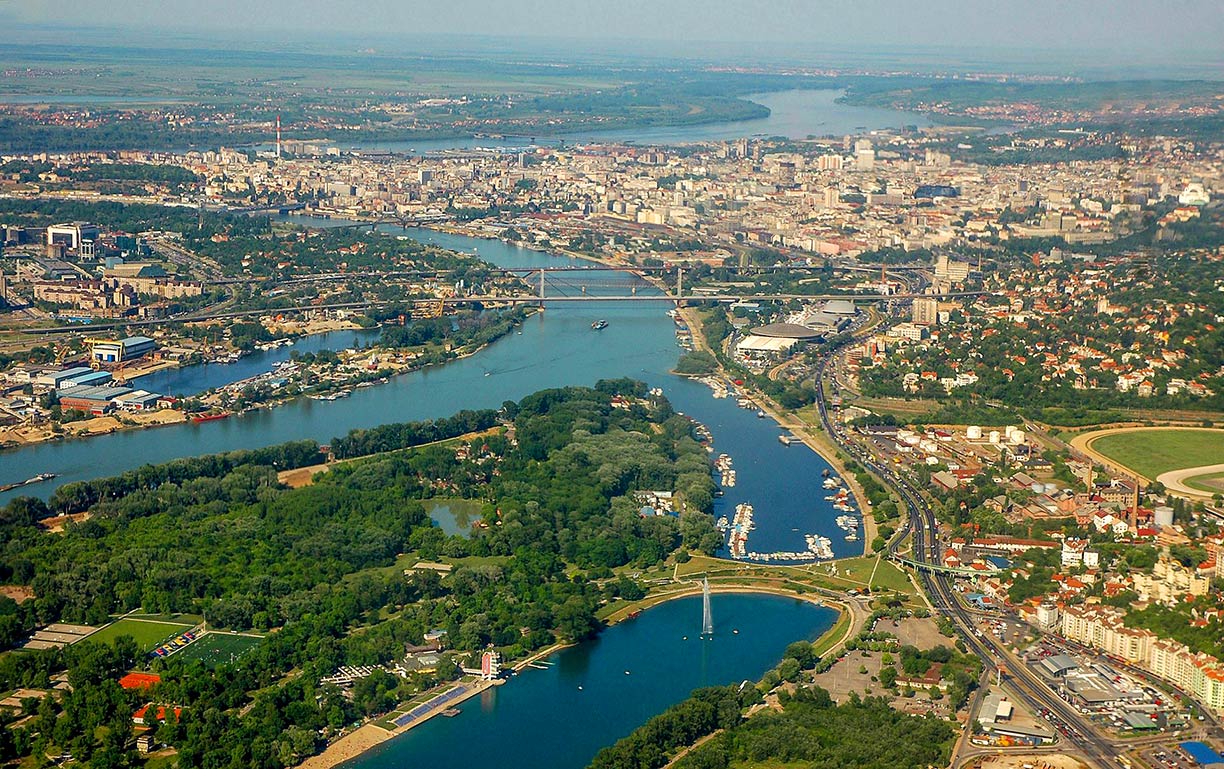
Macroeconomic and fiscal indicators of Serbia
Serbia’s economic growth accelerated in the second half of 2023, bringing GDP growth for the year to 2.5%, thanks to a better-than-expected performance of the agriculture and construction sectors, and a strong sector recovery of energy, after the crisis of 2022[1] .
Economic activity showed signs of improvement, boosted by strong fiscal support ahead of parliamentary elections in December. The ruling party’s landslide victory has strengthened its hold on power, indicating that no change in governance or economic policy is expected in the near future.
Net exports and consumption were the main drivers of growth in 2023, while investment had a negative contribution. In 2024, growth is expected to accelerate further, with full-year economic growth expected to reach 3.5%.
| Key economic indicators | Serbia | ||
| 2021 | 2022 | 2023 | |
| Population, 1000 people | 6,834 | 6,664 | 6,614 |
| GDP, real change in % | 7.7 | 2.5 | 2.5 |
| GDP per capita (EUR in PPP) | 14,240 | 15,560 | 16,310 |
| Average unemployment rate (in %) | 11 | 9.4 | 9.5 |
| Average monthly gross salary, EUR | 772 | 880 | 1,011 |
| Average annual inflation (in %) | 4.1 | 11.9 | 12.1 |
| Budget deficit (% of GDP) | -4.1 | -3.2 | -2.2 |
| Public debt (% of GDP) | 57.1 | 55.6 | 52.3 |
| FDI flow, EUR mln. | 3,886 | 4,432 | 4,522 |
Në vitin 2023, ulja e varfërisë vazhdoi për shkak të rritjes së fortë ekonomike dhe incidenca e varfërisë vlerësohet të ketë rënë në 7.1%, nga 7.5% në 2022.
The inflation rate has slowed, but only gradually: it remained close to double digits at the end of 2023, one of the highest figures in WB6[2].
Real wages started to rise towards the end of the year, however they are still below the first level at the end of 2021.
Public investment is expected to remain strong and FDI inflows are likely to remain strong, with the country continuing to attract investment from both the West and the East. However, structural challenges will persist.
These include issues related to the current economic model, such as the neglect of domestic private investment, the lack of rule of law, widespread corruption, and democratic backsliding, all of which will hinder the potential for higher growth rates.
After last year’s stagnation, consumption should become the main driver of GDP growth in 2024 as disinflation and rising wages boost real disposable incomes and credit conditions improve.
A moderate boost to growth is also expected from the investment side. Net exports may detract from growth as imports recover and export growth remains moderate

Leave a Reply
You must be logged in to post a comment.