


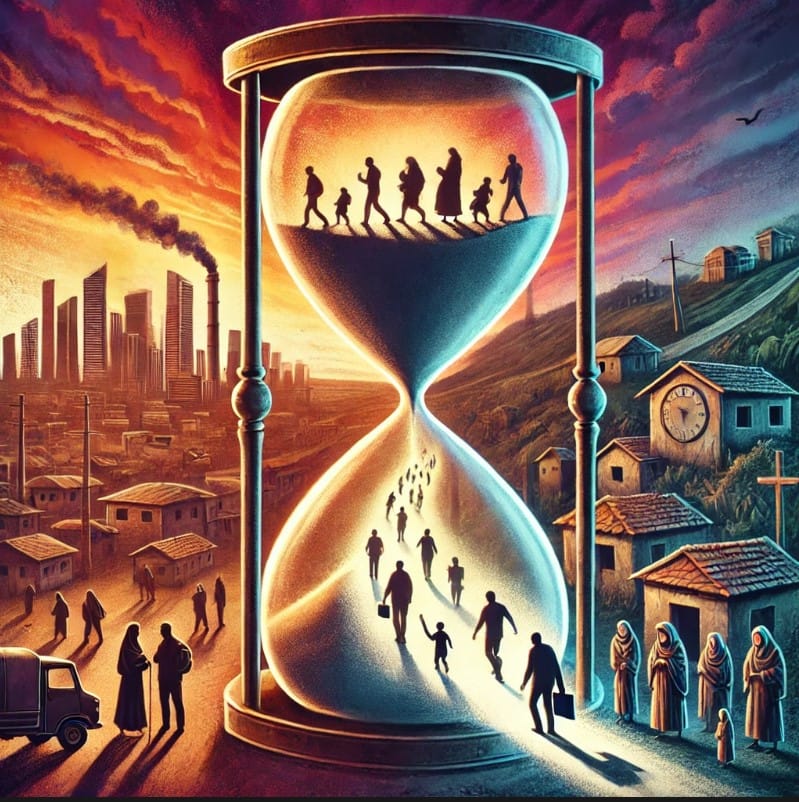
Facing Albania’s Double Challenge: Population Aging and Emigration
economic structure: an aging population and mass emigration. These phenomena are exerting increasing pressure on the labor market, the pension system, and the country’s economic growth. While many developed countries have faced similar trends, Albania’s situation is more complex due to the massive emigration of young people and persistently low birth rates.
1. Declining Birth Rate: A Key Driver of Demographic Decline
One of the primary factors accelerating Albania’s aging population is the sharp drop in fertility. According to INSTAT, the birth rate stands at around 1.3 children per woman—well below the replacement rate of 2.1. This trend is comparable to Eastern European countries like Bulgaria (1.5) and Romania (1.6), but contrasts with countries like France (1.8) and Sweden (1.7), which have implemented proactive policies to boost fertility.
To address this issue, Albania must adopt policies that support childbirth and new families:
- Subsidies for the first, second, and third child, with progressively larger amounts in depopulated regions. Countries like France and Hungary have introduced direct financial support to families, positively influencing fertility rates.
- Increased investment in nurseries and kindergartens not only supports working parents but strengthens community ties and encourages people to stay and invest in their country.
- Extended paid parental leave and flexible work arrangements are important but must be realistically implemented. Low wages and lack of enforcement dilute the impact of these measures. Nordic countries have shown that work-life balance directly supports higher birth rates.
2. Rising Life Expectancy and Strain on the Pension System
Life expectancy in Albania has risen to 78.5 years in recent years, putting increased strain on the pension and healthcare systems. While this trend is common in the EU, those countries have more advanced social protection systems. Albania’s pension system is under severe pressure due to a shrinking base of contributors.
The combination of low birth rates and youth emigration is shrinking the working-age population. According to the World Bank, Albania’s population could decline to just 2 million by 2050 if current trends persist. This would result in severe labor shortages, similar to what has occurred in countries like Italy and Germany, which have used immigration policies to fill gaps in the labor market.
3. Reforming the Pension System and Supporting Older Workers
Aging is increasing pressure on the pension system, requiring urgent reforms—beyond what the government proposes unilaterally for political gain rather than systemic resolution.
- Gradual increases in the retirement age should be part of broader reform packages. Germany and Italy have tied retirement age to life expectancy to reduce pressure on public pension schemes.
- Employment programs for older adults are underdeveloped and lack a clear path to implementation. Some countries have created incentives and favorable conditions to keep older workers in the labor market.
4. Managing Emigration: A Skilled Workforce in Decline
Albania has one of the highest emigration rates in Europe, particularly among skilled professionals such as doctors, engineers, and IT specialists who seek better pay and working conditions abroad. This trend is similar to Romania, which lost over 3.4 million people in recent decades.
Mass emigration—especially of skilled labor—has created serious gaps in Albania’s labor market. To slow this trend, robust policies are needed to make Albania more attractive to its workforce:
- Raising the minimum wage and improving labor contracts should be top priorities in current political debates. In developed countries, decent pay and job security are key factors influencing people’s decisions to stay.
- Reducing informality and strengthening labor protections must become part of a national consensus, not just a tool for political gain. Much of Albania’s labor remains undeclared, depriving workers of legal protections and social benefits. Yet this issue has not been addressed with the necessary urgency or comprehensiveness.
5. Returning Talent and Reducing Regional Inequality
Policies aimed at bringing back professionals from abroad have had limited effectiveness. Other countries like Ireland and Lithuania have successfully used tax incentives and startup support to attract returnees, but Albania has yet to follow suit meaningfully.
Regional inequality is a key driver of both internal and international migration. To reduce this gap, sustained investment in infrastructure and local economies is required. So far, these efforts have often been politically driven rather than economically grounded.
Although infrastructure projects have begun across the country, their impact on connectivity and local economic integration remains limited. Similarly, subsidies for agriculture and agritourism are distributed unevenly and suffer from politicization. In contrast, countries like Italy and Spain have used rural development subsidies to revitalize underserved regions and create employment opportunities.
To address these complex demographic challenges, Albania must pursue well-integrated policies that not only mitigate negative impacts but also foster economic growth and social welfare. International experiences show that a strategic mix of social, economic, and regional interventions can be effective. However, success depends on long-term political commitment, clear implementation strategies, and inclusive dialogue that rises above short-term interests.

Leave a Reply
You must be logged in to post a comment.