


Current military crises and the tasks of the Albanian economy
The Albanian economy, regardless of the situation outside its borders, is vulnerable, as it has left areas of its sovereignty not to be an influencing factor in cases of outbreaks of military and economic crises. The fact that the oil produced in the country had no mitigating weight for the domestic market during the price crisis after the Russian aggression in Ukraine is a weighty fact to take different actions without waiting for the new war between Hamas and Israel to affect and more.
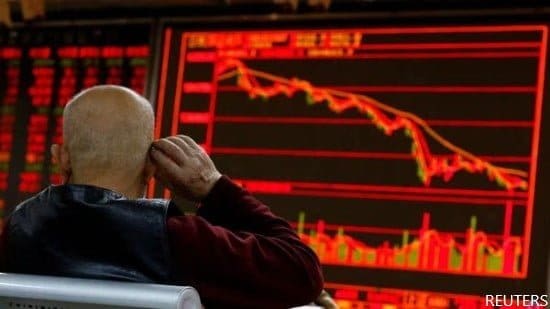
According to political and military analyzes on security, Albania seems unlikely to face an imminent military threat. However, Albania faces daily economic threats like all other NATO member countries and every other country in a region and beyond, as the prices of consumer goods and those related to energy products tend to increase a lot. faster than any possible theoretical prediction.
Concretely, the impact of the military crises in Europe, especially the comprehensive crisis between Serbia and Kosovo, have affected Albania in its weak point, the energy sector, which according to Prime Minister Rama “…is the backbone of the entire economic system of the country amid the ever-increasing threat of a deepening energy crisis” [1].
However, the impact in the case of conflict in the Middle East may take time to become clear and will depend on how long the conflict lasts, how intense it becomes and whether it spreads to other parts of the region.
“It’s too early to tell” what the implications might be, although oil and stock markets could have immediate consequences, Agustin Carstens, general manager of the Bank for International Settlements, said in a presentation to the National Association for Business Economics [2].
However, in the context of Albania’s small and open economy, the wars have the potential to at least add an unpredictable set of impacts to the economy, which, although it appears to be doing well, has been slowed by inflation and political and economic informality and is still adjusting to the approach of keeping interest rates high longer than has been mentioned so far.
The economy has witnessed the depletion of its supply capacity under escalating external and internal influences, and this has expanded segments of the informal sector. Businesses have survived the crises of recent years by using their savings and being influenced by an unrealistic optimism that the situation will be fixed. But in the current conditions, when the exchange rate with a weak euro, as well as the decrease in the competitiveness of the main and valuable products in the market, accompanied by a strong corruption crisis is forcing businesses to reduce their activities. Foreign direct investments, necessary for economic modernization, have taken a downward trend in those sectors that create premises for an increase in active capital for sustainable growth. These indicator levels of the economy are highlighted by a shift in the industrial base towards low-productivity and low-wage activities. The current period has also witnessed a general stagnation of the average size of enterprises and an expansion of micro-enterprises, with less than ten workers [3].
However, the economy has managed to absorb some of the new entrants [4]. But the introduction of young people into the market, as well as the re-introduction of immigrants returning to Albania in an unorganized manner, has kept a low level of productivity, further weakening the capacity of supplying the economy with additional labor and experience.
The whole current situation will inadvertently have an impact on the investment projects planned to be carried out and those that are being carried out, as long as the dilemma is answered whether this new conflict will be a repetition, a reinforcement of the Russia- Ukraine, or will new developments within the Western Balkans region occur and derail the long-term balance?
In this case, the Bank of Albania should, after its analysis based on the new facts, communicate to the public and the market if it is likely that the current situation abroad will lead to new inflationary pressures, based on the fear that the oil market immediately increased the price. But on the other hand, international transport will also have an impact on the cost of Albanian imports, as goods and equipment from China (in second place for Albanian imports for the 8-month 2023) pass through the Gulf of Suez.
So, starting from the fact that the Albanian economy had barely started stuttering into something different using the overbid foreign currencies to help the construction market and related segments (transportation, trade, mechanics, and real estate services), such an unclear situation is a blow to the confidence of how the Albanian economy will amortize.
The high energy prices expected to increase should influence the decisions on energy reserves and those of hydrocarbons, prompting the institutions for a complete control and analysis of the situation, as if it were a war threshold. Likewise, the situation must be sorted out according to security policies for important investments in the process in the energy and transport sectors.
On the other hand, starting from the experiences of the last year, the influences from the food import markets, as a possible risk for their perspective in view of the gradual easing of inflation, should encourage projects for the production and purchase of local products based on new relationships.
A collapse in agricultural production is a direct blow to mass consumption.
Other instruments (financial and fiscal) that can be used are likely not to avoid a recession, or a sudden market shock, which may react by speculating as it takes advantage of informality, political corruption, and the inability of the political class to make timely decisions.
While the policy of increasing market interest rates cannot be seen as a source of curbing inflation, in fact consumers and businesses should be encouraged to borrow and spend, as this optimization of consumption invigorates and moves the segments of the economy as well. , which have been inactive due to the new forced balance of the exchange rate of the euro with the lek and the expectation fueled by uncertainty about the future.
It is time that analysis of extreme policies like direct money supply on the one hand and demonetization on the other should be considered as commonplace in this unusual situation.
Let’s not forget that the economy can no longer tolerate the restriction of its freedom, as happened with the establishment of boards that rotted commercial relations and that are still felt to have changed the relations in the internal market, to the detriment of consumption and public interests.
[1] https://www.kryeministria.al/en/newsroom/impakti-i-luftes-se-rusise-ndaj-ukraines-e-vendeve-te-nato-s-mbi-cmimet-e-energjise-dhe-naftes/
[2] https://www.reuters.com/markets/middle-east-conflict-adds-new-risks-global-economic-outlook-2023-10-08/
[3] https://www.instat.gov.al/media/7172/regjistri-i-ndermarrjeve-2020.pdf
[4] https://www.instat.gov.al/media/11652/regjistrat-e-biznesit-2022.pdf

Leave a Reply
You must be logged in to post a comment.