


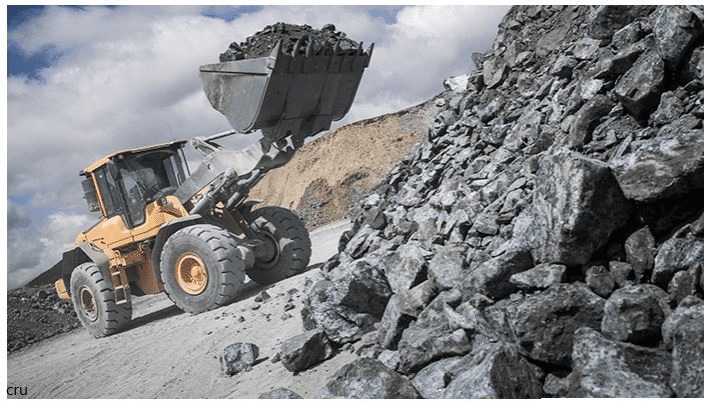
Chromium royalty has reduced the contribution to the state budget for the last three years Chromium royalty
According to the amendment made in December 2020[1] of the Law “On national taxes”[2] “In the case of the sale of mineral of the first group (I), “Metallic minerals”, which includes chrome and copper for processing within the country, from the extractor to the processor, the interest percentage is applied to the extent of 3/7 of the interest rate for in 2019, 3/8 of the interest rate for 2020 and at the rate of 0% for the period from the entry into force of this law (year 2021) until the end of 2023…”
In comparison with the quantitative data and the value of chromium ore and its concentrates for the year 2021 and 2022, according to the publication of INSTAT[3], it can be seen that:
– in 2021, 1.07 million tons were produced with a value of ALL 22.4 billion.
– in 2022, 1.4 million tons were produced (31% production amount more than the previous year) with a sales value of ALL 30.96 billion (38% higher sales than the previous year)
The comparison between the years 2022 and 2021 shows that there are 31% more production quantities than the previous year that were sold in the market with 38% higher values than the previous year.
From the entire production of chrome for the year 2022, up to 930 thousand tons, or 66.5% of the total produced by Albanian mines, were exported.
If we were to calculate the value of the royalty, zeroed from 2021 to 2023 for chrome processing within the country, it seems that the amount of 470 thousand tons that has been traded within the country is about 2.1-2.3 billion ALL “forgiven” for three years consecutively, 2021 – 2023.
According to the report of the Ministry of Finance at the time of the adoption of the law that facilitated domestic production for processing, “fiscal benefits for a period of 3 years will have a negative effect of approximately 500 million ALL in the state budget”. In fact, this legal initiative has a negative impact on the revenues of the local budget of the municipalities that have mines within their jurisdiction in the amount of 5-7 million euros per year.
In 2008, the annuity level changed. It increased in application levels from 4% to 10% depending on the type of mineral.
In 2010, rent levels changed for chrome, copper, nickel ores, coal and bitumen, as well as minerals and construction materials.
From a comparison between the periods when there was a change in the percentage of rent (2008 to 2007 and before, as well as 2010 to 2009 and 2008) it results that the increase in rent is accompanied by a decrease in the production of nickel minerals and limestone for inert, which are also the minerals with the largest weight in the annual volume of the total production of minerals in the country.
In this comparison before and after 2008, the effects that come from evasion as a result of the increase in rent, or for market reasons, where the internal market where some minerals are traded have more influence than the increase in the level of rent, have not been considered. Meanwhile, chrome or copper, based on the impact of contracts abroad, as well as the affordable cost for sale, has not been directly affected.
In the comparison for the periods before and after 2010, when the level of rent for minerals has changed for the second time, the same impact can be observed as with the changes that had the levels of rent for different minerals. For the minerals that are exported, it is seen that the rent has no impact on the volume of production. However, the copper ore has been affected by the price reduction in the international markets and has had a direct impact on the production volumes.
[1] https://www.tatime.gov.al/shkarko.php?id=9818


Leave a Reply
You must be logged in to post a comment.