


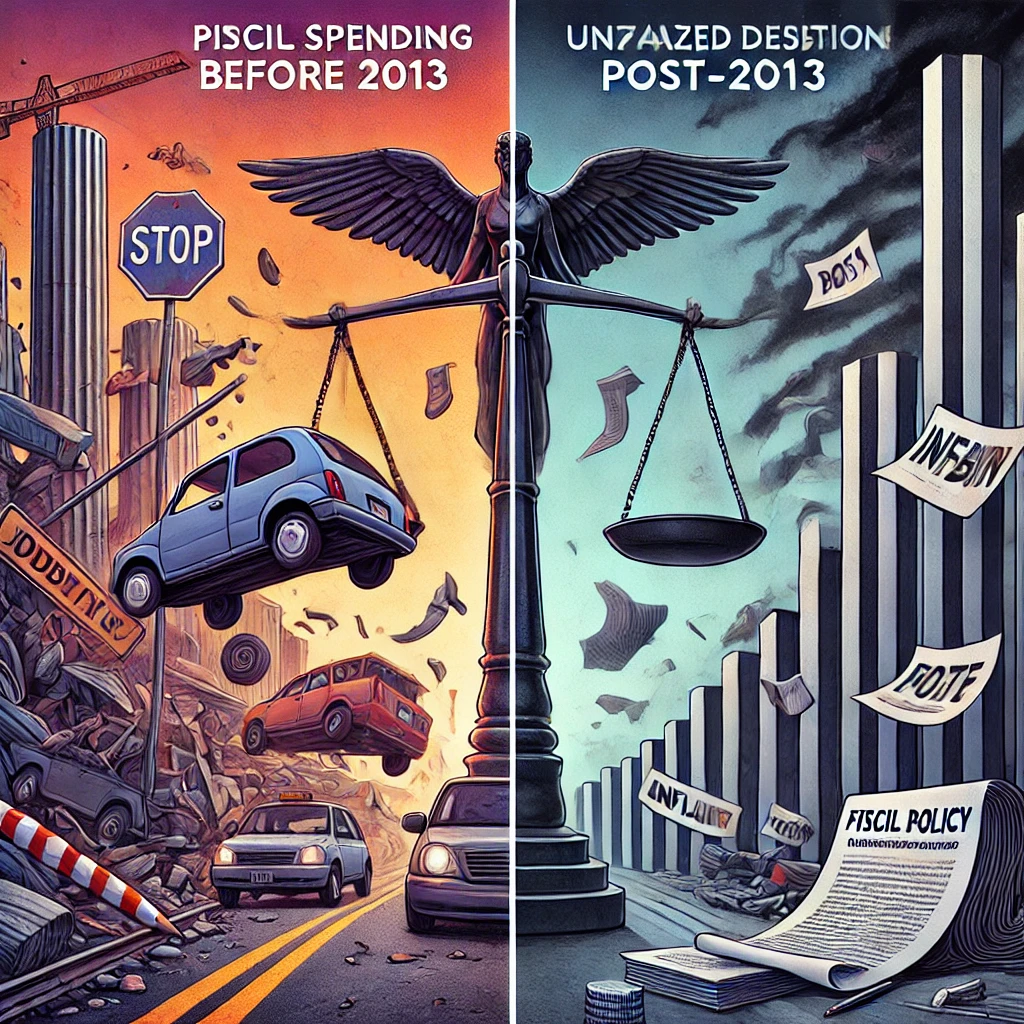
Analysis of Public Finances before and after 2013
The analysis of the main problems inherited in Albania’s public finances before 2013 highlights a series of complex and intertwined challenges, which negatively impacted fiscal sustainability and the country’s long-term economic development.
The increase in public debt and the lack of effective control is one of the fundamental problems of this period. From 2005 to 2013, public debt increased from 57.1% of GDP to 62.2%, exceeding the fiscal sustainability threshold and making economic financing more fragile.
Part of this increase was linked to high expenditure on major infrastructure projects, such as the construction of the Durrës-Kukës highway, which involved significantly higher costs than initially projected and lacked economic return analyses.
Furthermore, the budget deficit, which averaged around 4.5% of GDP, was financed through borrowing, further burdening public debt. This unsustainable fiscal management strategy created a chain of negative effects, including reduced space for new investments and increased reliance on external financing.
Another major challenge was the rise of arrears to businesses, which by the end of 2013 reached 72 billion ALL, or around 720 million euros. The state had a history of payment delays for public contracts, mainly in construction, supplies, and services. These delays not only created liquidity difficulties for businesses but also undermined the private sector’s trust in public institutions. Poor liquidity management in the state budget worsened the situation, increasing the economic burden on private enterprises and hindering sustainable economic development.
The increase in uncontrolled public spending was another key factor contributing to fiscal problems. Public spending peaked in 2009, reaching 32.4% of GDP, mainly focused on capital investments. While infrastructure investments could have had a positive impact on long-term economic development, the lack of feasibility and benefit analyses led to limited effects.
Projects such as the Durrës-Morinë highway, which cost over 1 billion euros, were carried out without regard for efficiency or economic impact. Moreover, populist policies such as salary and pension increases before elections, although serving electoral interests, lacked sustainable fiscal backing and strained the public budget.
Weaknesses in the tax administration and the phenomenon of corruption contributed to the worsening of the situation. With an informality level that reached over 40% of the economy and public revenues averaging 23.5% of GDP, the tax administration failed to mobilize the necessary revenues to cover public expenditures.
The lack of investments in technology and training for tax administrators exacerbated the problem, while corruption in key sectors such as customs and taxation significantly undermined citizen and business trust in the fiscal system.
Another concerning element was the weak and unstable fiscal system, which was further undermined by the introduction of the flat tax in 2007. This system reduced tax progressivity, increasing the burden on low-income groups and creating an unequal taxation structure. Revenues from direct taxes and VAT declined in some years, creating budget gaps and limiting the ability to finance public policies.
Ultimately, ill-considered investments and the lack of feasibility studies are a clear example of the failures of this period. Projects such as the Durrës-Kukës highway and others had costs far exceeding initial projections and failed to generate the expected economic return. In some cases, projects remained incomplete or were executed with significant quality shortcomings, representing a major misuse of public funds and a loss of development opportunities.
The legacy of these problems has continued to severely affect Albania’s public finances and economy to this day. Public debt remains above 60% of GDP, limiting the room for new and emergency policies, while business distrust and difficulties in implementing structural reforms have slowed economic growth and sustainable development. Meanwhile, social pressures created by public spending limitations have worsened living standards for many citizens, requiring a continuous confrontation with the consequences of past legacies.
The post-2013 period analysis shows several significant changes in the approach to public finances, including efforts to address some of the inherited problems, but also new challenges that have impacted economic development and fiscal sustainability.
In the post-2013 period, governments treated public debt as a stabilization priority. Public debt, which was 62.2% of GDP in 2013, continued to rise in the early years after 2013, reaching over 70% of GDP during the COVID-19 pandemic, but has since shown signs of stabilization around 60–65% of GDP. This management has been achieved mainly through:
- Greater discipline in public spending during 2014–2019,
- Agreements for the gradual clearance of arrears to businesses,
- Increases in budget revenues, especially through improved tax collection.
However, public debt remains high and continues to constrain financing for new capital investments. In recent years, it has faced pressure from rising global interest rates and inflationary effects, which have increased debt servicing costs.
After 2013, governments took steps to reduce arrears to businesses by implementing a better public payment management system. During 2014–2016, there were efforts to resolve inherited obligations in construction, services, and supply sectors, improving the alignment between spending and revenue. However, new issues emerged, including the creation of other obligations related to public-private partnership (PPP) contracts, which pose a long-term burden on the state budget.
The approach to public investment shifted from high-cost, non-feasible mega-projects toward PPPs.
These contracts have been used as a means to finance infrastructure and public services without increasing direct debt. However, PPPs have raised concerns regarding transparency, economic efficiency, and long-term budgetary burdens. Major projects, such as road and health concessions, have been criticized for lacking analysis of economic impact and for favoring specific private actors.
In the years after 2013, there were efforts to increase public revenues through fiscal reforms. Key changes included the shift from the flat tax to a progressive income tax in 2014, which increased the tax burden on higher-income individuals and businesses while improving fiscal equity. There were also improvements in tax collection systems and technology, reducing informality and increasing revenues from VAT and other taxes. However, informality remains a major challenge, especially in the construction, agriculture, and service sectors.
There have also been greater investments in modernizing the tax and customs administration. Electronic systems, such as “e-taxation,” have improved revenue collection and transparency. However, corruption in the public sector remains an issue, undermining public trust and limiting the effectiveness of undertaken measures.
Public spending has been more focused on sectors such as education, health, and social support. Nonetheless, social policies have faced significant difficulties due to insufficient resources and the pressures of inflation and the rising cost of living.
Recent crises, including the COVID-19 pandemic and increases in food and energy prices, have exposed the limitations of the current social protection system and support policies for the poor.
In recent years, Albania has faced new challenges, including the impact of imported inflation and global crises. The increase in food and energy prices has added pressure on households and businesses, while public debt remains a limiting factor for government policies. Meanwhile, the economy has shown moderate growth (3.94% in 2023), but lacks a strong foundation to address long-term challenges.
The differences between the pre-2013 and post-2013 periods reflect a transition from a phase dominated by uncontrolled spending and unclear economic priorities to a period with efforts toward fiscal discipline and improvements in the public revenue system.
Before 2013, high public expenditures—often without feasibility studies—and increasing debt were the main characteristics that moved the economy toward weak fiscal sustainability. Large-scale investments, such as the Durrës-Kukës highway, involved unforeseen costs and a lack of long-term benefits, deepening public debt and creating an ineffective investment environment.
On the other hand, the post-2013 period has been characterized by measures to reduce the deficit and stabilize public debt but also faced new challenges. Interventions to clear arrears to businesses and the implementation of progressive taxation brought some improvements in budget revenues and reduced inequality. However, public-private partnerships (PPPs), a tool used to finance major projects without increasing formal debt, have been criticized for poor transparency and long-term costs to the state budget.
Additionally, inflation and global uncertainties in recent years have increased pressures on the economy and the population. The rise in energy and food prices, as well as the cost of debt servicing, have hindered the government’s ability to focus on long-term investments or structural reforms. Despite some efforts toward fiscal discipline, public debt remains above optimal levels, while challenges related to corruption and informality continue to negatively impact the economic climate and public trust.
Overall, although the period after 2013 has brought improvements in some fiscal and administrative indicators, progress has been slow and often unstable, leaving room for concerns about the transparency and effectiveness of public policies.
This highlights that deep structural reforms remain essential to create a sustainable foundation for economic growth and social well-being.

Leave a Reply
You must be logged in to post a comment.