


Albania’s Economic Growth 2025: Structural Challenges and Long-Term Stability
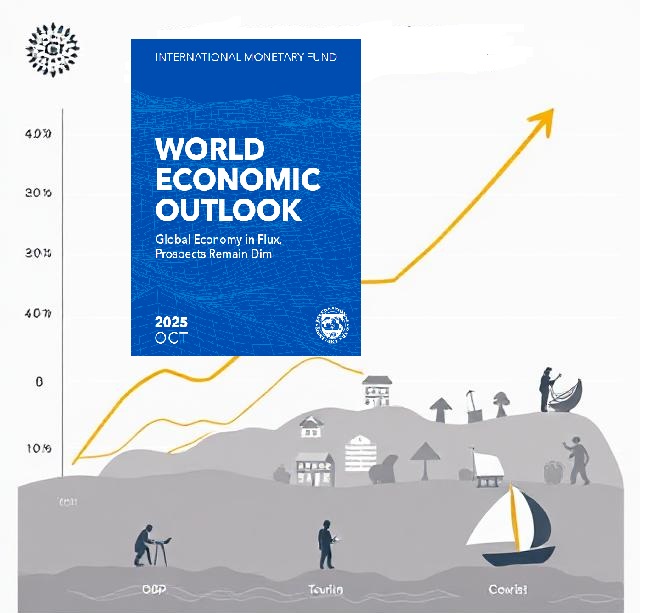
The International Monetary Fund (IMF), in its October 2025 report, forecasts steady growth for Albania, albeit at moderate rates. According to the data, real GDP is expected to grow from 4.0% in 2023 and 2024, to 3.4% in 2025, positioning the country close to the regional average of 3.5% for the same year. This indicates that Albania is progressing at a stable economic pace, but without signs of broad-based, sectorally consolidated growth.
However, growth remains constrained by the narrow structure of the Albanian economy.
During the period 2023–2025, economic development is driven mainly by construction, real estate, and tourism services, supported by natural resources and energy. Manufacturing and industrial sectors remain relatively sluggish, making growth less consolidated and more sensitive to domestic and external shocks. This concentrated structure underscores the need for strategic investments and sectoral diversification to ensure that growth is sustainable and resilient to fluctuations.
Regional comparisons show that Albania does not differ dramatically from other economies with similar structures:
- Bosnia: 2.0–3.0% (2023–2025)
- Montenegro: 3.2–3.2%
- North Macedonia: 2.1–3.4%
- Bulgaria: 1.9–3.0%
- Serbia: 2.4–3.9%
Although Albania’s growth rate is slightly higher than that of some regional peers, this does not automatically translate into a sustainable strengthening of the domestic currency. Inflows from Foreign Direct Investment, tourism, and remittances are substantial, but a significant portion of these flows is concentrated in non-productive sectors or outside the formal economy, increasing the economy’s dependence on external factors and seasonal fluctuations. This dynamic explains why the lek remains volatile, despite significant foreign currency inflows.
Moderate growth and concentration in a few specific sectors highlight the economy’s vulnerability to market fluctuations and domestic shocks.
To ensure long-term stability, the IMF and economic experts recommend:
- Diversifying productive sectors to increase the contribution of industry and exports.
- Formalizing currency flows to reduce the impact of informal and seasonal economic activity.
- Strengthening the fiscal base to reduce reliance on external inflows and real estate-driven growth.
By following these steps, Albania can achieve more sustainable and balanced growth, improve exchange rate stability, and create a solid foundation for long-term economic development.
For full data and official analysis, refer to the IMF report: IMF World Economic Outlook, October 2025


Leave a Reply
You must be logged in to post a comment.