


How Corruption Distorts Capital Allocation in the Western Balkans (WB6)?
In public debate, corruption is often treated as a problem limited to the direct theft of public funds, bribery, or abuse of office. However, from an economic perspective, its damage is far deeper. Corruption operates as a systemic mechanism that distorts the allocation of financial, institutional, and human resources throughout the economy. Instead of capital being directed toward high-productivity investments, innovation, education, technology, and competitive entrepreneurship, it is diverted toward activities that generate profits through political privileges, monopolistic advantages, clientelism, and economic rents.
It is precisely this mechanism that makes the real cost of corruption far greater than the fiscal losses that can be directly measured in public budgets. The loss is represented not only by misused funds, but also by investments that never materialize, businesses that are never created, jobs that are never generated, and talent that leaves the region.
Calculations based on the Western Balkans Corruption Cost Index (WB6-CCI) indicate that the total economic cost of corruption ranges between €5.9 billion and €7.6 billion annually, with an average of approximately €6.7 billion. This amount represents a developmental burden that constrains the region’s long-term potential and significantly delays its convergence process with the European Union.
Public Procurement – The Main Channel of Resource Loss
Public procurement constitutes the primary mechanism through which governments invest in infrastructure, public services, and strategic supplies. For this reason, it is also the sector where the impact of corruption becomes most visible and measurable.
In a properly functioning system, public contracts are awarded to operators offering the best combination of price and quality. Under conditions of corruption, this principle is replaced by political favoritism, bid-rigging, artificial restrictions on competition, and contract overpricing. The result is that the state pays more for the same service or receives lower quality for the same price.
International studies indicate that in countries with high levels of corruption, the average overpricing of public contracts ranges from 15% to 30%. In Serbia, losses associated with infrastructure projects are estimated at €400–600 million annually, an amount equivalent to 50–80% of the annual road maintenance budget. In Bosnia and Herzegovina, institutional fragmentation and the complex inter-entity structure increase public project costs by approximately 20–35%.
At the regional level, losses associated with public procurement reach €1.3–1.9 billion annually, representing roughly one quarter of the total corruption cost measured by the WB6-CCI. This makes public procurement not only the largest source of direct financial losses, but also the most important mechanism through which corruption distorts economic development priorities.
Public-Private Partnerships (PPPs) and Concessions
Public-Private Partnerships and concession contracts were designed as instruments for mobilizing private capital to implement public investments. When implemented under high standards of transparency and accountability, they can increase efficiency and reduce fiscal pressure on public budgets.
However, in environments characterized by weak institutions, PPPs and concessions can become mechanisms for transferring public value to private interests. The problem is not limited to corruption during the contract award process; it also extends to long-term contractual arrangements that create hidden fiscal obligations and restrict market competition.
In several cases within the regional energy sector, hydropower contracts have guaranteed purchase prices that were 30–50% higher than average European spot market prices. In Montenegro, management contracts awarded without effective competition have generated estimated losses of between €40 million and €80 million annually. Water supply, waste management, and municipal service sectors continue to be considered among the areas most exposed to corrupt practices.
The long-term consequence is that public funds that could otherwise be invested in education, healthcare, or productive infrastructure become locked into inefficient contracts with limited economic returns.
Foreign Direct Investment (FDI) – The Largest Invisible Cost
One of the least visible, yet economically most significant, consequences of corruption is its impact on foreign direct investment. Unlike losses in procurement or PPPs, this cost does not appear in public accounts; rather, it is reflected in investments that never occur.
International investors make decisions based not only on market size or labor costs, but also on institutional quality, legal certainty, and policy predictability. Corruption increases uncertainty, raises operating costs, and undermines confidence in market functioning.
International economic literature strongly confirms this relationship. Mauro (1995) argues that deteriorating corruption perceptions are associated with significant reductions in private investment. Dreher and Gassebner (2013) find that a one-point deterioration in corruption indicators may reduce the FDI-to-GDP ratio by 2–3%.
Considering the average gap of 25.5 points between the Western Balkan countries and European Union standards in institutional integrity indicators, the region potentially loses €3–5 billion in foreign direct investment every year. This represents the largest category of corruption’s invisible costs, as it reflects capital, technology, managerial know-how, and employment opportunities that never enter the economy.
Brain Drain – The Loss of Human Capital
If financial capital leaves because of institutional uncertainty, human capital leaves because of the absence of meritocracy. Corruption affects not only businesses and investors; it also directly influences individual decisions about whether to build a future at home or abroad.
When promotions, hiring decisions, and economic opportunities are perceived as outcomes of political connections rather than merit, highly educated and skilled individuals have fewer incentives to invest in their careers domestically. As a result, emigration becomes the most rational economic strategy for many young professionals.
The region loses approximately 40,000–60,000 highly educated or professionally qualified young people every year. The replacement cost of this human capital, including investments in education, training, and lost productivity, is estimated at €2–3 billion annually.
The consequences are long-term: lower economic growth, shortages of skilled professionals in strategic sectors, and weakened institutional capacity to implement reforms.
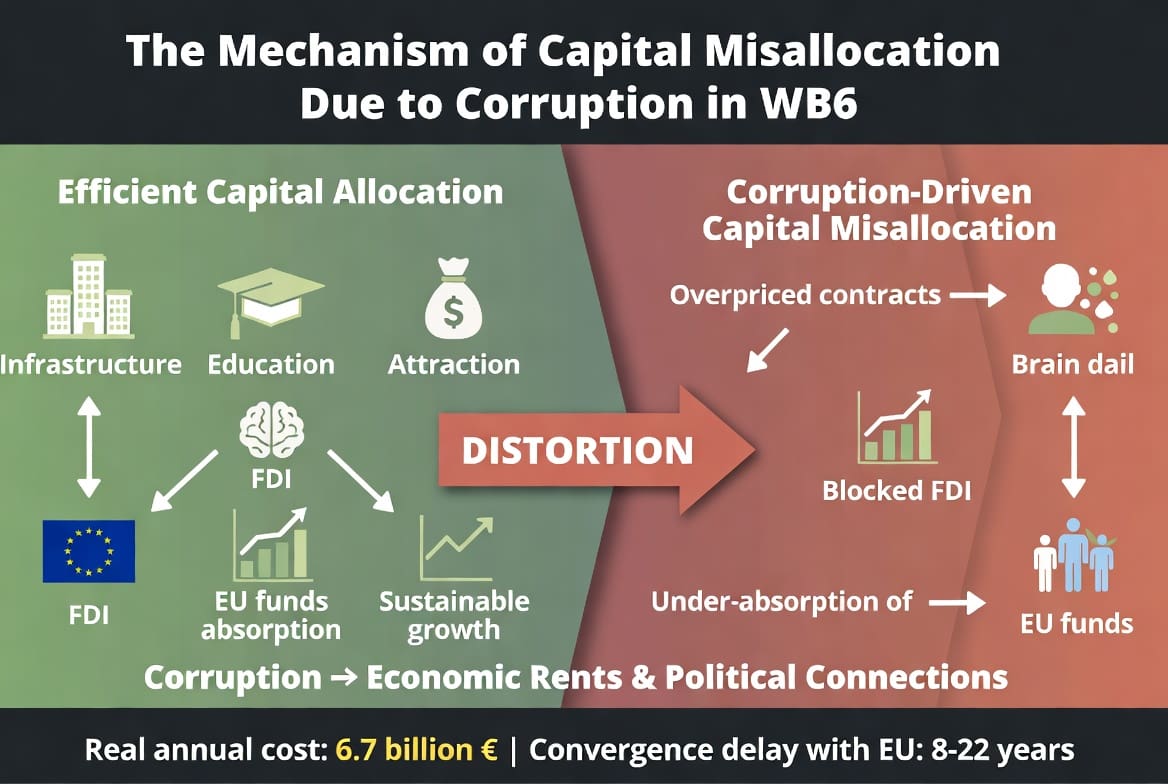
Figure 3 – The Mechanism of Capital Allocation Distortion
| Dimension | Efficient Allocation | Allocation Under Corruption |
| Infrastructure | Market pricing, high quality | Overpriced contracts |
| Education & Skills | Productive investment | Talent emigration |
| FDI | Strong attraction of investment | Blocked by institutional risk |
| State-Owned Enterprises | Efficient with auditing | Losses and political appointments |
| EU Funds | Maximum absorption | Massive under-absorption |
| Outcome | Sustainable growth and convergence | Growth below potential, inequality, and divergence |
The table illustrates that corruption does not simply represent a transfer of funds from the public sector to specific individuals. It changes the direction of the entire economic system. Capital does not disappear; rather, it is redirected from productive uses toward rent-seeking activities, thereby reducing national productivity and long-term development potential.
Convergence Gap with the European Union
One of the most meaningful ways to measure the cost of corruption is through its impact on the time required for economic convergence with the European Union. Rather than being viewed solely as an ethical or institutional issue, corruption should be understood as a factor that directly prolongs the time needed to achieve European standards of prosperity.
The WB6-CCI analysis indicates that structural corruption causes significant delays in the pace of economic convergence with the EU. Bosnia and Herzegovina emerges as the most problematic case, with an estimated delay of 15–22 years. Serbia faces a delay of 12–18 years, while Albania, North Macedonia, and Kosovo fall within a range of 8–14 years. Montenegro remains the relatively best performer, although even there the cost of corruption translates into a delay of 6–10 years.
GDP per Capita Projections to 2035 (WB6 Average, PPP €)
| Scenario | GDP per Capita in 2035 | Difference Compared to Status Quo |
| Reform | €23,500 | +€7,500 |
| Status Quo | €16,000 | — |
| State Capture | €10,100 | -€5,900 |
The difference between the Reform scenario and the State Capture scenario reaches €13,400 per person by 2035. At the regional level, this translates into approximately €24 billion in additional or foregone economic output, depending on the political and institutional choices made during the coming decade.
Strategic Scenarios for 2035
| Dimension | 🟢 Reform | 🟡 Status Quo | 🔴 State Capture |
| Annual Cost of Corruption | €2.5–3.5 bn | €6.5–7 bn | €9–12 bn |
| Impact on GDP Growth | +1.2–1.5 pp | 3.5–4% | -1.5–2 pp |
| EU Fund Absorption | 50–60% higher | 45–55% | Blocked |
| EU Convergence | 8–12 years closer | Stagnation | Further divergence |
These scenarios demonstrate that corruption is not a secondary policy variable. It is a determining factor shaping the region’s economic trajectory. The difference between reform and inaction is measured not in perceptions, but in billions of euros of investment, employment opportunities, and living standards.
In response to these structural costs, a package of measurable and monitorable reforms is required at the regional level. Key priorities include the annual publication of the WB6-CCI beginning in 2026, with the objective of creating a sustainable mechanism for monitoring the economic cost of corruption. At the same time, electronic procurement systems should be harmonized with the Open Contracting Data Standard (OCDS) and achieve full implementation by 2028.
Another high-impact instrument would be the conditional allocation of at least 30% of European Union Growth Plan funding based on the achievement of measurable anti-corruption milestones. In parallel, state-owned enterprises and PPP contracts should be subject to independent annual audits, while judicial reforms should focus on strengthening genuine institutional independence and reducing the backlog of unresolved cases.
Structural corruption in the Western Balkans is not merely a governance challenge or a formal requirement of the European integration process. It represents the region’s most significant development obstacle because it distorts the allocation of economic, financial, and human resources.
Its cost reaches an average of €6.7 billion annually. It delays convergence with the European Union by between 8 and 22 years, reduces foreign investment, weakens competitiveness, and drives the emigration of 40,000–60,000 highly qualified young people every year.
In this context, the fight against corruption should not be viewed as an administrative obligation or a technical condition for EU accession. It represents the single highest-return economic investment that the region can make.
The principal contribution of the WB6-CCI is that it shifts the debate away from the traditional question, “How corrupt is the region?” toward a far more concrete and measurable one: “How many euros, how much investment, and how many years of development are we losing every year because of corruption?”
Only when the cost of corruption is measured in economic and developmental terms can public policy build responses that are serious, transparent, and results-oriented.
Part of the policy document WB6 Cost of Corruption Index (WB6-CCI, 2025)

Leave a Reply
You must be logged in to post a comment.