


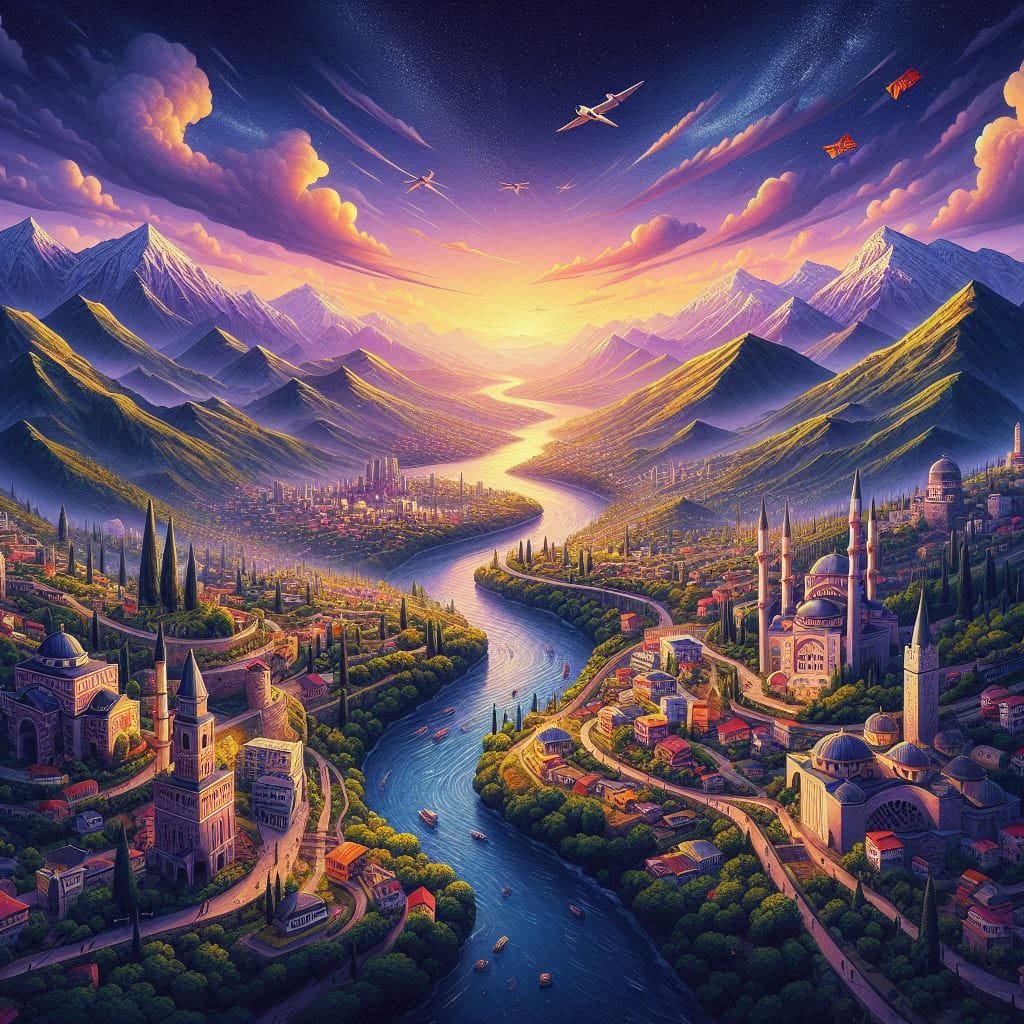
With which countries should Albania’s economy be compared?
In general, the economy of Albania is often compared to other small emerging economies in Southeastern Europe and the former Soviet Union that share similar historical experiences and growth challenges.
The economy of Albania can be compared to countries of similar size, income levels, and stages of development. These countries tend to have similar challenges, such as high unemployment rates, low wages, and the need for infrastructure development, while also benefiting from EU integration and foreign investment opportunities.
Some appropriate comparisons in answering the question might be the following countries:
1. North Macedonia. As a neighboring country in the Balkans, North Macedonia has a similar population size, geographic location, and economic structure. Both countries are transition economies with a focus on sectors such as agriculture, industry, and services.
2. Kosovo. The Albanian-speaking state of Kosovo, also in the Balkans and a neighbor to the northeast, has very similar economic profile to Albania, with a focus on remittances, agriculture, and post-conflict reconstruction. Both have relatively small, developing economies with limited industrial sectors, but have a lot in common since they both are Albanians.
3. Bosnia and Herzegovina. Another Balkan country with a comparable level of GDP per capita and economic structure. It also faces similar challenges, such as reliance on remittances and foreign investment for growth.
4. Georgia. Although geographically distant, Georgia shares a similar post-Soviet history and economic transition, with a focus on services and agriculture. It also has a comparable size and growth potential.
Like Albania, Georgia is a small, developing country with a post-Soviet history. It has a similar mix of agriculture, services, and some light industry in its economy. Both countries also rely heavily on remittances and have made efforts to integrate into European and global markets.
5. Serbia. Serbia like Albania is a country in the Western Balkans with similar historical events in recent decades, having been part of the former communist bloc. They share some economic challenges, such as the transition from a centrally planned economy to a market economy, and have comparable levels of GDP per capita. Both countries have growing service sectors and are focused on infrastructure development and foreign investment.
6. Montenegro. Another country in the Western Balkans, Montenegro has a small economy with a similar reliance on sectors such as tourism, agriculture, and services. Like Albania, it has worked to integrate with the European Union and attract foreign investment to boost its economy.
7. Moldova. While Moldova is geographically further away, it shares many economic characteristics with Albania, such as a relatively low GDP per capita, a strong dependence on agriculture, and significant remittances. Both countries face challenges such as corruption, infrastructure deficiencies, and unemployment.
A comparison with these countries below can be useful to better understand where Albania stands in comparison to the member states of the European Union, as well as to identify economic opportunities and challenges.
8. Greece. This country is one of the closest countries to Albania in geographical and economic terms. A comparison with Greece can point to changes in key sectors of the economy and the benefits of greater integration into European markets.
9. Croatia. Croatia has a more advanced economy and could be a reference for Albania in terms of structural changes and development of the tourism sector.
Comparing these economies with Albania helps to highlight Albania’s strengths and areas for improvement, guiding economic policies and development strategies.

Leave a Reply
You must be logged in to post a comment.