


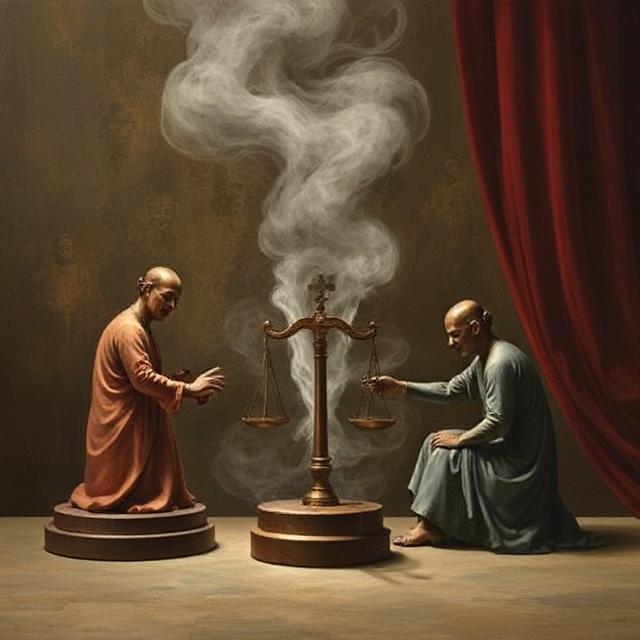
When the law is softened and the violation strengthened – Inspection as a reform illusion in Albania
Albania is currently at a critical turning point where the philosophy of inspection, from an instrument for ensuring the enforcement of the law, is transforming into an institutional illusion that masks state failure. The new Law “On Inspection in the Republic of Albania”, approved at the end of 2024[1], aims to build a culture of cooperation between the inspector and the subject, with an emphasis on raising the violator’s awareness.
This law promises reform, but its implementation and content signal a visible softening of the rule of law in the name of education and cooperation.
But in the Albanian reality, where a stable legal culture is lacking, institutions are politicized, and the inspector’s authority is diminished, this approach turns into a practical devaluation of the state’s control function.
Instead of strengthening the rule of law, it is legalizing impunity.
Punishment, once a tool to deter violations, has become an empty symbol, a legal decoration that no longer carries any dissuasive force.
Meanwhile, unstructured education, without follow-up mechanisms and without concrete accountability, becomes an institutional illusion that legitimizes violations and lowers trust in the law. Instead of increasing awareness, this approach feeds impunity.
The failure of the inspection system is no longer abstract.
In this system, the violator is not only unafraid but feels confident that the law will not affect them, at least not immediately.
The consequences are already visible, especially in the food safety sector, where the risk to public health is direct.
The rise in poisoning cases, the presence of expired products on the market, the lack of labeling, and inadequate hygienic-sanitary conditions are no longer just technical issues, but clear indicators of the failure of the inspection system.
Instead of punishing serious violations, subjects are warned—or worse, they benefit from unilateral pardons that destroy every logic of responsibility.
When punishment is replaced with counseling, the protection of public health collapses.
This approach culminated with the decision to forgive all unpaid administrative fines for the period 2015–2024.
This act by the government is not just a failure in revenue collection, but a clear and dangerous political message.
In Albania, violations are not punished, but tolerated.
The state not only lacks consistent stances, but rewards deviant behavior without any reflection. A business that for years has operated in violation of the rules has no reason to improve its standards when the state pardons it unconditionally.
The comparison with regional countries is meaningful. In Montenegro and North Macedonia, warnings are used only for light and justified cases, while for violations affecting safety or competition, punishment is immediate and non-negotiable. In Serbia, specialized structures have been established to guarantee the integrity of inspectors, clearly separating counseling from punishment. Albania, instead of strengthening the system, has devalued it.
In Albania, the concept of warning has turned into the norm, regardless of the nature of the violation. This not only creates legal uncertainty but undermines the preventive function of inspectors. Inspection has turned into a formal ritual—inspection is done, but not punishment; advice is given, but no action follows.
Worse than the wrong philosophy is the weak infrastructure that accompanies it.
No law can function on weak implementation infrastructure. In Albania, the inspection system is undermined by three deep wounds:
– Lack of technical capacities, making the identification and tracking of violations impossible;
– Political selection of inspectors, undermining independence and professionalism;
– Widespread corruption in the field, turning inspection into a tool of selective pressure, not an instrument of equality before the law.
In this context, inspectors have become advisory figures without real authority.
The new law does not equip inspectors with more power—on the contrary, it removes their most important tool, the immediate fine, reducing them to passive figures.
This is a step backward in ensuring the public interest, where the state inspects but does not act; identifies the violation but does not punish; advises but does not correct.
It must be said clearly!
Education as a philosophy is not the problem. But it only works on strong institutional foundations, inspector integrity, and respect for the law by the state itself. Albania does not meet these conditions.
In this context, education becomes an alibi for inaction, warning becomes a guarantee of impunity, and the inspector turns into an institutional extra.
A state that warns but does not punish, pardons but does not demand responsibility, is a state that no longer guarantees order, but simulates it. Inspection, if it remains in this form, is no longer an instrument of the rule of law, but an empty ritual that devalues the authority of the state itself.
Albania urgently needs an inspection system with real authority, professional integrity, and effective sanctions, otherwise it is producing a legal farce with serious consequences for security, the economy, and civic trust.



Leave a Reply
You must be logged in to post a comment.