


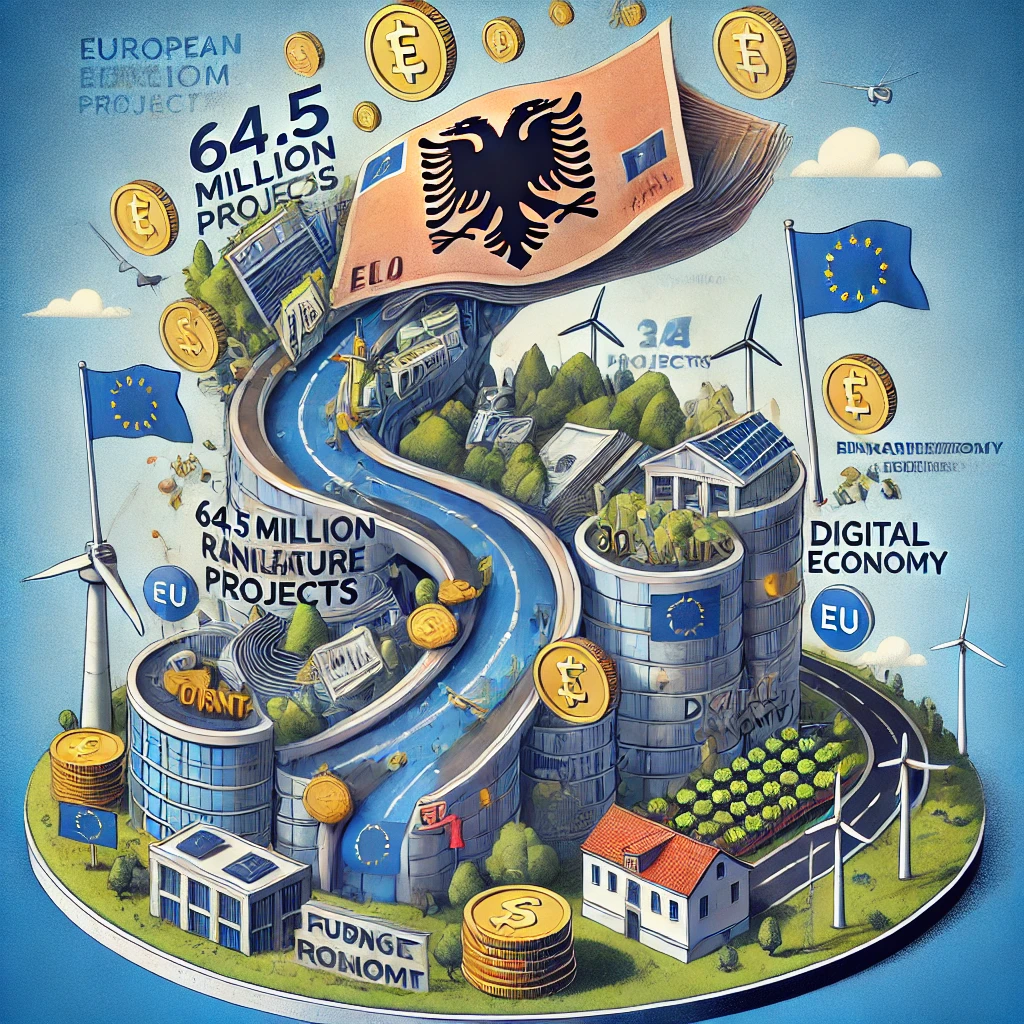
The challenge of transparency and accountability in managing EU Funds for Albania
Albania has received a pre-financing of €64.5 million under the European Union’s Reform and Growth Facility, part of the EU Growth Plan for the Western Balkans. This mechanism aims to support the region in accelerating socio-economic convergence with the EU and to pave the way for its future membership.
📌 Details of the Pre-Financing
- €30 million in concessional loans are allocated as budgetary support, intended to finance reforms outlined in Albania’s Reform Agenda. These are loans that citizens will ultimately be responsible for repaying.
- €34.5 million in grants are earmarked for infrastructure investments, channeled through the Western Balkans Investment Framework (WBIF).
🎯 Objectives of the Mechanism
The funding aims to:
- Strengthen the rule of law
- Develop critical infrastructure
- Support the green economy, human capital, and the private sector
- Promote sustainable growth and social cohesion
- Prepare Albania for integration into the EU Single Market
These funds will be used by the government to implement policies and projects under the Reform Agenda and the Reform and Growth Mechanism.
⚠️ The Core Challenge: Transparency and Accountability
In an environment where transparency and accountability mechanisms are weak, the risk of mismanagement and misuse of public funds is significant. Therefore, it is crucial to strengthen monitoring and oversight tools to ensure that the funds are used:
- To meet the declared objectives
- To deliver real benefits for Albanian citizens
Otherwise, this opportunity could be wasted or even become another case of public fund abuse.
💡 Potential Benefits for Citizens
While the €64.5 million pre-financing may not immediately impact citizens, it holds indirect benefits that could gradually translate into improved living standards and economic opportunities—if reforms are implemented effectively.
🔧 1. Infrastructure Improvements
Investments in roads, public transport, and business-enabling conditions can:
- Enhance market efficiency
- Reduce transport costs for individuals and businesses
🌱 2. Green Economy and Renewable Energy
Investments in renewable energy can:
- Lower energy costs for households
- Provide sustainable and reliable energy
- Create new jobs in solar, wind, and waste management sectors
👔 3. Support for the Private Sector
Boosting private sector development can:
- Generate new employment
- Encourage business growth
- Offer better wages and career opportunities
- Foster a more competitive market with benefits for both workers and consumers
⚖️ 4. Rule of Law and Better Public Services
Strengthening the rule of law and institutions may lead to:
- Less corruption
- A fairer tax system
- More efficient public administration
- Improved public services
- Reduced burden of unnecessary taxes
📊 Future Prospects
Albania is eligible to receive up to €922.1 million by 2027 from the Reform and Growth Facility, provided it meets reform conditions in areas like:
- Rule of law
- Renewable energy
- Digital economy
- Human capital development
- Private sector growth
Future disbursements will be performance-based, linked to reform milestones defined in the Reform Agenda.
✅ The €64.5 million pre-financing marks a positive signal for Albania’s European path. However, the real test lies ahead: whether the country will fully commit to executing reforms and fulfilling EU accession conditions.
Without robust implementation, citizens will bear the debt without enjoying the promised benefits. With transparent and accountable governance, however, this could become a turning point for Albania’s sustainable and inclusive development.



Leave a Reply
You must be logged in to post a comment.