


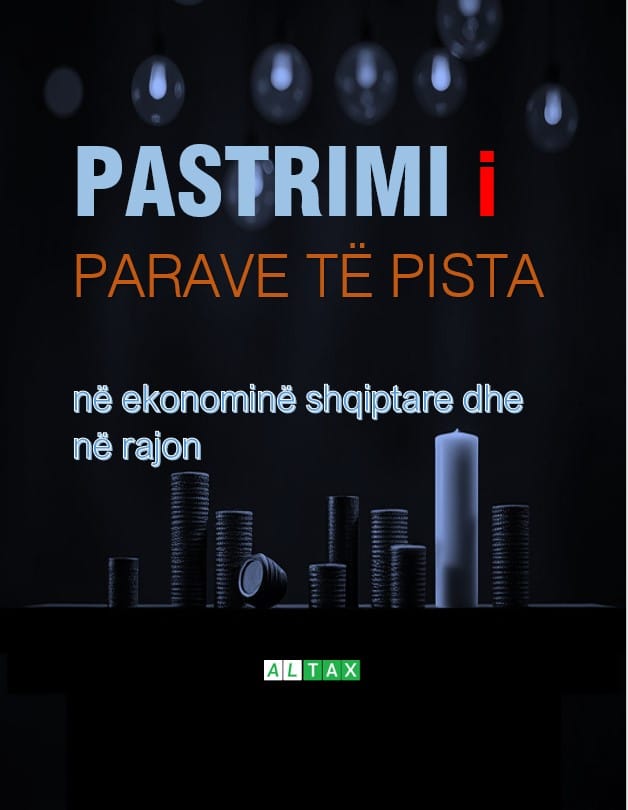
Study on Money Laundering in Albania and the Region: Economic impact and countermeasures
Money laundering is a serious issue that has had a profound impact on the Albanian economy and those of the surrounding region. It stands as a major obstacle to sustainable economic development and fiscal stability. Criminal activities such as drug trafficking, corruption, tax evasion, and organized crime contribute significantly to the spread of this phenomenon, which affects key sectors such as construction, tourism, and energy.
In Albania, illicit funds are primarily linked to drug trafficking—particularly cannabis and cocaine—as well as the laundering of money through the construction and tourism sectors. The informal economy is another critical factor, accounting for 20–25% of GDP, which translates to an estimated value of $4–5 billion USD. The economic impact is substantial, distorting market competition, increasing economic inequality, and causing significant fiscal losses.
In neighboring countries such as Kosovo, Serbia, and North Macedonia, money laundering is also widespread. In Kosovo, arms trafficking and corruption are major sources of illicit funds, while in Serbia and North Macedonia, ties to international organized crime and the use of sectors like construction and tourism for laundering purposes remain ongoing concerns.
Our study, “Money Laundering in the Albanian and Regional Economy: Impact, Effect, Consequences, and Approach,” clearly concludes that money laundering has deep and damaging effects on the economy and society in both Albania and the region.
To combat this phenomenon, it is essential to strengthen legal and financial controls, invest in transparency and international coordination, and develop more robust infrastructure for tracking and prosecuting illicit financial flows. Equally important is the need for Albania and neighboring countries to collaborate in enabling a more effective fight against money laundering and to secure sustainable economic development.
The study’s key message is that fighting money laundering requires a coordinated and enhanced approach at both national and international levels. Addressing this phenomenon demands stronger legal and financial measures, greater transparency, and the development of stronger capacities for monitoring and prosecution. Only through such committed efforts can a cleaner and more sustainable environment for economic and social development in Albania and the region be ensured.
For more information and consultation, you may contact our center for legal and economic support.


Leave a Reply
You must be logged in to post a comment.