


Modernization of public services in Albania, efficiency, or image?
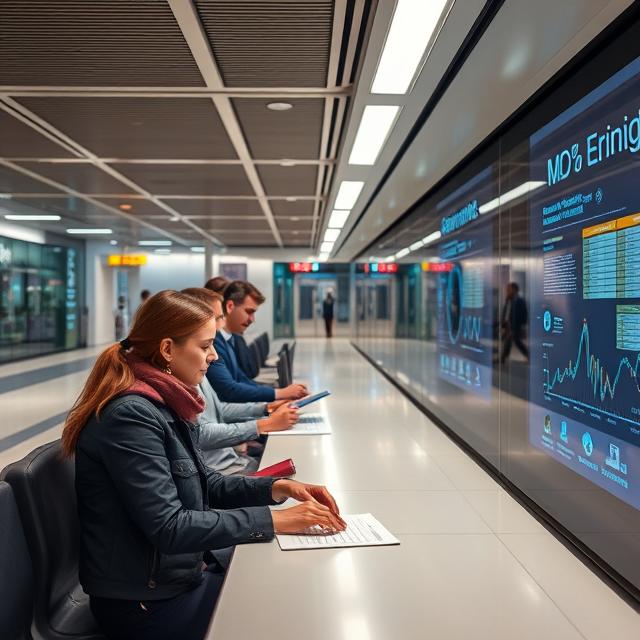
When entering an administrative office in a major Albanian city, the first feeling is a mixed one. Everything appears new and orderly. New furniture, windows that allow more natural light, relaxing spaces, digital boards showing the queue number, and even fresh colors on the walls create an impression of modernity.
However, behind this external façade, many things remain the same. Queues still continue to lengthen, bureaucratic processes and requests slow down service, and procedures require numerous documents.
The citizen, who hopes for a faster and simpler experience when hearing government advertisements about the modernization of buildings and spaces, often finds themselves waiting for a service that, in principle, could have been much more efficient.
Every year, a considerable portion of taxpayers’ money is dedicated to the administration budget for the maintenance of public buildings, the renovation of furniture, and technological equipment, around 8–9% of total operating expenses.
For a state with limited resources, this is a significant figure that must be justified with real benefits.
But here arises the dilemma: do these funds genuinely improve services for citizens, or is modernization used more as a visual façade creating the impression of efficiency?
This phenomenon intensifies during election periods. Every renovation, every new desk, or digital screen appears as a tool to gain political favor, while the real problem—delays, bureaucracy, and lack of staff capacity—remains untouched.
Service efficiency is not measured by wall colors or digital boards, but by how the institution functions: how quickly requests are completed, how few errors occur, and how accessible the service is to the citizen.
When modernization is carried out without a clear cost-benefit plan and without analyzing long-term financial impacts, it can simply turn into a “beautiful suit” over the same rigid bureaucratic structure, consuming funds without producing real improvements.
From a budget management perspective, every investment must have a clear orientation toward priorities: the busiest centers and services with the greatest impact for citizens should benefit first, while technologies and furniture should be selected to reduce operating costs and future maintenance expenses.
If these aspects are ignored, any modernization investment may have hidden costs appearing in future budgets, increasing financial pressure and limiting the ability to fund other important sectors.
An analysis of operating expenses and the modernization of public services shows a clear contrast between strategic objectives and actual practices.
Trends indicate that operating expenses have had a gradual increase, remaining around 9–10% of total expenses, a level that has ensured budgetary stability.
But after 2022, their growth has accelerated, mainly due to maintenance costs, technology, and major modernization projects. In theory, this could be interpreted as an effort to improve the quality of public services; in practice, the challenges are different.
The experience of European Union countries provides clear examples of how modernization should be organized.
In Germany and Finland, for example, every investment in the digitalization of public services undergoes detailed cost-benefit analyses and local pilot tests.
Projects are prioritized according to citizen impact: offices serving the largest number of users or critical services such as property registration, taxes, or healthcare are digitalized first.
An electronic property registration project in Estonia, which cost around 50 million euros over several years, brought a dramatic reduction in administrative errors and waiting times for citizens, also reducing operating costs in the long term.
In Albania, modernization expenditures are visible, but without a strategic plan and clear priorities.
Rushed investments in digital infrastructure or technology often result in new desks, digital screens, or unused systems that do not change citizens’ daily experiences. The cost of these projects can range from several hundred thousand to several million euros, placing a considerable burden on the budget without producing proportionate real benefits.
For example, investments in fiscal digital infrastructure or anti-informal economy technology over the past five years have been carried out hastily and without detailed analyses of needs and capacities measured against financial and human resources, resulting in new desks, digital screens, or systems with compromised security and continuing significant problems in service quality and informal economy reduction, contrary to the endless promotion by government leadership.
Albanian citizens do not need image displays.
They need functional services, trained and capable officials, and systems that value their time and money. Modernization must achieve real service improvement, not temporary political promotion.
Before large sums are spent on furniture or technology, investments must be made in education, economic development, and increasing income for vulnerable groups. With this different approach, a real foundation can be created that allows institutions to utilize every modernization investment with maximum efficiency.
Modernization without priorities, planning, and cost-benefit analysis is merely a beautiful suit over the same rigid bureaucracy.
A new model based on the good practices of EU countries can create a functional, fair, and sustainable public service, where every euro spent reflects real benefits for the citizen and for the state budget.


Leave a Reply
You must be logged in to post a comment.