


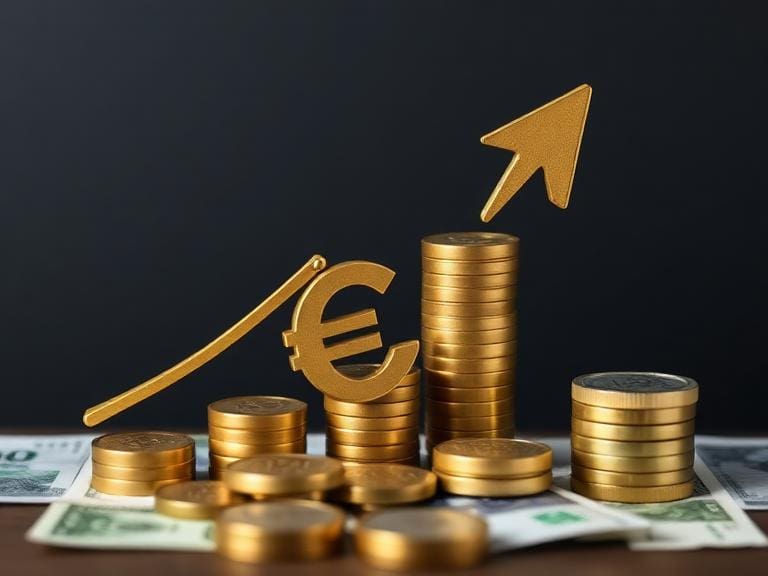
Foreign exchange risk for Albanian exports and the urgent need for financial protection mechanisms
The current situation of Albanian exporters is not simply a financial or technical issue, but a structural problem of the economic model itself. In a context where the euro has significantly depreciated against the lek, the Albanian exporter finds itself in an increasingly unfavorable position, since it continues to sell in euros while the vast majority of its costs are in lek (wages, taxes, energy, services, and operational expenses). This means that even when the business operates the same way, produces the same, and sells the same, the financial result at the end of the year is weaker.
In reality, the problem is not related to the exporter’s ability to compete in foreign markets, but to an external mechanism beyond its control: the exchange rate.
The typical structure of an Albanian exporter is very simple and one-sided.
Revenues are in euros, while costs are almost entirely in lek. When the euro weakens, the ratio between these two currencies deteriorates and the profit margin is automatically squeezed, with no connection to productivity, quality, or the management of the business itself. In essence, the exporter is penalized for something it cannot control.
In economic theory, this situation is addressed through financial hedging (instruments for protection against exchange rate risk).
In Albanian practice, however, these instruments are almost inaccessible for most real exporters.
Small and medium-sized enterprises, which make up the vast majority of exports, do not have financial departments, nor do they have expertise in complex products, and often not even sufficient volume to negotiate seriously with banks.
For them, forward contracts, currency options, or other mechanisms remain more theoretical concepts than real tools usable in everyday business life.
Even the simplest form of protection, the so-called structural currency matching, is difficult to implement in practice.
Most Albanian exporters purchase raw materials and services in the domestic market, pay employees in lek, and operate in an economy where the euro is mainly used only for revenues. Therefore, even the idea that revenues and expenses can be balanced in the same currency is, in many cases, simply impossible.
In this reality, the Albanian exporter is practically fully exposed to the exchange rate, without having real tools to protect itself.
This is why the depreciation of the euro in recent years has produced a much stronger effect than what appears in macroeconomic figures. From around 120 lek per euro in 2022, the rate has fallen to around 98 lek in 2025 and to 96.5 lek at the beginning of 2026. For a typical exporter, this translates into real losses of 18–25% of revenues, without any change in volume, market, or performance.
A company that exports one million euros per year, three years ago would collect around 120 million lek. Today, for the same activity, it collects only around 98 million lek. The difference of 22 million lek is not the result of competition, nor of a market crisis, but simply of the exchange rate. In economic terms, this is a structural loss of income, which acts as an invisible tax on the exporting sector.
In this sense, what is happening in Albania is a silent transfer of income from exporters to the domestic economy and consumption, through the strengthening of the lek.
The exporter produces value, brings foreign currency into the country, but part of this value “evaporates” at the moment of conversion into lek. And this is paid without any compensation mechanism.
The fact that most exporters do not use protective instruments is not a matter of choice, but a structural reality.
They do not use them because they lack access, lack sufficient information, lack institutional support, and operate in an underdeveloped financial market.
Under these conditions, the demand that businesses should “manage risk on their own” sounds more like a theoretical abstraction than a real economic policy.
For this reason, the exchange rate problem cannot be treated simply as an individual business issue, but as a political and structural issue.
Functional financial instruments and supportive policies with a purposeful approach to exports can avoid the risk of entering a process of silent deindustrialization, where exports remain on paper and gradually lose their real economic meaning.
For the Albanian exporter today, the issue is not whether to use sophisticated financial techniques, but whether the economic system realistically allows it to survive in an environment where the exchange rate works against it.
Under current conditions, selling in euros and spending in lek is no longer just a business risk, but a structural disadvantage of the economic development model itself.
Nevertheless, the solution cannot be reduced to the use of a few isolated financial instruments, because the problem of Albanian exporters is not simply technical, but structural. Hedging, in itself, is only one part of the mosaic.
It works effectively only if it is placed within a broader package of economic policies that includes the development of the financial market, the creation of simple and accessible instruments for SMEs, the subsidization of the costs of protection against exchange rate risk, public guarantees for forward contracts, and the provision of basic financial advisory services for exporters.
In this way, it protects against financial risk and moves from a theoretical concept to a real stabilization mechanism, which no longer leaves the exporter alone in front of the exchange rate, but turns it into part of a national strategy for sustainable exports and the strengthening of the “Made in Albania” brand.


Leave a Reply
You must be logged in to post a comment.