


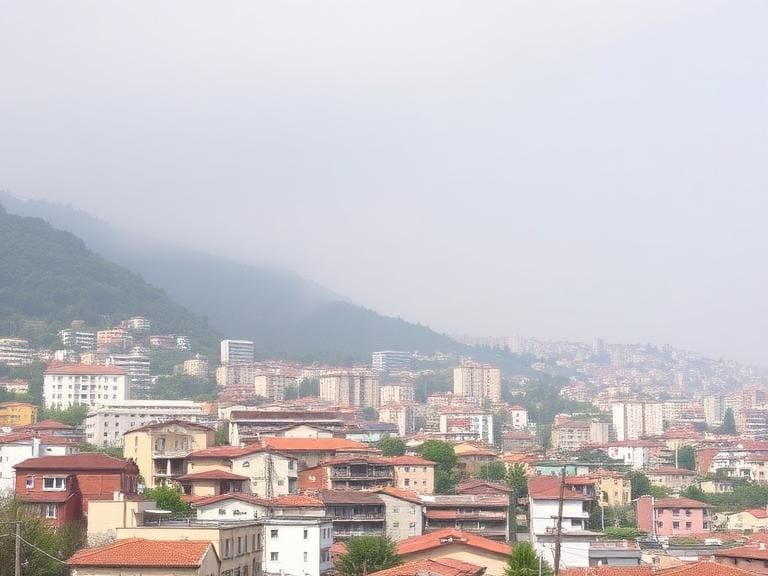
Construction abuses and air pollution, a high price of uncontrolled “development”
The construction sector contributes up to 40% of global CO₂ emissions, but in Albania, the air pollution crisis has taken on tragic human dimensions, extending far beyond just the construction industry.
According to data from the European Environment Agency (EEA) for 2021, air pollution—especially from PM2.5 particles—causes approximately 4,600 premature deaths annually in the country, with the majority concentrated in Tirana and other densely populated urban areas.
This figure, confirmed by sources such as the EEA, Statista, and UN reports, exceeds the initial estimate of 2,300 deaths nearly a decade ago cited in some studies, highlighting a deep-seated problem: uncontrolled urbanization and construction abuses are destroying public health under the guise of “economic development.”
The causes of air pollution are not limited to construction but come from a deadly mix.
Investigations show that air pollution in Albania is not solely from construction; other significant sources include road transport (old vehicles and heavy traffic, contributing up to 50% of urban pollution), household heating (29–40%, mainly from burning wood, industrial oil, and gas), manufacturing and processing activities, waste burning, and the reduction of green spaces.
In Tirana, these factors are worsened by a construction boom, which increases dust from construction sites and operational emissions (heating, cooling, lighting).
According to the ALTAX report, PM2.5 levels reach 18–25 μg/m³, which is 1.8–2.5 times higher than in the EU, with winter peaks up to 50–150 μg/m³. Albania ranks as the 7th most polluted country in Europe, with levels three times above the WHO limit.
Construction plays a significant role, consuming 30% of global energy and contributing 26% of energy-related emissions, but in Albania, abuses exacerbate the burden: permits issued without full environmental assessments and the destruction of urban greenery are turning the capital into one of the most polluted cities on the continent.
Abuses in construction intensity show exceedances up to three times, with an increasing trend in new permits.
Measurements and reports indicate that construction violations in Tirana and across Albania often exceed legal building intensity limits by an average of three times, with extreme cases documented up to 77%.
In the former Blloku area, for instance, 12 projects have high construction intensity that violates urban planning criteria, making exceptions the norm. New laws stipulate confiscation for exceedances over 10%, but corruption and private interests continue to allow uncontrolled “concretization,” masking money laundering and organized crime. This increases dust pollution from construction sites and traffic, aggravating coal dependence in the region and the lack of green standards.
The human and economic costs include a public health and social tragedy as well as rising expenses.
These over 4,600 premature deaths per year are more than statistics—they represent asthma, cardiovascular problems, lung cancer, and lost productivity, primarily affecting Tirana, where pollution acts daily as a “silent killer.” Compared to the EU, where pollution-related deaths are declining thanks to the Green Deal, Albania still suffers from high levels.
The rise in costs is alarming.
Air pollution causes economic costs such as healthcare expenditures, reduced productivity (lost workdays), and damage to tourism, estimated to account for up to 10% of the disease burden and annual erosion costs of €50–100 million.
Construction abuses add to this burden, with urban pollution control programs estimated at €4 billion, while urban development creates jobs but exceeds benefits with long-term damage.
Social policies from the budget are limited and unequal compared to the region and the EU. The Green Agenda for the Balkans (€9 billion) has been implemented only 30–40%, leaving citizens without subsidies for thermal insulation or renewable energy. Energy poverty affects 29% of the population, while the elite benefits from large projects.
This is more than a warning—it is an urgent alarm.
We cannot continue sacrificing human lives and the economy for the benefit of a few based on uncontrolled development.
The government must engage and act to enforce strict measures against construction abuses, invest in monitoring and sustainable materials, and prioritize public health with equitable social policies. Without decisive action, the crisis will deepen, leaving a toxic legacy for future generations.
Leave a Reply
You must be logged in to post a comment.