


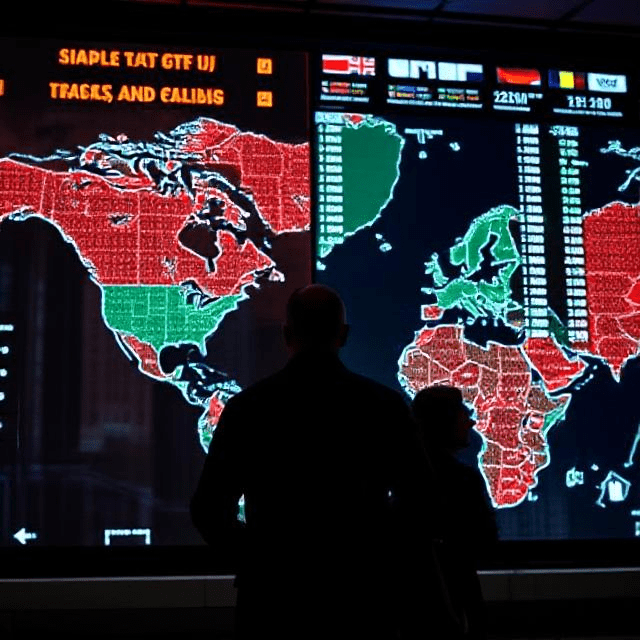
Albania–US Trade Relations in 2025 and the Impact of Trump Tariffs
In a world constantly oscillating between globalization and protectionist policies, the year 2025 marked a significant turning point in trade relations between Albania and the United States of America. In April of this year, the Trump administration, during its second term, introduced a series of tariffs that encompassed all imports to the US, including those from Albania. This decision, driven by domestic economic policies and Trump’s strategic objectives, has had a direct impact on the Albanian economy. But to better understand this impact, one must first examine the current structure of trade relations and its role in Albania’s economic development.
In January 2025, Albanian exports to the US were valued at $4.5 million, while imports from the US reached $8.9 million. This resulted in a trade surplus of $4.4 million in favor of the US, highlighting a somewhat imbalanced yet functional and potentially growing trade relationship.
Albania’s exports to the US are diverse: from textiles and garments produced in Albania’s industrial zones to mineral and agricultural products—all of which find a receptive market in the United States. On the other hand, Albania imports high-value technological goods, such as industrial equipment, pharmaceuticals, and advanced technologies—products that not only meet domestic market needs but also help improve the country’s production capacities.
Beyond the economic dimension, Albania–US trade relations are strategically important. Albania has historically been a close ally of the US in the region, reflecting not just economic cooperation but also political, military, and cultural ties that have contributed to the stability and development of the Western Balkans.
On April 2, 2025, President Trump officially announced the introduction of a baseline 10% tariff on all imports to the US, including those from Albania. At first glance, this seems like a neutral economic measure, but in reality, it significantly affects Albanian exporters, who have limited price flexibility to maintain their competitiveness in the American market.
Furthermore, for countries that import oil from Venezuela—and Albania is among them through regional energy agreements—a supplementary 25% tariff was imposed on all goods imported into the US. Although indirect, this tariff created an additional barrier for Albanian exporters, who now face increased logistical, customs, and administrative costs.
The Trump administration’s tariff policies are not accidental. They are part of a philosophy known as “reciprocal tariffs,” aimed at counterbalancing trade barriers imposed by other countries on American products. This approach, based on protecting domestic producers, seeks to reduce the US trade deficit, safeguard jobs, and stimulate domestic production.
The effects of these tariffs are visible on two levels: direct and indirect impact. Initially, the 10% tariff directly affects Albanian exports by increasing the price of Albanian goods in the US market. This makes them less attractive to American consumers and importers, thereby reducing Albania’s competitiveness in this crucial market.
The additional 25% tariff is an extra burden for Albanian goods if the country is indeed included in the list of penalized nations due to its ties with Venezuela. This means that Albanian exports—whether agricultural, mineral, or industrial—will become increasingly less profitable in the US.
The indirect impact, however, is equally important. The rise in tariffs against countries such as China and the European Union may create openings for Albania to substitute certain products in the American market. But such an opportunity requires Albania to possess advanced production capacities and high-quality standards—something that demands time, investment, and close public–private coordination.
On the other hand, a slowed European economy due to these tariffs could reduce demand for Albanian goods, leading to negative consequences for the country’s economic growth and labor market.
To cope with this new global economic climate, Albania must take several well-calculated steps. First, market diversification is essential. Albania cannot rely solely on one or two major markets like the US or EU. It should seek new trade partners in Southeast Asia, Africa, and the Middle East.
Second, improving competitiveness must become a national priority. Investments in modern technology, workforce training, and the enhancement of logistical infrastructure are key factors in boosting the country’s productive capacities.
Finally, Albania should engage in bilateral negotiations with the US. Tariff exemptions for specific products are possible if Albania presents a well-argued case and demonstrates the value its products bring to the US market. These negotiations should involve both public and private sectors, acting as a united diplomatic and economic front.
The Trump administration’s tariff policies in 2025 represent a significant challenge for Albania–US trade relations. However, they do not signal the end of economic cooperation. In fact, they serve as a call for restructuring and new strategies. Albania, if it acts with vision, can turn this crisis into an opportunity to strengthen its position in the global economy—an economy increasingly defined not by the volume of goods produced, but by the capacity to adapt and innovate.

Leave a Reply
You must be logged in to post a comment.