inflation

Headline inflation and energy – fuel inflation in the OECD and the Balkans, August – October 2023

Headline inflation (year-on-year) in the OECD, as measured by the Consumer Price Index (CPI), eased to 6.2% in September 2023 from 6.4% in August, following increases in July and August. Inflation fell between August and September in 27 OECD countries. In...

Expensive and unaffordable cost of tax of inflation

Contractionary monetary policy (contraction economic policy) is now the most popular method of controlling inflation. The purpose of a contractionary policy is to reduce the money supply within an economy by raising interest rates. This helps slow economic growth by...

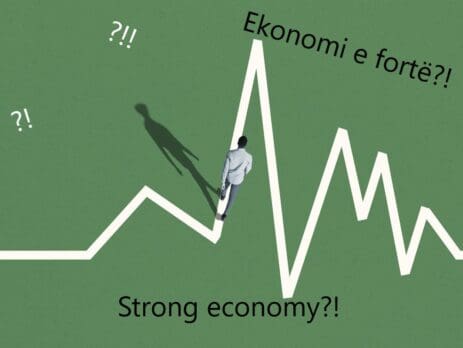
What is a strong economy?

In clarifying the term strong economy, according to many definitions and criteria from most information, it is seen that it should summarize together: - High rate of economic growth. According to our commentary, this implies an expansion of economic output,...

An economic growth without growth for 2024, if not based on inclusiveness

As shown in the World Economic Outlook a few days ago, while the world has shown remarkable resilience, the recovery from the shocks of recent years is slow, below its potential and uneven. Growth is slow, because at 3-4 percent,...

What is happening with prices and Euro and what is waiting for the monetary and fiscal policy?

In a clarification of the current situation, if our market would be like that of advanced countries, it is that the lost fight against evasion and corruption, as well as failure to act in time to have an expanded and...

The study “Economic growth in 2023 challenged by informality and black money” is published

At the beginning of the second 6-month period, after an assessment and ongoing monitoring of the economic situation, but also the positions held by the financial and fiscal institutions, as well as based on the comments and recommendations from the...

Wage increase bill, confidence, and economic security for the people

In the Eurozone, the government wage bill accounts for almost a quarter of total government expenditure and about 10% of GDP, so it is important from a macroeconomic point of view[1]. In Albania, the government wage bill...

The Pedal of Fiscal and Monetary Policy: Who Has Been Pressed Harder?

The sharp tightening of monetary policy has often caused financial stress or even crises, especially in developed economies, but also in developing countries. Because of higher credit and currency risks, global investors have typically pulled out quickly when interest rates...

…to create a resilient fiscal shield to adjust to shocks

Inflation can affect public finances through multiple channels. It tends to expand tax bases in nominal terms, increasing nominal tax revenues, but it can also increase the cost of government spending, more directly for budget items that are automatically indexed...

What affects inflation and exchange rates in Albania?

In a previous study of ALTAX [1], we mentioned all the factors analyzed and listed, which are the influences on the variations of the foreign exchange rate and inflation. From this previous analysis, we conclude that because of the...

error:
Privacy Overview

This website uses cookies so that we can provide you with the best user experience possible. Cookie information is stored in your browser and performs functions such as recognising you when you return to our website and helping our team to understand which sections of the website you find most interesting and useful.