


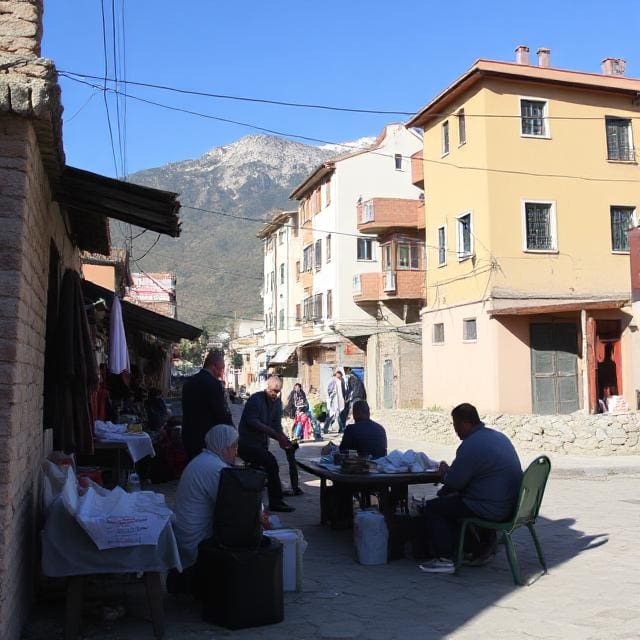
Informal employment in Albania, a reality that speaks louder than reforms
In every development strategy, Albanian governments have identified informal employment as one of the main challenges to a healthy and fair economy. However, despite drafted plans, international recommendations, and occasional interventions, the level of informality remains high and persistent, especially in sectors such as construction, agriculture, and services.
Today, it is estimated that over 30% of workers in Albania are part of the informal economy, a clear indicator that current policies have lacked lasting impact. Instead of a fundamental improvement, Albanian society is facing a normalization of informality, which has become a daily reality for thousands of individuals working without contracts and outside social protection.
The causes are known, but the solutions remain partial
The causes of this phenomenon are complex but not unknown: from the high cost of formalization for small businesses, to the lack of information about workers’ rights, and the weak structures of inspection and law enforcement. Furthermore, part of the informal economy is fueled by economic insecurity and instability, which push many individuals to accept forms of employment outside the system.
Despite these facts, reforms have mostly focused on administrative measures, inspections, awareness campaigns, or improvements in registration systems, without being accompanied by a comprehensive vision that also addresses structural factors.
The consequences are profound, both for the individual and for the state
For informally employed individuals, the consequences are numerous: lack of social security, no legal protection in case of dismissal, no right to leave, health benefits, or a guaranteed pension. Essentially, the informal individual remains invisible in the eyes of the system.
On the other hand, the state loses significant revenue from unpaid contributions, and moreover, bears the social burden of the consequences, which appear in forms such as social support for economically unstable individuals or pressure on the pension system.
Institutional efforts lacking coherence
In a measured analysis, it cannot be denied that steps have been taken toward improvement: from the digitalization of business registration to measures for greater transparency in wages and employment. However, these measures have remained fragmented and often without clear political coherence. They have not been accompanied by an integrated approach that includes effective inspections, supportive policies for businesses, and education of the workforce.
Moreover, cooperation between institutions remains sporadic, and resources for labor inspectorates are limited to sustainably monitor the phenomenon.
Is there a lack of will for a full solution?
This is a question that arises naturally from the ongoing reality. For some analysts, the problem is not the lack of knowledge or alternatives, but the absence of a sustained will to undertake measures that would challenge widespread interests in the economy. Some sectors with high levels of informality have significant impact on employment and consumption, which may explain the cautious political approach toward them.
In this context, the fight against informality requires more than legal instruments – it requires a political orientation that prioritizes the creation of a fair and sustainable labor market.
What can be done differently?
To have a real impact, the fight against informal employment must focus on three directions:
- Real strengthening of inspectorates, with resources and technology that allow continuous and impartial control;
- Financial and advisory support for small businesses, which often avoid formalization out of fear of costs and complicated procedures;
- Building a new work culture, through vocational education, public awareness, and appreciation of decent work in every sector.
Informal employment is a deeply rooted phenomenon in the country’s economic and social structure. Addressing it successfully requires continuous and politically sincere commitment, not just temporary campaigns or partial actions.
If Albania aims for an equal, safe, and sustainable labor market, the fight against informality must be a strategic priority and not a seasonal debate topic. Because only then can we claim that social justice and development are more than just words on paper.

Leave a Reply
You must be logged in to post a comment.