


What do Albanians need to become an active center to produce goods in the region?
Albanians have great potential to become a regional hub for the production of goods, but to achieve this objective, several strategic factors need to be addressed. These factors include improving infrastructure, promoting supportive economic and fiscal policies, developing human resources, focusing on strategic sectors, protecting the environment and ensuring sustainable development, as well as promoting regional cooperation and international image. Below we analyze, one by one, those aspects we believe are most relevant to this discussion.
1. Improving infrastructure with transparent access
Modern infrastructure is essential to attract investors and facilitate trade. Albania needs significant investments in roads and railways, especially for connection with major ports such as Durrës, Vlorë, and Shëngjin. The development of these ports would help the country become a regional logistics hub and facilitate cross-border transport to improve trade with neighboring countries. However, Albanians in Kosovo, Montenegro, and North Macedonia also hold great potential. What this potential lacks is the absence of coordination among the interests of the states where Albanians live, to enhance road, railway, and air connections, which would help producers export more easily and connect markets more effectively with consumers.
A stable energy supply is also vital for production, hence investments are needed in renewable sources to ensure affordable and clean energy. Diversifying energy sources is a necessity to reduce dependence on hydropower and imports. Approximate investment costs for Albania may exceed 3 billion euros over the next 10 years, while risks include insufficient funding, delays in major projects, and corruption or mismanagement in infrastructure projects. These costs are similar for the two neighboring countries where Albanians live.
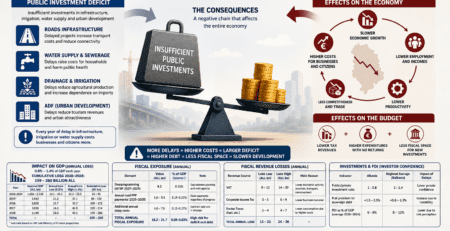
Despite the great importance of developing infrastructure to support a competitive industry and attract investors, it is important to emphasize that capital investments in infrastructure have been limited in Albania. Despite the fact that 4–5.5% of GDP has been spent annually on capital investments, many objectives outlined in the road development strategy, including connections to ports and the creation of an adequate logistics network, have not yet been achieved. This indicates that although investments are significant in absolute terms, efficiency and fulfillment of objectives remain a challenge.
The critique is that despite considerable spending, the necessary infrastructure to enable sustainable and market-responsive economic development has not yet been realized. This relates to the management of investments and their proper allocation to achieve strategic goals, which are essential to making Albania a regional production center. Failure to meet set objectives calls for a revision of the strategy and infrastructure investment management to ensure market demand is met and competitiveness is increased.
2. Well-discussed and well-studied economic and fiscal incentive policies
Fiscal incentives for the manufacturing industry and exporters are often considered a key tool for promoting economic development. However, this stance is debatable when compared with analyses by the International Monetary Fund (IMF) and domestic assessments, which note that Albania, like neighboring countries, already offers a wide range of fiscal incentives and that expanding them could harm the country’s fiscal sustainability. Additional tax exemptions may create a burden on the state budget, limiting opportunities for public investment in key sectors and significantly increasing public debt.
Given this situation, a different approach is suggested—improving the business climate through fiscal policy stability, simplifying administrative procedures, and strengthening the rule of law. This is a more sustainable and sound perspective for supporting long-term economic growth. Implementing a clear and stable fiscal framework, without the need for ongoing incentives, can ensure stability and credibility for investors, promoting a healthier environment for entrepreneurship.
Another critical aspect that should be considered is the need for a deeper analysis of the sources of funding for proposed investments. These expenses cannot be covered solely through further fiscal incentives, and it is essential to clarify how they will be financed—through the state budget, external loans, or foreign investments. Furthermore, the absence of a comprehensive analysis of the impact of these investments on economic growth and the potential return on investment creates uncertainty regarding the effectiveness of the proposed policies.
In this context, it is essential for the government to develop a more balanced strategy, focusing on improving the fiscal structure and simplifying the administration to ensure that investments have a sustainable impact on economic development.
3. Development of human resources with a different attitude
A skilled and qualified workforce is a key element of a successful productive economy. Aligning vocational education with market needs is an important step, as is encouraging cooperation between universities and industry. To curb youth emigration and retain human capital within the country, policies must be created to stimulate employment and wage growth in strategic sectors.
Investment in education and training could reach up to 500 million euros in the next decade. However, there is a need to assess the potential opportunities and risks, including delays in implementing educational reforms and challenges in curbing emigration.
Despite repeated discussions and initiatives to link vocational education with market needs and to promote collaboration between universities and industry, many of these proposals have remained unfinished or have been implemented in a fragmented manner. Vocational education and workforce training are key aspects that can help reduce unemployment and curb youth emigration, but there is still no clear approach and well-coordinated strategy to address these issues.
Policies that stimulate employment and wage growth in strategic sectors are also necessary, but so far they have been vague and often inadequately fulfilled. To create a favorable environment for industrial development and retain human capital within the country, concrete steps must be taken, supported by a comprehensive and continuous plan—not just isolated initiatives that are not connected to a long-term strategy. So far, the lack of coordination and a long-term approach in these areas has hindered the development of a skilled and stable workforce to support Albania’s productive economy.
4. Focusing on strategic sectors with exhaustive analysis and debate
To achieve success as a production center, Albania must focus on several high-potential sectors. Agro-industry is one of them, where increasing the processing capacity of agricultural products and exporting higher value-added products can bring significant economic benefits.
Another sector is the textile industry or light manufacturing, where improving working conditions and creating supply chains for clothing and footwear can help attract investors. Additionally, the technology and electronics industries can be developed through attracting IT investments and creating free economic zones for technology—initiatives that have begun to be implemented but still raise concerns about their completion.
Investments in these sectors could require over 1 billion euros in the next 10 years for Albania alone and over 2.5 billion euros for neighboring countries, while challenges include a lack of skilled labor and the instability of industrial policies.
For example, Albania has missed significant opportunities for sustainable economic development and faces major challenges in transforming itself into a regional production center due to the non-implementation of appropriate policies in key high-potential sectors. Agro-industry, textile and light manufacturing, as well as the technology and electronics sectors, are among the opportunities that have been neglected or insufficiently developed to drive economic growth and attract major investments.
One of the most visible consequences of this issue is low economic growth and the loss of opportunities to increase the processing capacity of agricultural products and to export higher value-added products. Albania has the potential to enrich its economy through a more advanced production chain in the agro-industrial sector, but delays and lack of commitment to prioritize this sector have led to lost development opportunities, keeping the country at a low level of global competitiveness.
Likewise, the textile industry and light manufacturing sectors could have provided a significant boost to Albania’s economic development. However, efforts to improve working conditions and create supply chains for clothing and footwear have not been sufficiently developed, leaving Albania to compete at low levels with other countries that have invested more in this sector. This has led to lost opportunities to attract new investors and to build a stronger manufacturing industry.
In addition, the technology and electronics industry—another key sector for sustainable development—has also lagged behind. Attracting investments in IT and creating free economic zones for technology could have stimulated major development in this field. The lack of a clear strategy and commitment to this sector has led to missed opportunities to develop an advanced technology industry that could have provided new employment opportunities and boosted the economy.
Shqipëria dhe shqiptarët në rajon kanë pasur mundësi reale që të zhvillojnë sektorë strategjikë me potencial të lartë, por mungesa e analizave të thelluara, debatit gjithëpërfshirës dhe vullnetit politik për implementim ka penguar konkretizimin e këtyre mundësive. Në mënyrë që këto sektorë të lulëzojnë, është e nevojshme të hartohen politika industriale të qarta dhe të qëndrueshme, të cilat mbështeten me skema mbështetëse për inovacionin, teknologjinë dhe kapitalin njerëzor.
- Mbrojtja e mjedisit dhe zhvillimi i qëndrueshëm si standard i domosdoshëm
Zhvillimi industrial nuk mund të shihet më i ndarë nga mbrojtja e mjedisit dhe qëndrueshmëria. Shqipëria dhe rajoni i shqiptarëve përballen me sfida të mëdha në menaxhimin e mbetjeve, ndotjen e ajrit dhe ujërave, si dhe shfrytëzimin e paqëndrueshëm të burimeve natyrore. Politikat e reja duhet të integrojnë standarde mjedisore të BE-së në çdo iniciativë prodhuese apo infrastrukturore.
Mosrespektimi i standardeve mjedisore mund të sjellë penalitete në procesin e integrimit evropian, por edhe të rrisë kostot sociale dhe shëndetësore për popullatën. Investimet në teknologji të pastër, energji të rinovueshme dhe menaxhim të qëndrueshëm të burimeve janë jo vetëm të domosdoshme, por edhe një mundësi për krijimin e vendeve të reja të punës dhe për të ndërtuar një avantazh konkurrues afatgjatë.
Për më tepër, ndërtimi i kapaciteteve për të integruar kriteret e ESG (Environmental, Social, Governance) në qeverisjen publike dhe në praktikat e korporatave prodhuese është thelbësor për tërheqjen e investimeve të përgjegjshme ndërkombëtare. Për këtë kërkohen reforma në sistemin ligjor, mbështetje për bizneset që adoptojnë praktika të gjelbra, si dhe ngritja e strukturave të monitorimit dhe raportimit për standardet mjedisore.
- Promovimi i bashkëpunimit rajonal dhe imazhit ndërkombëtar
Për të pozicionuar veten si një qendër rajonale prodhimi, shqiptarët duhet të forcojnë lidhjet ndërkufitare përmes bashkëpunimit ekonomik, tregtar dhe institucional mes Shqipërisë, Kosovës, Maqedonisë së Veriut dhe Malit të Zi. Kjo nënkupton harmonizim të standardeve, lehtësim të tregtisë dhe ndërtim të marrëveshjeve të qëndrueshme për zinxhirët e furnizimit dhe shpërndarjes.
Në këtë drejtim, mungesa e një tregu të përbashkët funksional shqiptar ka penguar shumë nga iniciativat industriale që kërkojnë volum, lidhje logjistike dhe shkallë prodhimi për të qenë konkurruese. Po kështu, ka munguar një strategji e unifikuar për promovimin e imazhit ekonomik dhe tërheqjen e investimeve përmes përfaqësimit të përbashkët në panaire ndërkombëtare, promovimit të markës “Made in Albania” ose “Made by Albanians” në rajon dhe jashtë tij.
Zhvillimi i diplomacisë ekonomike dhe fuqizimi i institucioneve të promovimit të investimeve është një tjetër element thelbësor. Deri tani, shumë pak janë realizuar në drejtim të krijimit të një rrjeti të qëndrueshëm për marketingun ndërkombëtar të avantazheve industriale të rajonit shqiptar.
Përfundim: Një qasje gjithëpërfshirëse për të ndërtuar një qendër rajonale prodhimi
Për të bërë shqiptarët një qendër aktive rajonale për prodhimin e të mirave, kërkohet një qasje strategjike, e koordinuar dhe afatgjatë që përfshin:
- Infrastrukturë funksionale dhe transparente, e lidhur mirë ndërkufitarisht;
- Politika fiskale të qëndrueshme, jo thjesht favorizuese, por të menduara mirë;
- Kapital njerëzor i zhvilluar, që kërkon një ndryshim radikal në qasjen ndaj arsimit dhe punësimit;
- Sektorë strategjikë të identifikuar qartë, të analizuar dhe të mbështetur me instrumente praktike;
- Zhvillim i qëndrueshëm, me respekt të thellë për mjedisin dhe standardet e BE-së;
- Bashkëpunim rajonal i zgjuar dhe promovim ndërkombëtar i markës prodhuese shqiptare.
Vetëm në këtë mënyrë Shqipëria dhe shqiptarët në rajon mund të ndërtojnë një ekonomi prodhuese konkurruese, që nuk varet nga ciklet afatshkurtra politike, por nga një vizion i përbashkët për zhvillim të qëndrueshëm dhe të zgjuar.

Leave a Reply
You must be logged in to post a comment.