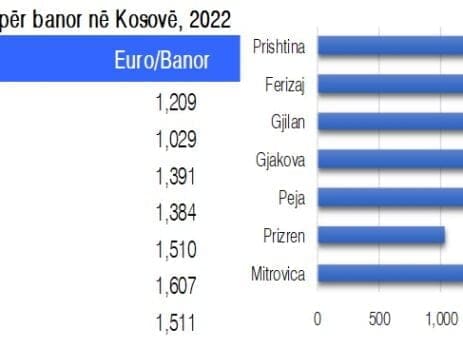
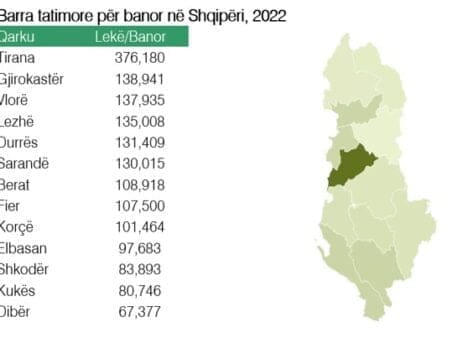
Regions and tax burden in Kosovo, 2022
Tax and non-tax revenues in the budget in 2022 in relation to the internal production of the Region for 2022 for each of the 7 regions in Kosovo are presented in table 36. The tax burden is a product of the...
According to Report TB 2023, The tax burden is the product of the revenues collected by the central tax administration and the customs administration, from the revenues from the local government, as well as the receipts for social and health...
Tax revenues from BP countries that applied a progressive tax model a few years ago (Montenegro, Kosovo, Albania, Serbia) compared to countries that applied flat rate taxation (North Macedonia, Bosnia, and Herzegovina) show a higher burden of 1.8% and 2.1%...
Tax Freedom Day represents the taxpayers of a country facing their burden from the fiscal administration for the collection of fiscal obligations for the budget. This day is the indicative date to know on which day of the year the burden...
According to the report on the tax burden in Kosovo, in absolute value budget revenues in 2021 are 1.94 billion Euros. Direct tax revenues are 343 million Euros, indirect tax revenues are 1.59 billion Euros, as well as non-tax...
The own municipal revenues are financial assets that are collected from taxes, fees, fines, payments for public services provided by the municipality, rents from real estate owned by the municipality, revenues from the sale of municipal assets, revenues from municipal...
Impact of new measures to improve the business environment, facilitation of imports for the manufacturing sector, exemption from customs duties in the case of imports of technological equipment, plans to narrow the tax gap and informal economy, measures for...
Budget revenues through the approval of the budget for the fiscal year contain within them the tax burden, which the government decides to be paid by taxpayers of their country for every year through the implementation of the tax system...
Host countries of FDI in the Western Balkans have been applying low profit tax rates for over a decade. However, it can still be seen that the attraction of investment has not tended to increase significantly, even in countries...
The average foreign direct investments in WB6 in 2019 are in the level of. 6.2% of GDP. What matters for FDI relates to their treatment as one of the factors that need to be integrated with internal elements and...