serbia

Inflation of the first quarter 2024 in OECD countries, the EU and the Western Balkans

Year-on-year inflation in the OECD as measured by the Consumer Price Index (CPI) remained broadly stable at 5.8% in March 2024, after 5.7% in February (Figures 1 and 2). Headline inflation fell in 19 OECD countries with the largest...

Interview – The economic impact of the Chinese president’s visit to Europe

In an interview that Mr. Gjokutaj told China Foreign Radio about the economic impact of the Chinese president's visit to Europe that "this visit comes in the framework of a relationship which, after 5 years of President Xi Jinping's...

Distribution of the tax burden by destination in the Western Balkans 2023

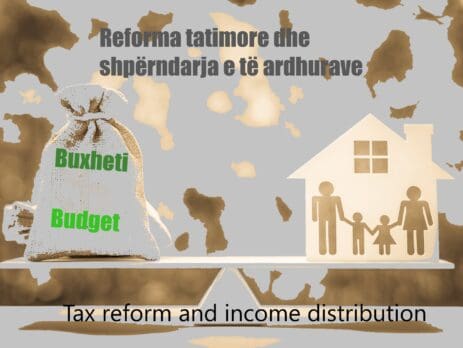
The distribution of budget revenues must take into consideration the demands of individuals, families and their own businesses, who, in the role of direct and indirect taxpayers, claim equal proportional benefit. According to this request, which comes naturally as a...

Tax reform and income distribution for individuals

Tax reforms can effectively strengthen the incentives for some groups of the population and the economy that can affect a long-term perspective in the Balkan economies, which are under an increased pressure for market expansion and the right incentives to...

Income inequality and influencing factors in the Western Balkans

Our analysis shows that income inequality is a major contributor to the distribution of household income, but not to the fair distribution of wealth and well-being in Western Balkan countries (WB6). This is observed in the case of possession of assets...

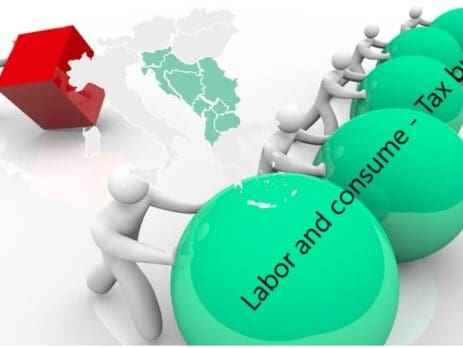
The tax burden in Albania and its neighbors depends on consumption and labor taxes

The tax systems in the Western Balkans (BP6) still have the greatest dependence on VAT and taxes on work (tax on income from work and insurance contributions). In the five of BP6 countries (excluding BiH), VAT payments carry a weight of...

Tax rates and the impact of direct and indirect taxes, 2022 – 2024

This specificity of the weight carried by direct, indirect taxes and social contributions, etc., if we look at it according to the Tax Norms 2022 - 2024 in Statistics, it is observed that: 1. Regarding direct taxes, countries such as Albania...

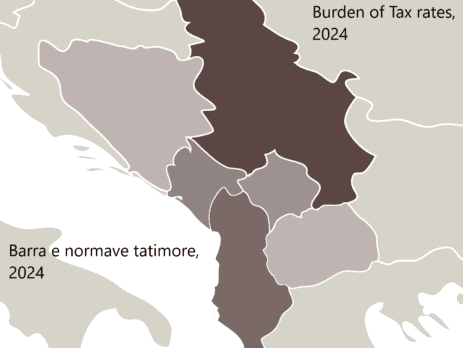
Tax burden, structure, and tax rates in Western Balkans 2024

The tax burden includes taxes on consumption (indirect for the form addressed to individuals and businesses), direct taxes addressed directly to personal income from work, capital gains to individual and corporate income, and general taxes (including all forms of national...

Tax Freedom Day in 2024 in the Western Balkans and regions of Albania

The Tax Freedom Day for the Western Balkans (WB6) for 2024 is its 114th day[1]. In 2024, this day falls earlier in Kosovo, Albania and North Macedonia. In Bosnia-Herzegovina, Montenegro and Serbia, the day of fiscal freedom is...

Macroeconomic and fiscal indicators of Serbia

Serbia's economic growth accelerated in the second half of 2023, bringing GDP growth for the year to 2.5%, thanks to a better-than-expected performance of the agriculture and construction sectors, and a strong sector recovery of energy, after the crisis of...

error:
Privacy Overview

This website uses cookies so that we can provide you with the best user experience possible. Cookie information is stored in your browser and performs functions such as recognising you when you return to our website and helping our team to understand which sections of the website you find most interesting and useful.