albania

Tax rates and the impact of direct and indirect taxes, 2022 – 2024

This specificity of the weight carried by direct, indirect taxes and social contributions, etc., if we look at it according to the Tax Norms 2022 - 2024 in Statistics, it is observed that: 1. Regarding direct taxes, countries such as Albania...
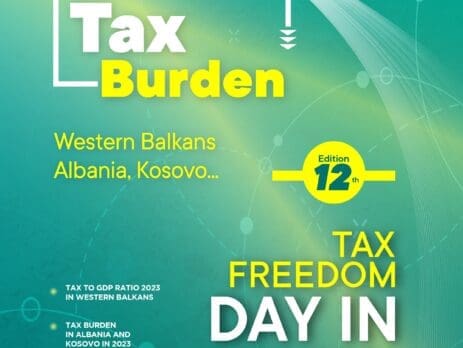
Summary from Tax Burden in the Western Balkans – Albania, Kosovo and Fiscal Freedom 2024

Economy and fiscal situation In 2023, the population of the Western Balkans (WB6) is 16.98 million inhabitants from 17.34 million inhabitants two years ago, with a decrease of 2.1% (360,000 people). In relation to the total population it seems that: - Serbia lacks...

Report on the Tax Burden in 2023 in the Western Balkans, Albania and Kosovo and Tax Freedom 2024

Today, ALTAX comes to all its readers and followers with the important thematic publication Tax Burden in the Western Balkans - Albania, Kosovo...Tax Freedom Day 2024. This report deals with the tax burden in the Western Balkans region and...

Tax burden, structure, and tax rates in Western Balkans 2024

The tax burden includes taxes on consumption (indirect for the form addressed to individuals and businesses), direct taxes addressed directly to personal income from work, capital gains to individual and corporate income, and general taxes (including all forms of national...

Tax Freedom Day in 2024 in the Western Balkans and regions of Albania

The Tax Freedom Day for the Western Balkans (WB6) for 2024 is its 114th day[1]. In 2024, this day falls earlier in Kosovo, Albania and North Macedonia. In Bosnia-Herzegovina, Montenegro and Serbia, the day of fiscal freedom is...

Economic and fiscal performance in the Western Balkans, 2021 – 2023

In 2023, the population of the Western Balkans (WB6) is 16.98 million inhabitants from 17.34 million inhabitants two years ago, with a decrease of 2.1% (360,000 people). The biggest decrease is felt in Serbia with 220,000 individuals less, in Albania...

The employment rate in Tr. 4 2023 in developed countries and in the Western Balkans

The employment rate in Tr. 4 2023 in developed countries and in the Western Balkans OECD[1] employment and labour force participation rates remained broadly stable at 70.1% and 73.8% in the fourth quarter of 2023, the highest levels recorded...

Food inflation continued to fall for the 15th consecutive month in OECD countries

Food inflation continued to decline for the 15th consecutive month, reaching 5.3% in February from 6.3% in January. OECD food inflation was lower than headline inflation for the first time since November 2021. Year-on-year inflation in the OECD, as measured by...

error:
Privacy Overview

This website uses cookies so that we can provide you with the best user experience possible. Cookie information is stored in your browser and performs functions such as recognising you when you return to our website and helping our team to understand which sections of the website you find most interesting and useful.