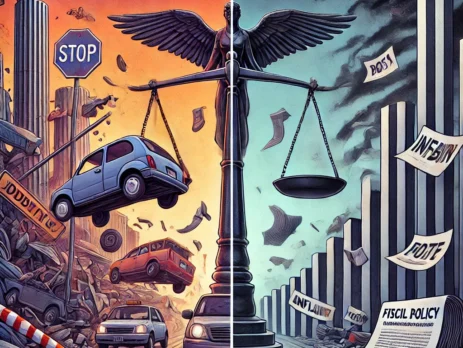
informality

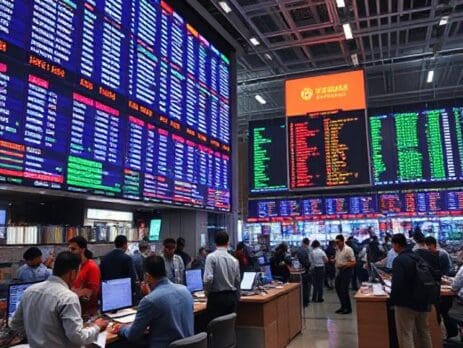
Why does Albania remain outside the stock market?

In a context where the Albanian economy has demonstrated steady growth and several leading companies have achieved significant financial turnover—often surpassing the average capacity of comparable markets in the region, the absence of a developed stock market continues to be...

The salary that doesn’t come, an open wound for Albanian society

In Albania, the story of the employee who waits for their salary and does not receive it on time has become commonplace, almost no longer shocking anyone. Employees across various sectors—from construction to services, from the garment industry to call...

Managerial fragility: The invisible obstacle of the Albanian economy

In every discussion on economic development in Albania, the word "business" is frequently mentioned—investments, taxes, startups, exports, subsidies. But what remains out of focus, although it deeply affects economic success or failure, is the quality of business management. This is...

ALTAX publishes a new study on the impact of price referencing on the Albanian Economy

In Albania, customs reference prices play a significant role in determining the value of goods and in calculating taxes, including VAT and other import duties. This mechanism is important for tax collection and ensuring fair competition, but it also faces...

Pension System Reform in Albania: Steps toward a more secure future

The current two-pillar system is an outdated model. Pension System Reform in Albania: Steps toward a more secure future. the current two-pillar system is an outdated modelThe first pillar, which constitutes the core of the public pension system, is based...

Public Debt-to-GDP trend and fiscal consolidation

Public debt is one of the main indicators of a country’s fiscal sustainability. In this analysis, we will examine the trends of Albania’s public debt in relation to GDP during the period 2014–2024, assessing the impact of budget deficit, revenue...

Analysis of Public Finances before and after 2013

The analysis of the main problems inherited in Albania’s public finances before 2013 highlights a series of complex and intertwined challenges, which negatively impacted fiscal sustainability and the country's long-term economic development. The increase in public debt and the lack of...

Between Tax justice and Electoral timing

In the midst of its digitization drive, the Albanian government has escalated efforts to combat wage evasion—a subset of the broader informality that continues to distort the country’s economy. While the official rhetoric frames this campaign as a structural correction...

Informality, as understood, can also be limited

Informality in Albania refers to the part of the economy that operates outside formal regulations, taxes, and labor laws. This includes unregistered businesses, undeclared income, and informal employment. The informal sector has become significant in Albania, contributing to tax evasion, unfair...

Roadmap “Informality in Albania: Approaches to Overcoming It Based on Experience”

Informality in Albania: Approaches to Overcoming It Based on Experience (in Albanian) is a study supported by ALTAX, as a policy document and with a roadmap approach through examples and presentation of experiences over three decades. This document is...

error:
Privacy Overview

This website uses cookies so that we can provide you with the best user experience possible. Cookie information is stored in your browser and performs functions such as recognising you when you return to our website and helping our team to understand which sections of the website you find most interesting and useful.